Dohany utca Synagogue in the Erzsebetvaros district of Budapest, is Europe's largest synagogue and the second biggest in the world after the Temple of Emmanuel in New York, with 3600 seats and a total capacity for over 5000 worshipers.
Designed by Ludwig Forster, the building epitomises the so-called Byzantine-Moorish style that was popular in the 1850s. It was restored in the 1990s.
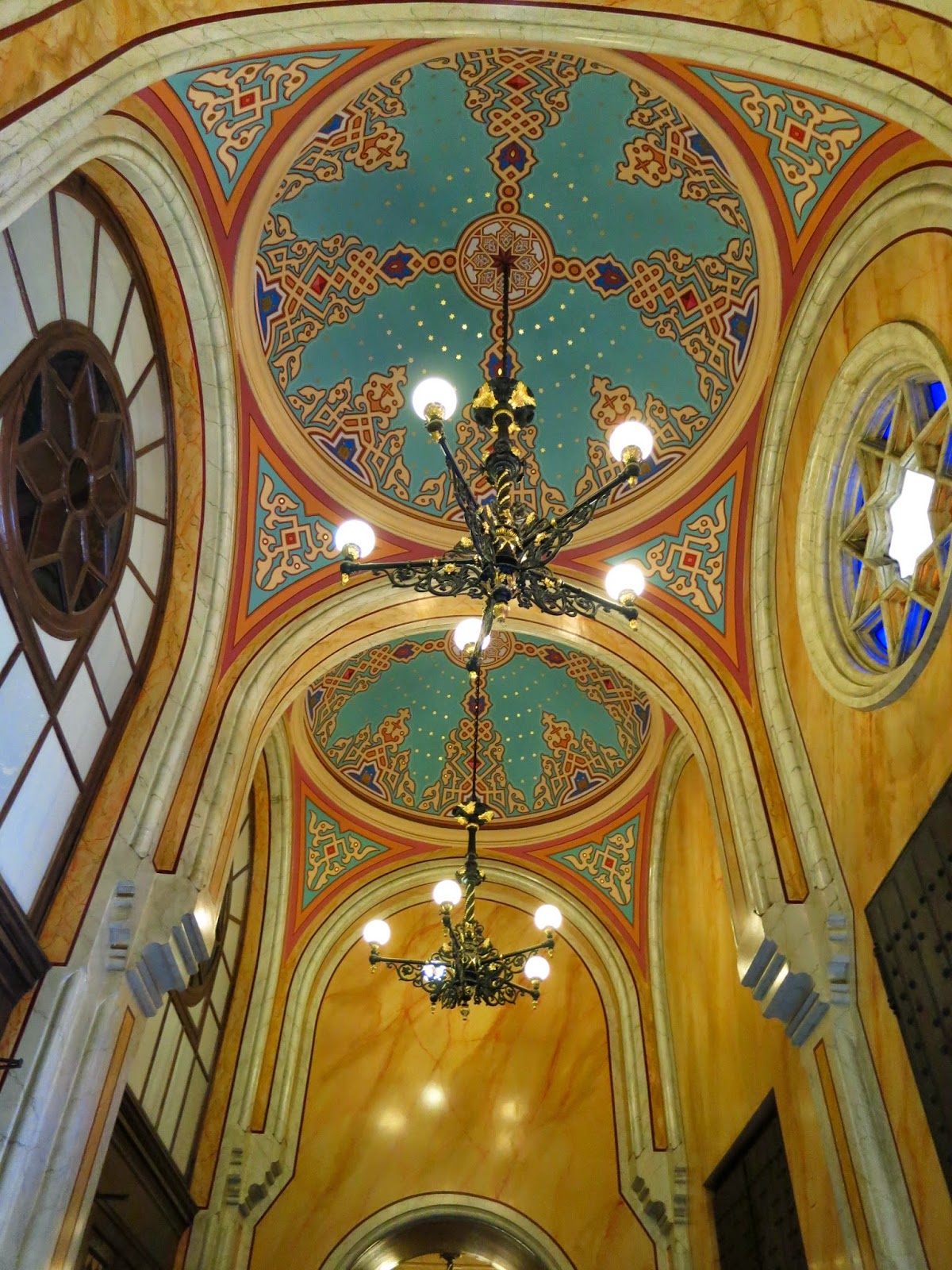
The interior was designed by Frigyes Feszl. It's quite magnificent: arabesques and Stars of David decorate the ceiling
the balconies for female worshippers are surmounted by gilded arches
the floor is inset with eight-pointed stars
One of the lobbies
a closer look at the ceiling
The museum is on the second floor
and the last room is dedicated to the Holocaust.
Chilling photographs and examples of anti-Semitic propaganda
Have we seen enough photos of the Holocaust? Has their message got through? Obviously not, as fascism is rearing its ugly head all over Europe again.....
The cemetery beside the Synagogue only exists at this spot because the Nazis forbade Jews from being buried elsewhere - one of many calculated humiliations inflicted by the local SS commander Eichmann on the Jewish quarter which was by then a walled ghetto. Some 2281 Jews are interred beneath simple headstones, erected immediately after the Red Army's liberation of the ghetto on January 18, 1945.
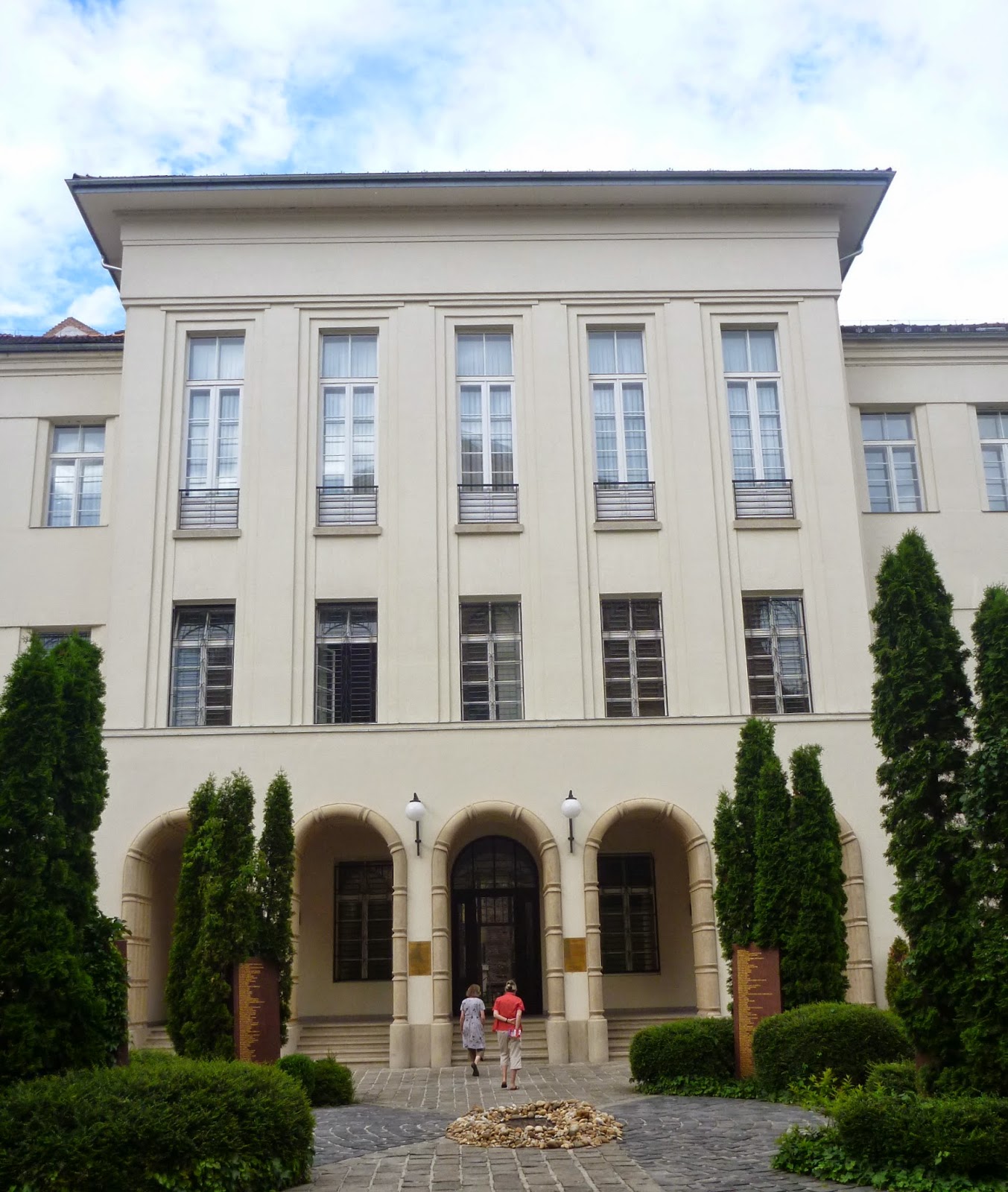
The Raoul Wallenberg Memorial Garden is at the back of the Synagogue
The garden is named after the Swedish consul who saved 20,000 Jews during WWII. Armed with diplomatic status and money for bribing officials Wallenberg and his assistants plucked thousands from the cattle trucks and lodged them in 'safe houses', manoeuvring to buy time until the Russians arrived. He was last seen alive the day before the Red Army liberated the ghetto: arrested by the Soviets on suspicion of espionage, he died in the Gulag.
Glass panels by Klara Szilard
Names, names, names. The garden is full of plaques of the names of those who were killed
The park's centrepiece is the Holocaust Memorial by Imre Varga, shaped like a weeping willow, each leaf engraved with the names of a family killed by the Nazis.

it's very beautiful and very moving
Also, in the garden
looking closer
and closer.
Also in the garden, the Heroes' Temple, erected in 1929-31 in honour of the 10,000 Jewish soldiers who died fighting for Hungary during WWI. These days it serves as a synagogue for everyday use.
The Memorial Garden is a very moving place, as is the story of Raoul Wallenberg himself.
As we were walking towards the metro, we came upon this wonderful Art Nouveau building
The experience of the Museum, the Memorial Garden and then coming across such a beautiful building, this contrast, somehow seemed to encapsulate our experience of Budapest as a whole - the people of Hungary suffered so much, in so many different ways, by so many different hands during the 20th century and it all happened in the middle of so much beauty...