Sunday, 23 May 2021

Rally for Palestine


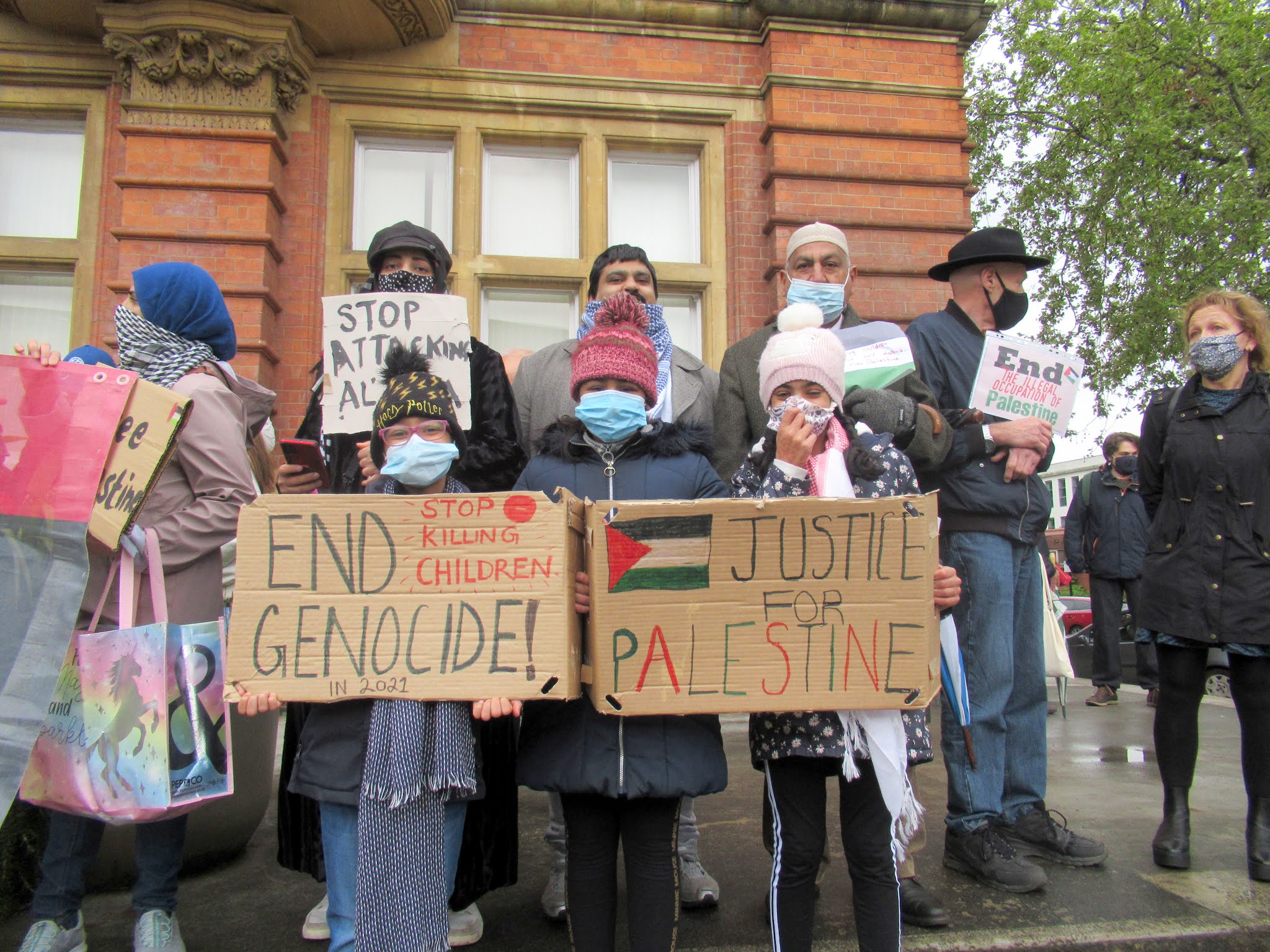
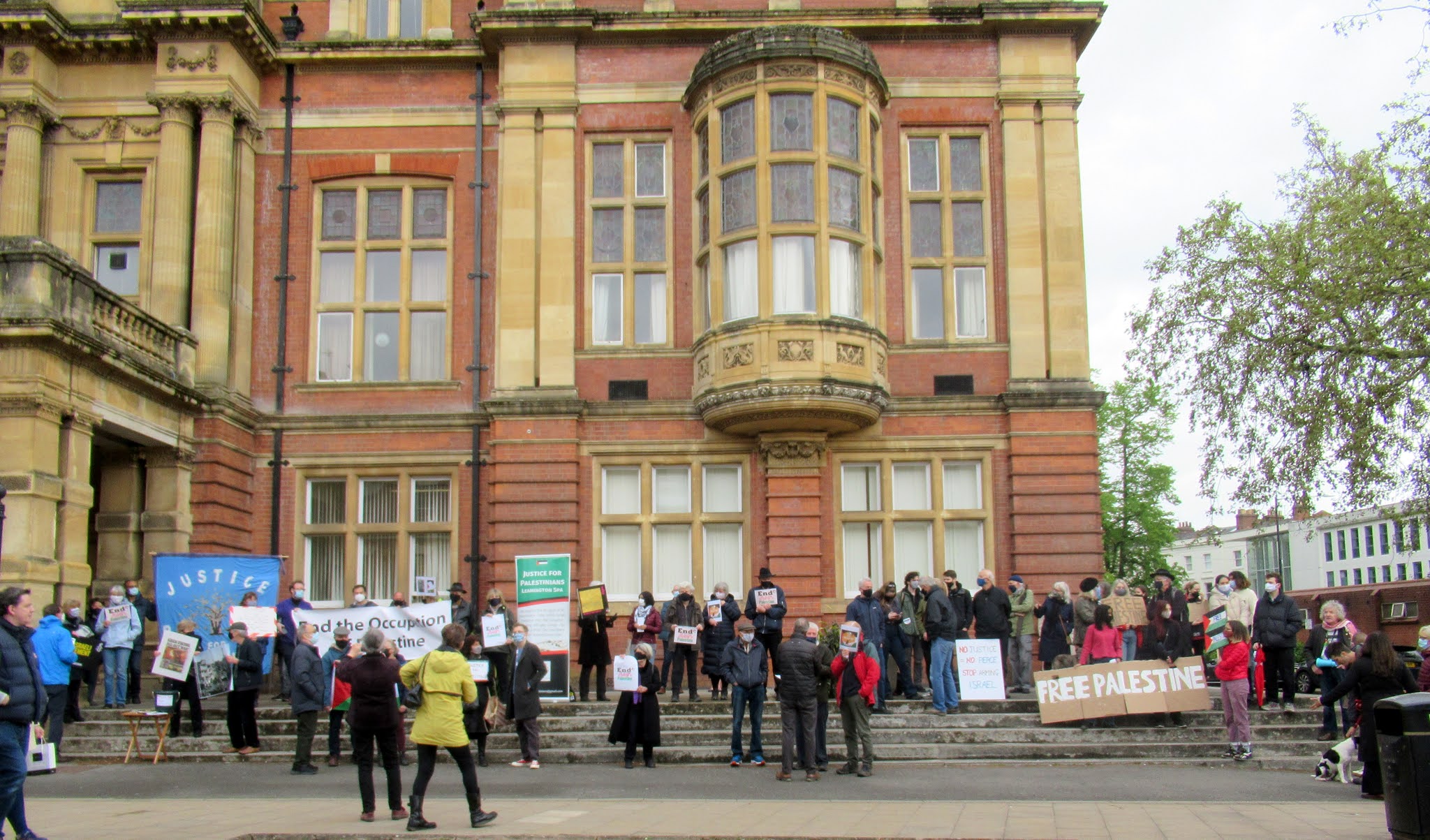
250,00 marched in London yesterday as part of 77 protests taking place across the UK - these were the biggest Palestinian protests since 2014. In our small town we held a rally in front of the town hall.


Israel has now agreed to a ceasefire in Gaza, but only after killing over 230 Palestinians, almost a third of them children, and only after bombing homes, medical facilities including the only Covid testing centre), schools and key infrastructure. 


The ceasefire is very welcome. It will wind down the barbarity we have witnessed in the last 11 days. But, as the BBC's Paul Adams admitted: 'these episodes follow a familiar pattern: Israel presses home its undoubted military advantage until the international outcry over civilian casualties, and a deteriorating humanitarian situation in Gaza, demand that the operations end'.  Israel has routinised the mass killing of Palestinians in high intensity episodes, and then retreating a return to the status quo of its continued occupation as peace - and doing it with complete impunity. 


But, the occupation isn't over. There can be no justice for the Palestinians while the siege of Gaza continues, while the occupation contnues, while apartheid continues.


In practice the siege of Gaza means: 95% of water is undrinkable; there are 4 hours of electricity per day;  45% unemployment; 46% of children suffer acute anaemia; 50% of children express no will to live; 2 million are denied freedom of movement.


There were speeches, and the names of those who have been killed in the last 11 days were read out.


Friday, 21 May 2021

The park revisited


The bluebells are out in Jephson Gardens, and it's such a pleasure!


This tree intrigued us as most of the blossom is pink, but,  on one branch it is white.


An orange tulip display by the Wills Road entrance to Jephson Gardens


View from the bridge


Reflection


Wonderful colour


The bridge that connects Jephson Gardens and the Mill Gardens


Major building work here aiming to build a wall at the end of this garden, to protect against flooding


The elephant seating which used to be in the Royal Priors before it was relocated here


It's always a pleasure looking at the fountain


The floral display in the middle of Jephson is always spectacular


Nature forever renewing itself.


Monday, 17 May 2021

End the Illegal Occupation of Palestine

Thousands marched last Saturday on Nakba Day which commemorates the forced exclusion of hundreds of thousands of Palestinians from their country. The protests took place all over world, and the largest demonstration in the UK was in London where 100,00 joined the march. In our small town we stood by the Town Hall as part of our once-a-month vigil for the Palestinians. 


The events that have unfolded in Palestine in the last week have made the protests even more potent. Israeli forces have attacked crowds of peaceful worshippers at the al-Aqsa mosque; Palestinian families in the Jerusalem neighbourhood of Sheikh Jarrah face being forced out of their homes, amid increased aggression from the Israeli far-right; over 180 people have been killed in air strikes on Gaza during the festival of Eid.


Fighter jets, rockets, cops and lynch mobs have swallowed the skies and streets these past few days.  Across Israel, throngs of armed groups, many of them Jewish thugs accompanied by police, are roaming towns and neighrourhoods, invading homes and shops, and seeking bloodshed in what many are rightly describing as pogroms. The fact that Palestinians have taken to the streets in such union is a defiant reminder that, despite the immesurable toll on its victims, Israel's colonial policy has not succeeded.


Indeed, along with the seismic wars of 1948 and 1967, Zionism's success as a settler-colonial project derives in great part from its creeping approach to dispossession. It steals territory piece by piece, evicts families home by home, and silences opposition from person to person. 'Quiet' is key to undermining collective resistance, while giving critics the illusion they have time to turn the tide.


Israel could halt the bloodshed now, by stopping the evictions, ending the siege of Gaza and ending the occupation of Palestine. 


We were very pleased that our MP joined our protest.


As events in Jerusaem showed this month, the more brazenly Israel pursues its policies, the more intensely resistance will rise. The people of Palestine need our support more than ever.


Saturday, 15 May 2021

The Gallery at The Guild


The Gallery at The Guild, in Chipping Campden.


Chipping Campden became known as the centre for the Cotswold Arts and Crafts Movement, following the move of Charles Robert Ashbee and the members of his Guild and School of Handicraft from the East End of London in 1902. According to the local historical society, the movement 'focused on handmade objects, reacting against the rapidly growing dominance of machinery which resulted in the loss of craft skills'. The Guild of Handicraft specialised in metalworking, producing jewellery and enamels, as well as hand-wrought copper and wrought irnwork, and furniture making. The Guild of Handicraft in Chipping Campden,  founded by Asbee in 1888, became one of the foremost Arts and Crafts workshops of its period and formed the focus of the communal life which, as a pioneering social experiment, formed the most bold and important expression of Arts and Crafts principles. 


A number of artists and writters settled in the area, including F. L. Griggs, the etcher, who built Dover's Court, one of the last significant Arts and Crafts houses. He set up the Campden Trust in 1929 with Norman Jewson and others, initially to protect Dover's Hill from development. According to a 2018 report, Griggs 'systematically restored houses on the High Street, battled against a tide of ugliness that engulfed other town and villages and used money he could ill afford to safeguard its surroundings'. Many of Grigg's etchings are preserved at the Ashmolean Museum in Oxford.


The Guild ceased operation in 1907. In 2005, a group of traditional craftspeople moved into the Old Silk Mill and turned it into an art gallery


Caroline Barnett, Pausing for Reflection, (smoke fired)


Robin Wade, Large Heathland Vase (porcelain)


Hilary LaForce, Bowl, (porcelain, crystalline glaze, volcanic glaze)


looking in


Hilary LaForce, Bowl, (porcelain, crystalline glaze, volcanic glaze)


Hilary LaForce, Tea Bowl, (porcelain, crystalline glaze, volcanic glaze)


Hilary LaForce, 2 Tea Bowls, (porcelain, crystalline glaze, volcanic glaze)


Hilary La Force, Shell Form I, (porcelain, crystalline glaze, volcanic glaze)


Don Mason, Newgale, Pembrokeshire, (acrylic)


Tuesday, 11 May 2021

A day out in Chipping Campden


The easing of lockdown has meant that we can travel outside our area, and during these last few weeks we have been having days out in the Cotswolds. Last week it was the turn of Chipping Campden.


Most Cotswold villages have a street named Sheep Street. And how about that window?


Out first stop was the Robert Welsh shop as we needed a large serving spoon and some sharp knives. 


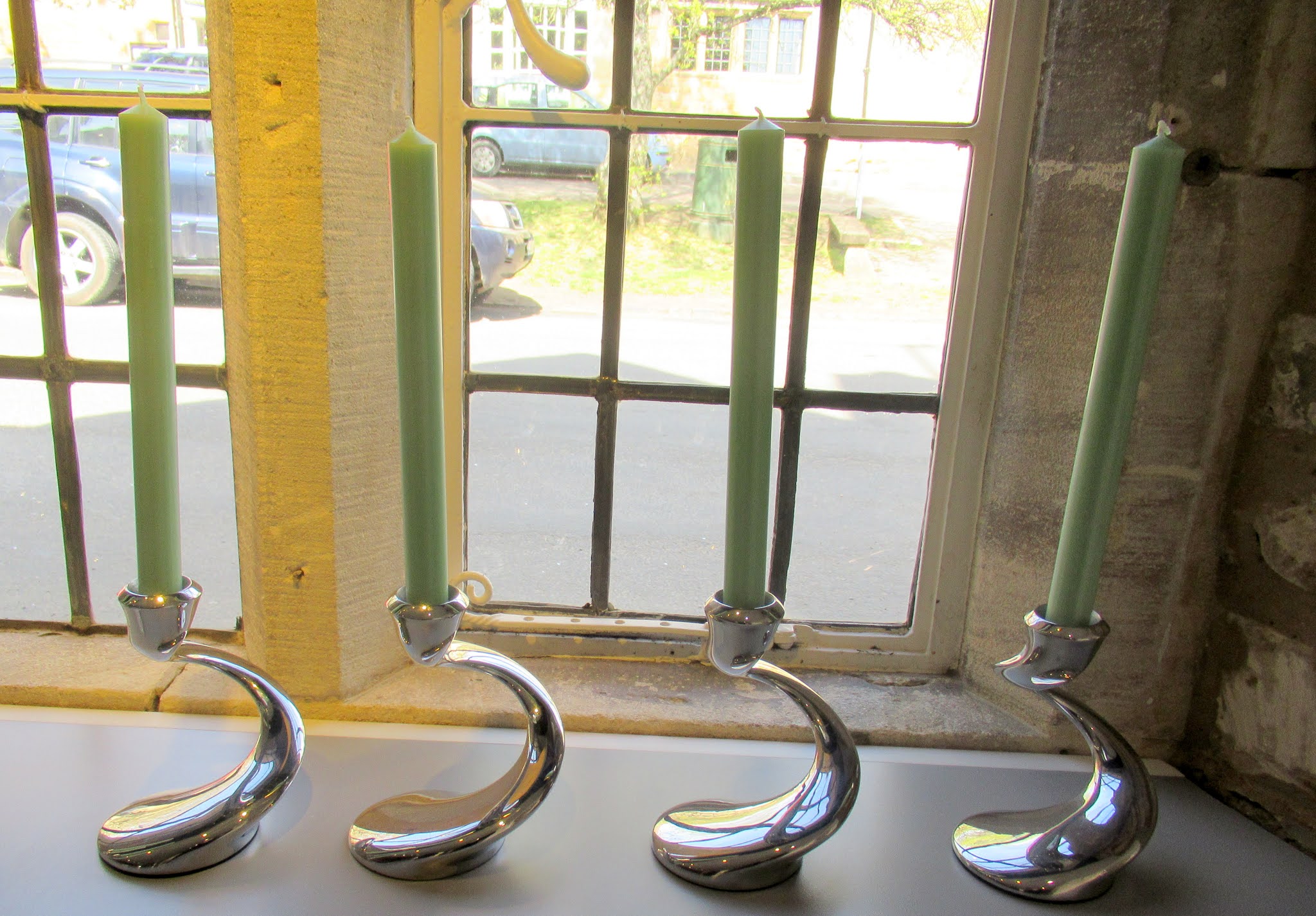
Candle holders


jug and two coffee pots


a bowl


a tea pot


We took our purchases to the car and then started exploring.


Chiipping Campden is a small market town, notable for its elegant terraced High Street, dating back from the 14th to the 17th century. A rich wool trading centre in the Middle Ages, the town enjoyed the patronage of rich wool merchants.


Narrow alleyways provide access to the back


It's a beautiful town, with lots of things to do and see, and yet, very few visitors - we visited on a Saturday on a gorgeous, sunny day, and yet, as always, hardly anyone about. Suits us, but I don't understand it.


Another alleyway,


All the houses are beautifully maintained


The High Street is lined with honey-coloured limestone buildings, built from the mellow locally quarried limestone known as Cotswold stone.


A few of the buildings are timber-framed


a narrow street, parallel to the High Street


We were hoping to have lunch at the Bistro on the Square


which is part of Cotswold House, hotel and spa


The grounds, accessed on the side of the building, are beautiful


beautifully maintained,


with outbuildings which I presume are the treatment rooms


alas, it was closed. This is where they serve drinks and meals, but no sign of tables or chairs


We wandered around the gardens


an unusual bench


tulips in the flower beds


the garden goes on and on


back on the High Street and a small green area by the War Memorial


a few tables on the green, and people having lunch


The Market Hall, right in the centre of town, a Grade I listed building. Built in 1627 by Baprist Hicks, it has splendid arches, and is still in use.  There was a plan to sell the hall in the 1940s, but locals raised funds to purchase the property and donated it to the National Trust.


The building was intended as a shelter for merchants and farmers selling their wares with the side walls open to allow light, and customers, to enter.


We continued on our way


The High Street in its full glory


a deli


The sign outside the shop made us smile


another alleyway


We left the High Street and reached the Almshouses on Church Street. They were built in 1612, provided by Baptist Hicks as homes for 12 pensioners and still remain in use for that purpose.  Today they are Grade I listed.


Such narrow doors. How does it work inside? Are there two entrance halls inside these doors?


Across the road, the Court Barn, now a museum celebrating the rich Arts and Crafts tradition of the area


Next to the barn, the entrance gates to Camden House, owned by Hicks, on land purchased some time after 1608, where he added the manor. The manor was destroyed by Royalists in 1645 during the English Civil War, possibly to present it falling into the hands of the Parliamentarians. There is little evidence as to the appearance of the manor and gardens. Any drawings of the house were made long after it had been destroyed. All that now remains of the once imposing estate are the gatehouse and two Jacobean banqueting houses, the latter now owned by the Landmark Trust. 


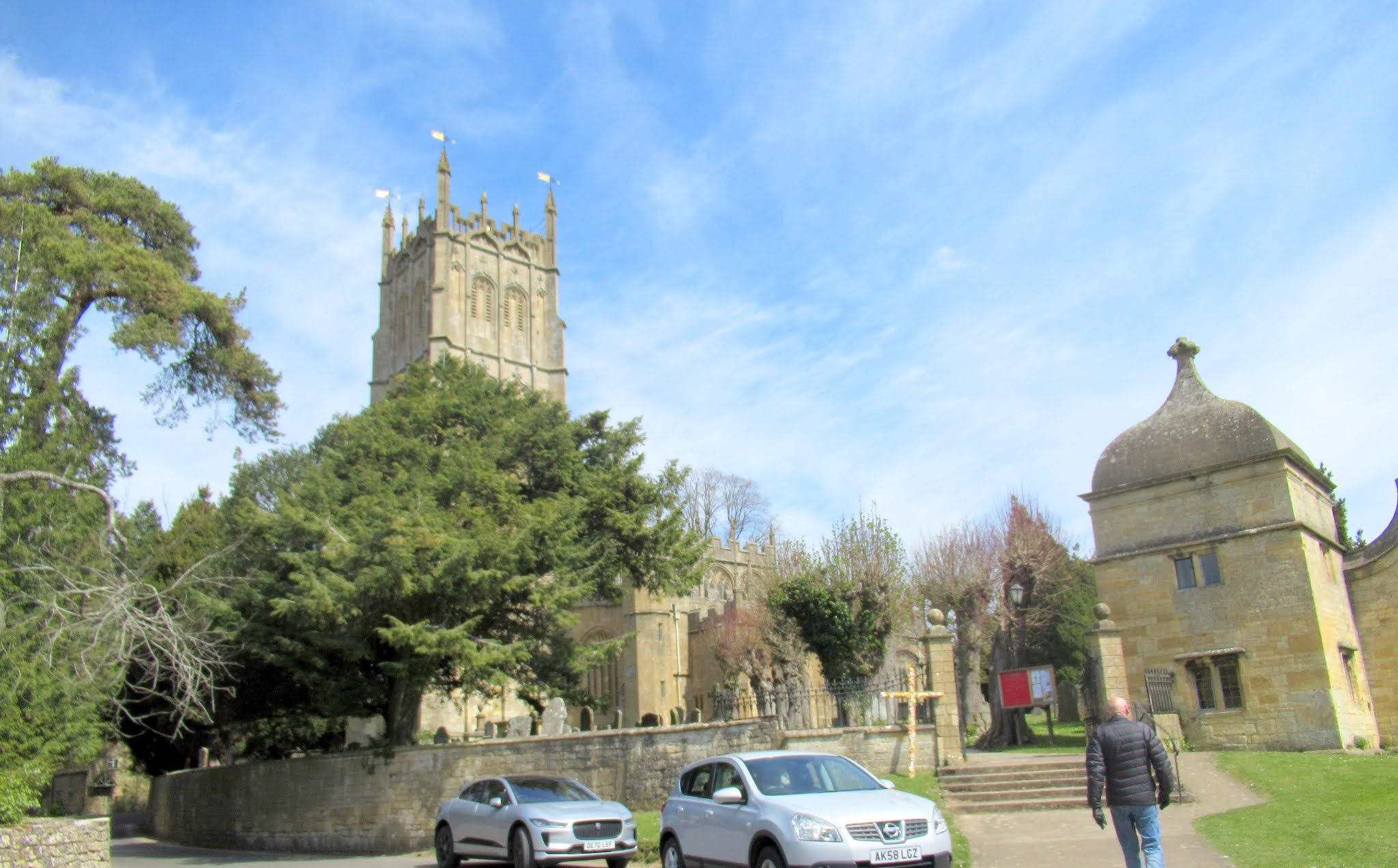
Situated next to the gates to the manor house, is the early perpendicular Cotswold wool Church of St James.


the path leading to


the church


through the narrow yew tree path


leading to the rest of the graves with extensive views of the Cotswold countryside plus a view of one of the remaining banqueting halls


we stayed here one night with friends courtesy of the Landmark Trust


back through the avenue of yews


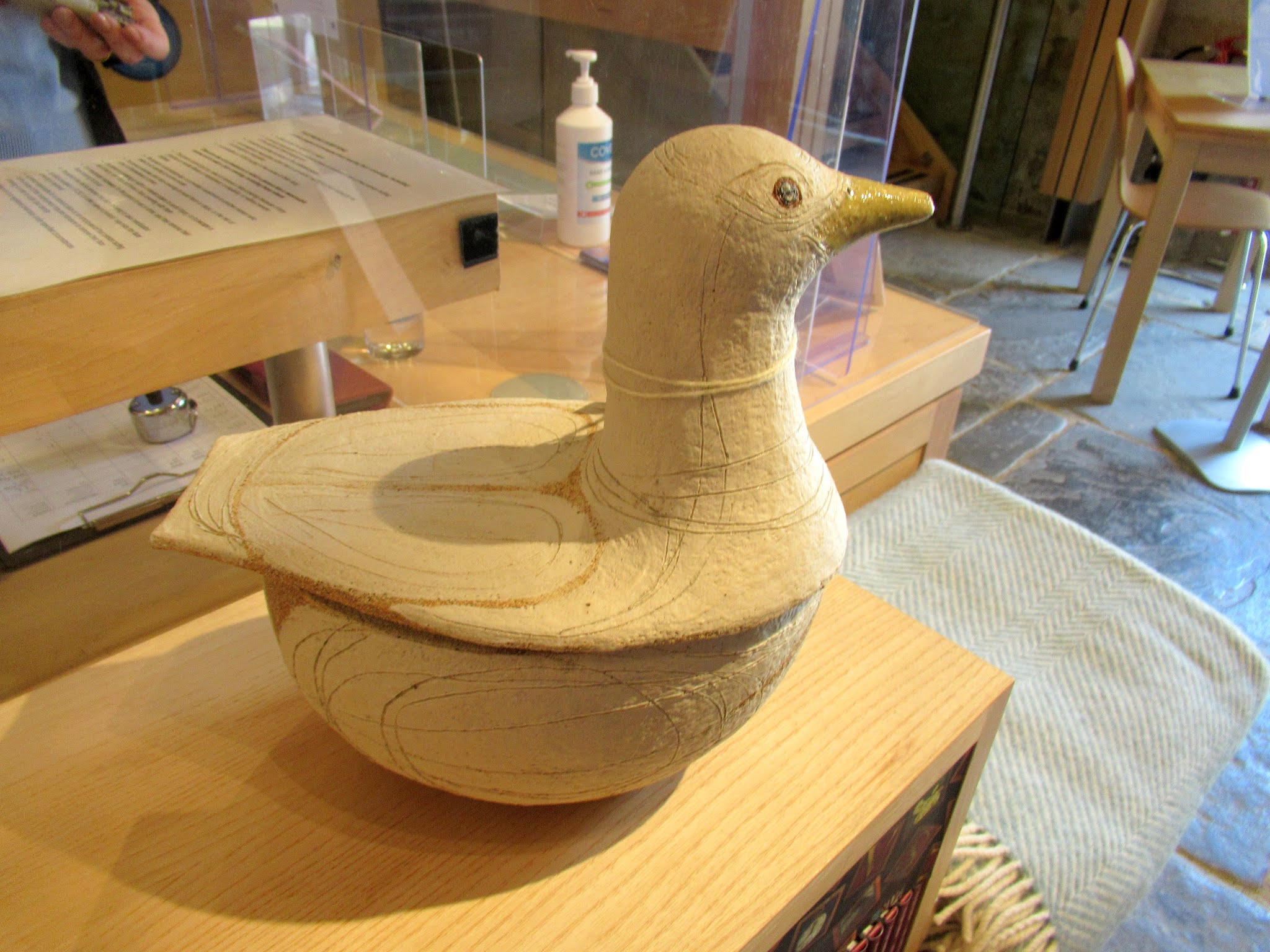
Next, we decided to have a look in the shop of the Barn where we saw examples of Steventon Green pottery


ceramics by Carey Moon


and by Vineyard Pottery.


As we left the Barn, we got a much better view of the Almshouses from across the road


and then we noticed this ditch


this plaque told us that it used to be a cart wash


back on the High Street


where, on this side of the road, the pavement is sunk, lower than the road


 and eventually we ended up where we had begun, and back to the car.