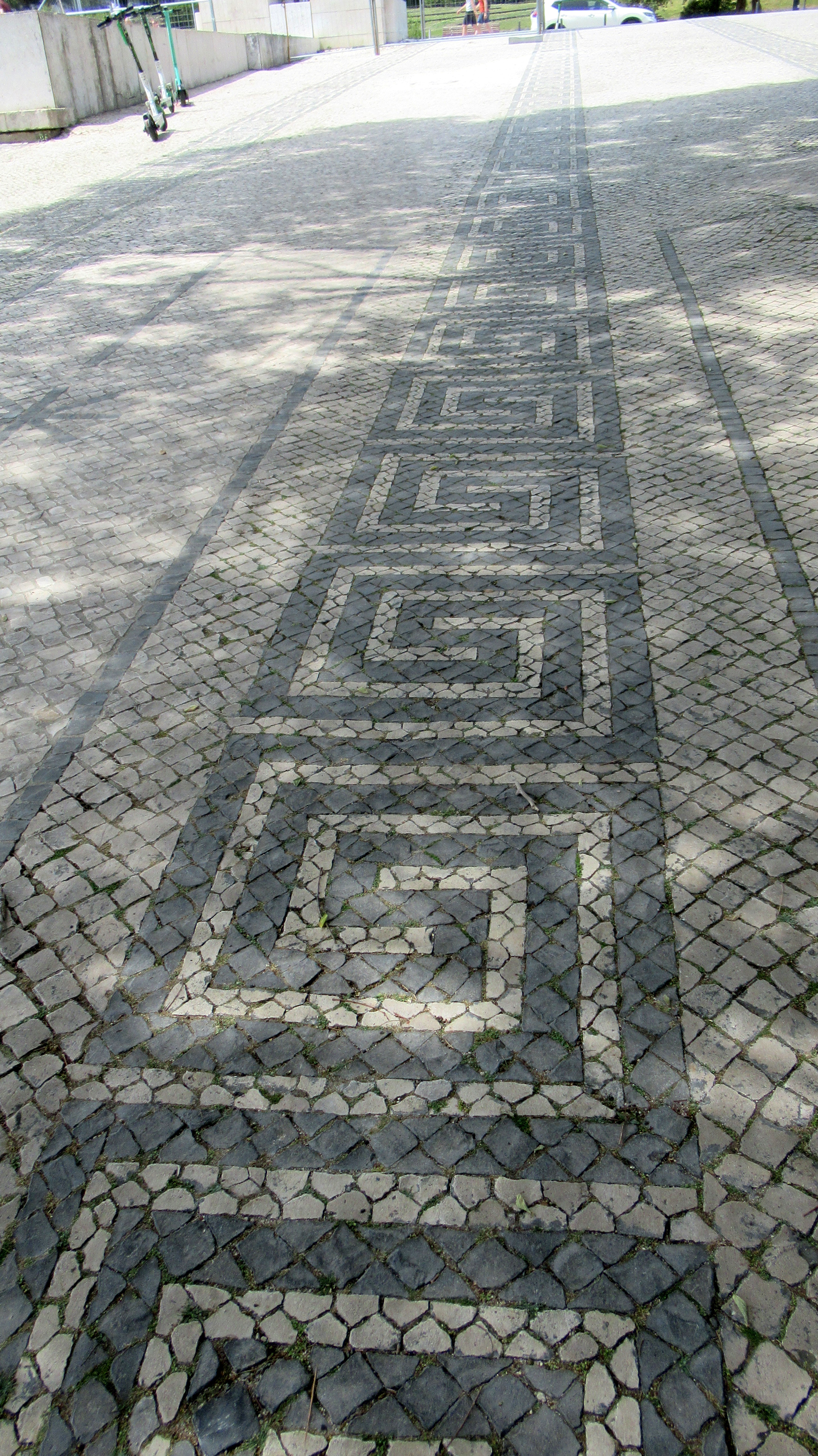
The Bairro Alto, the Upper Town, sits on a hill west of the Baixa. After the 1755 earthquake, the relatively unscathed district became the favoured haunt of Lisbon's young bohemians. Home to the Institute of Art and Design and various designer boutiques, it is still the city's most fashionable district. By day, the central grid of narrow, cobbled streets feels residential. After dark, however, the area throngs with people visiting its famed fado houses, bars and restaurants, while the city's LBGTQ community coalesces around the clubs of neighbouring Principe Real. This area houses good ethnic restaurants, a legacy of the city's first black community established by the descenants of African slaves.
We walked up Rua da Misericordia
some beautiful buildings here,
and arrived at Largo Trindade Coelho
which is dominated by the Igreja de Sao Roque. From the outside, the 16th century church looks like the plainest church in the city, with its bleak Renaissance facade
We decided to to inside.
Inside lies an astonishing succession of lavishly decorated side chapels. The highlight is the Capela de Sao Joao Baptista, for its size the most expensive chapel ever constructed. It was ordered from Rome in 1742 by Dom Joao V to honour his patron saint and, more dubiously, to gratify Pope Benedict XIV whom he had persuaded to confer a patriarchte on Lisbon. It was erected at the Vatican for the Pope to celebrate Mass in, before being dismantled and shipped to Lisbon at the then vast cost of £25,0000. The more valuable parts of the altar front are kept in the adjacent museum.
The statue of Padre Antonio Vieira sits outside the church.
We continued on our way, on the steep rise of Rua de Sano Pedro de Alcantara
Next to Miradouro de Sao Pedro de Alcantara, Elevador do Gloria, an old tram, was coming to its final journey after taking people up one of the steepest hills in Lisbon
The Miradouro de Sao Pedro de Alcantara was packed with people enjoying the sunshine
and having food and drinks from the kiosks that are to be found here
The views from here are breathtaking
zooming in on the castle

the river in the distance
and if you lean over the railing, you can see another terrace below where people can wander or sit.
We stayed here for about an hour, looking at the view and having a rest
then continued walking on Rua D. Pedro V
admiring the grand buildings all the while
some tiled
Praca do Principe Real was on our way so we stopped to have a look.
it's a small park but very pleasant
Tribute to the Victims of Homophobic Intolerance
and further along, the rainbow colours
and a stall with LGTQ information
Another tree with an amazing trunk
and another.
We left the little park and continued on Rua da Escola Politecnica until we finally reached our destination, Jardim Botanico,
and were greeted by this, at the entrance. Isn't that amazing? It's a
Dracaena Draco
And look at that trunk or is it branches?
We paid the entrance fee and then started walking around the Botanial Garden.
Lush and green with huge palm trees
a small pond
wide avenues
or paths
another pond with a bridge
Phytolacca Dioica and its wonderful trunk
and lots of bamboo.
We wandered around the garden for quite a while, and then we left.
and later, street artists at work.
The tram of Elevador do Gloria at Miradouro de Sao Pedro de Alcantara, was due in 15 minutes we were told. We really wanted to ride on it, but decided that walking would be quicker
so decided to walk down the steep hill, and sure enough, there was the tram as we reached the bottom.
We reached Praca do Restauradores and then it was a 5 minute walk to our hotel.