Sunday, 15 January 2023

Brain Forest Quipu


Brain Forest Quipu by Cecilia Vicuna, at Tate Modern.


Twenty seven metres of pale, ghostly, quipu sculptures hang from the ceiling at opposite ends of the Turbine Hall, creating an alternative architecture binding the two ends of the space.  Cecilia Vicuna's Brain Forest Quipu continues her long-standing work with the ancient Andean tradition of the quipu. Woven together from different materials collected from the banks of the river Thames by women from local Latin American communities, including found objects, unspun wool, plant fibres, rope and cardboard, the sculptures are combined with music and voice that emerge at moments as you move through the space. The work extends Vicuna's practice of assembling found, imperfect and modest materials that she calls precarios (precarious).

This multi-media installation is an act of mourning for the destruction of the forests, the subject impact of climate change, and the violence against Indigenous peoples. It is also an opportunity to create a space for new voices and forms of knowledge to be heard and understood, as we take responsibility for our part in the destruction.


Vicuna writes 'the Earth is a brain forest, and the quipu embraces all of its interconnections'. Brought together, the elements of Brain Forest Quipu emphasise the contradiction and complexity of our time. This entanglement of our bodies - with both the material world of nature and the places that we live - is enmeshed in the hive-mind of technology  that connects us with each other, while isolating us in new and often uncertain ways. Vicuna suggests that we are at the beginning of a new time, one where we must first become aware of our collective responsibility in order to change the destructiveness, injustices and harm.


The quipu is an ancient recording and communication system. It was used by the Quechua people of the Andes from 2500 BC through to the 16th century at the time of the Spanish conquest. Quipu means 'knot' in the Quecha language and consisted of a long textile cord from which hung multiple strands knotted into different formation and in different colours that were able to encode as much complex information as the alphabet.

Although the exact meaning of the knot formations are not now known, it is thought that they were used to record statistics, poems and stories, thereby creating a tactile relationship to memory and the imaginary. Vicuna has been exploring and transforming the quipu in her work for over five decades. The nots and materials are unlike the traditional form but inspired by it.


Looking down from the 4th floor.

Wednesday, 11 January 2023

Back in Greece


We arrived in Greece a week ago. Unfortunately on our first full day I broke one of the fingers in my right hand, so have a plaster cast up to my elbow. Can't do much and writing anything takes ages. So, with the exception of posts I completed before the break, my posts will be short.


Walking is on though, and we have been doing a lot of that, particularly since the weather has been wonderful: 18oC an sunny.


It's great walking by the sea again.


Even though they are threatening to gentrify our local marina, nothing has changed so far, except that Skippers, our favourite bar has closed down.


After a fairly long walk we ended up at Edem


for a drink


 and enjoyed the view.


Saturday, 7 January 2023

Ceramics at the Stratford Gallery


Ceramics at the Stratford Gallery, Broadway.

I had not visited the gallery for a while, so most of what was on show was new to me.


Shinji Suzuki, Aka (red) Shino Chawan with Feldspar spots (stoneware)


I think this pot looks absolutely gross and I cannot find anything about it that I like. At over £4,500 the mind boggles. It's based on the whole concept behind Akiko Hirai's ceramics, which I love, but in this case it just does not work.


Aaron Scythe, Katakuchi


Aaron Scythe


Aaron Scythe, Katakuchi


Aaron Scythe, Oribe Yobitsugi style large vase (stoneware and porcelain)


Hiroshi Yamada, Echizen Kaiuy Chawan (Echizen ash glaze)


Kyra Cane, medium bowl, (Limoges porcelain)


Kyra Cane, medium oval vase, (Limoges porcelain)


Kyra Cane, Tall Vessel, (Limoges porcelain)


Ahikiro Nikaido, Vase, (Izu earthenware)


Raewyn Harrison, Porcelain with impressions of Thames foreshore finds and multiple glazes. Ceramic transfers of Agas' map 1565


Raewyn Harrison, Porcelain with impressions of Thames foreshore finds and multiple glazes. Ceramic transfers of Morgan's map 1682


Keita Yamato, Blue Hari ash covered Kurinuku vase, (Hagi clay body, straw glaze)


Mitch Pilkington, Single Pointe Sculpture (stoneware)


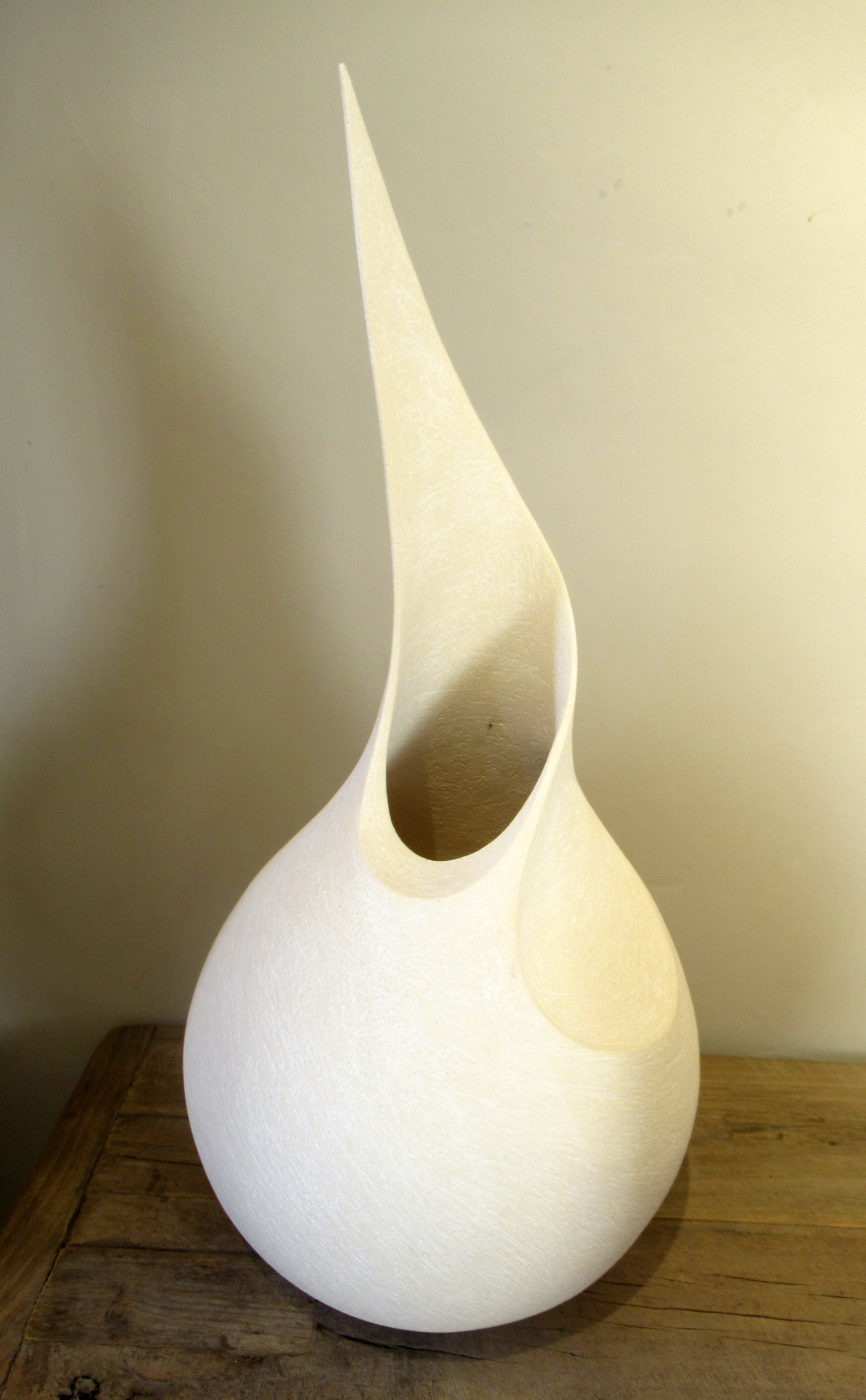
Mitch Pilkington, VOrtex, (white sculpture, hand worked stoneware)


Margaret Curtis, Celadon Flat Vase


Margaret Curtis, Small Celadon Plate


Margaret Curtis, Celadon Sake Cup


Margaret Curtis, Copper Red Sake Bottle, (stoneware)


Inhwa Lee, Material Moments 16 (porcelain)


Inhwa Lee, Material Moments 3, (porcelain)


Sayaka Shingu, Bowl Form, (mixed clay bodies, pigment)


Sayaka Shingu, Jug Form, (mixed clay bodies, pigment, midoriiro glaze, slip, platinum lustre)


Margaret Curtis, Oblong Celadon Plate


Eddie Curtis, Copper Red Container, (stoneware)


Hiroshi Yamada, Shizenkaiyu (natural ash glaze)


Kazu Yamada


Kazu Yamada, Kakuyu Oribe Saketugi (sake bottle), (stoneware)


Peter Hayes, Gemini, (bronze)


Peter Hayes, Couple, (bronze)


Chikako Inaba, Yohki Vessel V, (white glazed stoneware)


Chikako Inaba, Yohki Vessel IV, (white glazed stoneware)


Tuesday, 3 January 2023

Ceramics at Gatesbys


Ceramics at Gatesbys, Broadway.

This is not a ceramics shop, but they have a few nice pieces of hand built ceramics.


Paul Philip, Two-tone Vessel, (hand-built stoneware)


Les Guimards Ceramics (Natalie and Christophe Hurtault), shallow bowl


Les Guimards Ceramics (Natalie and Christophe Hurtault), footed bowl


1882 Ceramics


1882 Ceramics


1882 Ceramics


Joe Morris, Thirteen Lines II, (carved plaster on board)


Joe Morris, The Gathering II


Sotis Philippides, Rocking Bowls, (gold and platinum glazed stoneware)


Sotis Philippides, Bowl, (gold and platinum glazed stoneware)


Paul Philip


Paul Philip


Sotis Philippides, Greek Forms


Sotis Philippides, White Sgraffito Bowl


Ottolenghi Ceramics, (created by Ottolenghi with Italian artist Ivo Bisignano).