Monday, 17 July 2023

Swimming again!


Walking past the oleanders and palm trees


past these blue flowers that grow low on the ground


we arrive at our beach


the Beach of the Sun.We've been in Greece for almost two weeks now, and it's been wonderful, despite the effects of the climate catastrophe which we feel daily. The temperatures hovered around 35oC when we first arrived, temperatures which are considered too hot and constitute a heatwave. In the last week however, it's been 40oC to 43oC every day, and it's quite unpleasant: it's not possible or advisable to do much, except go to the beach, stay indoors with the air-conditioning on, or sit on the terrace with the fan on. They say there's another heatwave on the way, and what I ask myself is: what do they mean another, this one's still on.


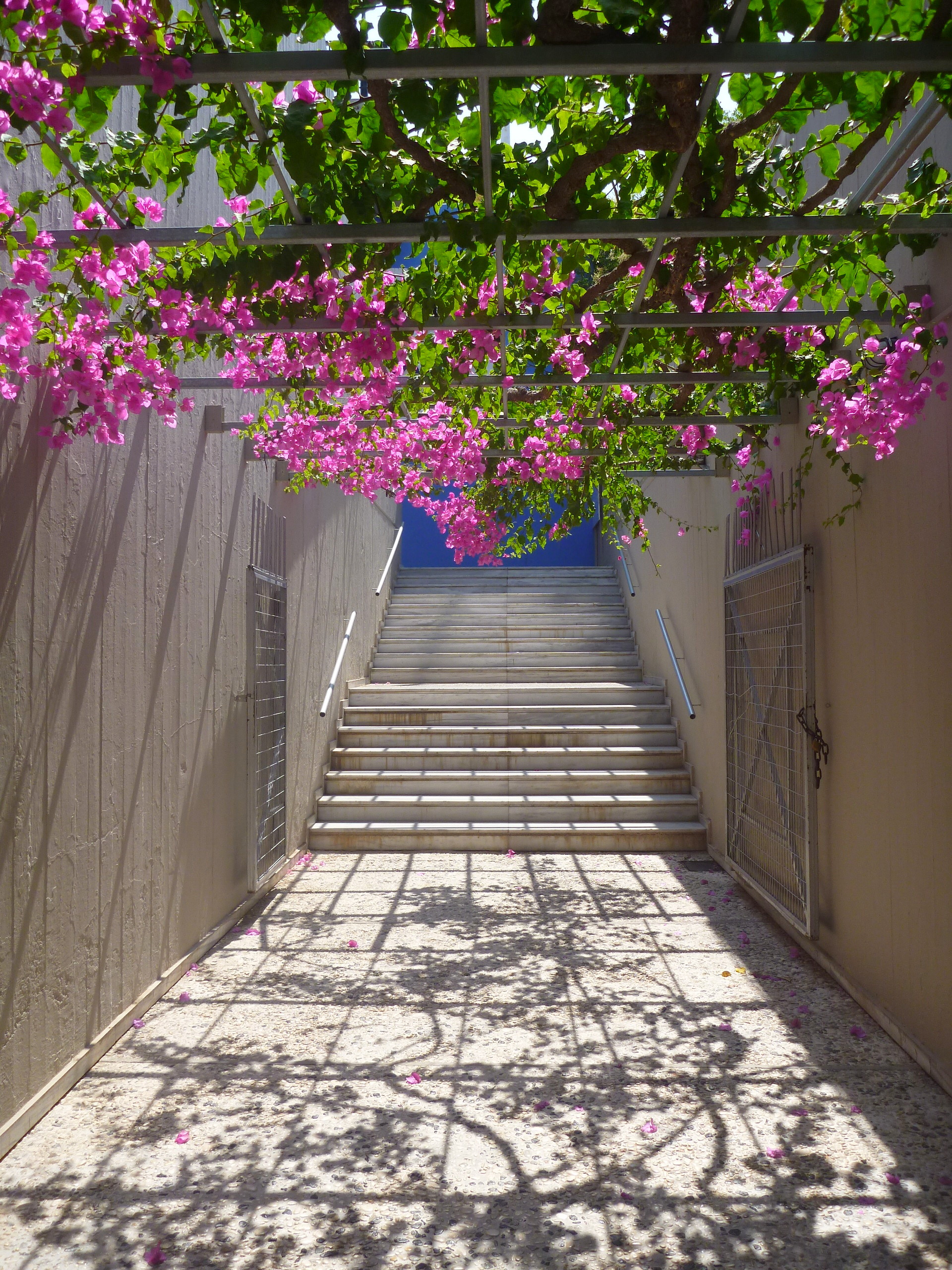
Down the steps we go - it's 65, I counted a while ago - down a long corridor with the bougainvillea above


and we arrive at the entrance. Every year there is something new that's been added to the beach - this year it's these Gaudiesque mosaiques


Having shown our resident's card which allows us free entry we are in. It's green and lush here


And we're here! It's 8:30 in the morning, and the beach is relatively quiet. It's far too early to be coming swimming and I hate it this early, but there is no choice if we want a front row seating: the beach gets very busy and much more so this year, I don't know why - we used to come at around 9:00 but now it has to be a brutal 8:30.


This is the quietest it will be all day, so it's to be savoured


most umbrealls and beds are empty


I place my lounger here, by the water, because in the early morning this is where the shade of my umbrella is and I have to say, it's welcome, as it's so nice lying so near the water


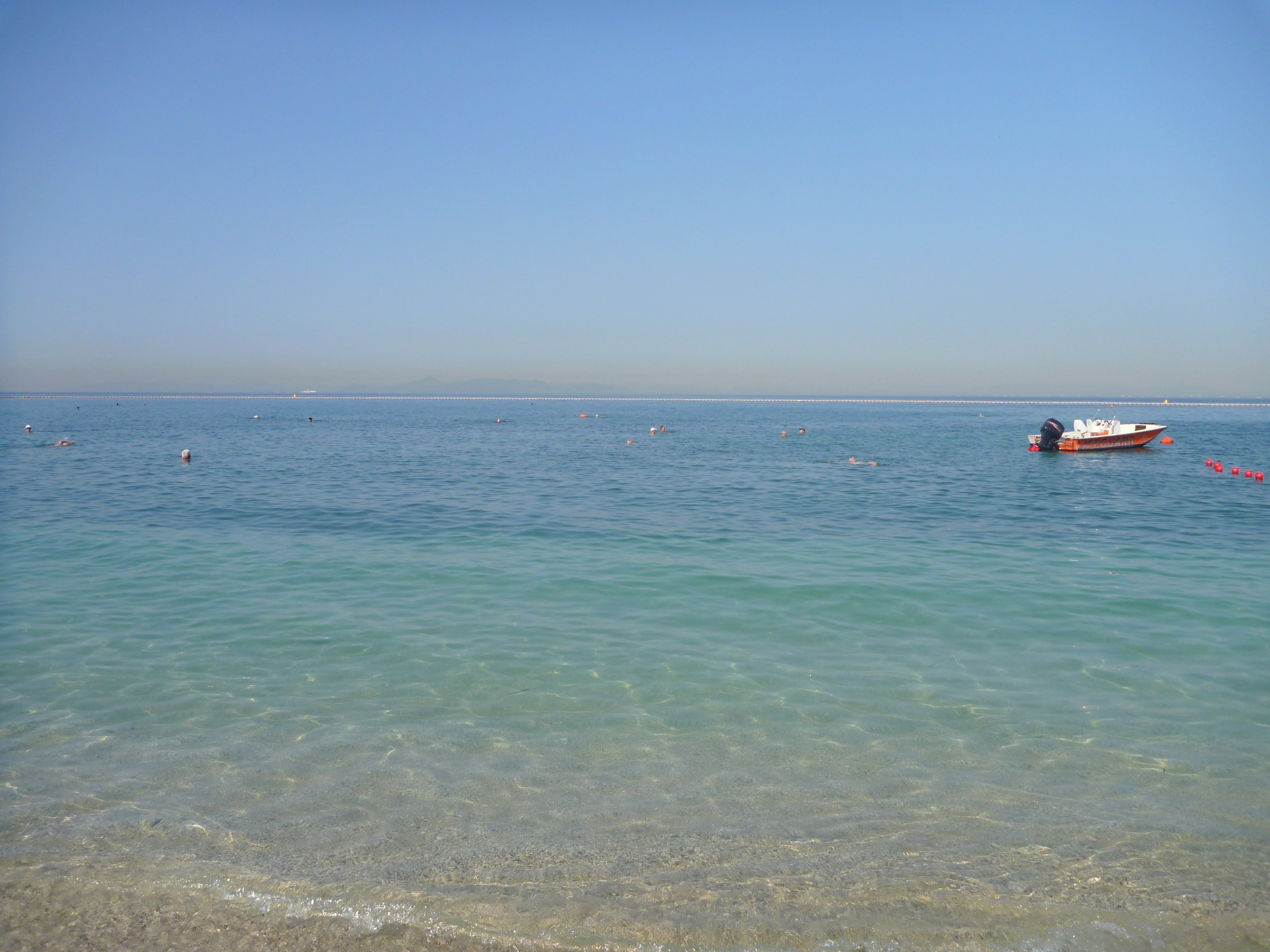
and this is my view: a view I have enjoyed for years, and which, this year is marred by this low mustard-coloured cloud on the horizon - pollution which spreads from Athens, concealing the islands of Aigina and Salamina which are normally the landmarks on the horizon. 


The pollution is thicker on our right as this is where Athens is. Jonathan Freedland in his article on the climate catastrophe in the Guardian explains how David Fenton, when talking about global warming, 'urges the climate community to speak of pollution and to settle on the image of a 'blanket of pollution trapping heat on Earth' and this is exactly what we see here.


But, most of the time we swim. The water is clear, clean (the sea urchins seen at the bottom are a testament to that) and most of the times, calm. It's wonderful. We normally swim to the net that surrounds the beach and back - the net is the white line in the photograph just before the horizon - but we haven't built up to that yet.


By around 11:30 when we are ready to leave, there are lots more people in the sea


and all the loungers and umbrellas are taken


So we make our way to the grassed up area


which is also filling up with people in search of shade


one last look at the beach


We don't have a shower as we're going straight home for one, but we do try to get all the sand off our feet at the taps that are provided for this purpose


fantastic tree trunk


We start the ascent under the bougainvillea


Say hello to the two resident cats


A view from the top of the steps


and another one


then past the oleanders and home.


Thursday, 13 July 2023

Women Artists and Global Abstraction, 1940-1970 - Section 5


Action, Gesture and Paint: Women Artists and Global Abstraction, 1940-70 at the Whitechapel Gallery.

An exhibition celebrating the women artists of mid-20th century gestural abstraction, showing how they shaped modern painting. The story of abstract art took a radical turn in the 1940s. Fusing bodily, gestural and emotive expression with colour, mark-making and the materiality of paint, this new movement was termed (in the USA) as Abstract Expressionism. It is often thought to have been centred in New York, where it was defined mainly by the work of white male artists. However, this new style of painting was a global phenomenon, shaped as much by local cultural and political context as by inernational exchange and dialogue.

The contributions of women have long been marginalised in modern art. The paintings presented here demonstrate how women across the world were fundamental in evolving the story of abstraction, incorporating experiences of turbulent social change into their work and promoting freedom of expression. Their art was made in a period of great historical shifts: the aftermath of WWII, global industrialisation, the rise of civil rights and post-colonial movements and a 'cold war' - marked by the threat of nuclear extinction - between capitalist democracies and communist states. Against this backdrop, the USA promoted abstract art as a form of western propaganda, to counter the influence of communism.

The exhibiton explores how artists made the canvas an arena for experimentation and personal expression through form and colour. It focuses on five themes: paint as material and process; symbolic languages drawn from myth and ritual; abstraction as an expression of the self; painting as movement and dance; and the canvas as environment.

This is the last section of the exhibition.


Section 5: Environment, Nature, Perception.

Lived experiences of the environment are expressed here through canvases that emphasise space, texture, light and atmosphere. These artists distill a momentary impression, observed or remembered, using a palette drawn from their surroundings - rural and urban. Like poets wirting at this time, they developed an aesthetic language that communicates the instantaneous experience of a time and a place, immersing us in the sensations of a landscape or interior. The epic scale of some of these canvases also presents the painting itself as an environment.


Janice Biala, Poland/France, Yellow Still Life, 1955, (oil on canvas)

Biala was one of the few women associated with the New York School of Abstract Expressionism and her work fused gestural lyricism with the aesthetics of the School of Paris.


Maria Helena Vieira da Silva, Untitled, 1955, (oil on canvas)


Maria Raymond, France, Montagne, 1961, (oil on canvas)


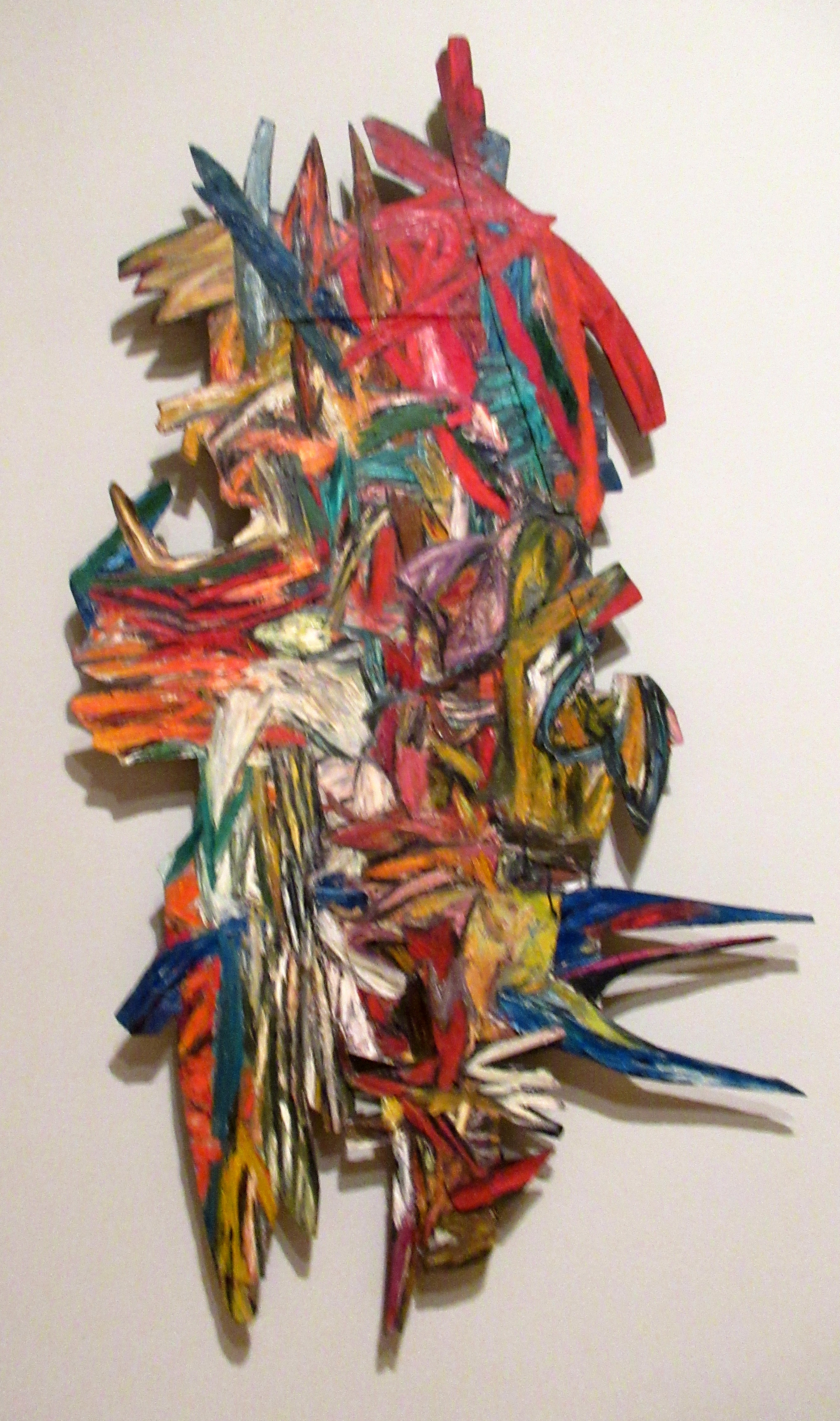
Anna-Eva Bergman, Sweden/France, Finnmark, 1966, (oil and silver on particle board)

A Norwegian artist who became one of the most famous post-war Scandinavian painters. Her early works were expressive depictions of landscapes, before she turned to Abstract Expressionism.


Joan Mirchell, USA, Painting, 1958, (oil on canvas)

One of the leading American abastract painters, Mitchell arrived in New York in 1949 and joined what became known as the second generation of Abstract Expressionist artists, including Helen Frankenthaler and Grace Hartigan. She painted in a fluid Abstract Expressionist style throughout her long career, exploring 'remembered feelings of nature' and experimenting with printmaking and drawing.


Ida Barbarigo, Italy, Promenade, 1963, (oil on canvas)

Barbarigo abandoned landscapes and portraits after moving to Paris in 1952 and became associated with the abstract painting movement of the New School of Paris. Painting in ochre tones, rhythmical white brushstrokes, and using sinuous forms orchestrated against light, airy backgrounds, Barbarigo frequently incorporated personal references in her work, in an attempt to 'unlearn how to paint', as she described it, and be closer to her senses.


Joan Mitchell, Untitled, 1957, (oil on canvas)


Sunday, 9 July 2023

Women Artists and Global Abstraction, 1940-1970 - Section 4


Action, Gesture and Paint: Women Artists and Global Abstraction, 1940-70 at the Whitechapel Gallery.

An exhibition celebrating the women artists of mid-20th century gestural abstraction, showing how they shaped modern painting. The story of abstract art took a radical turn in the 1940s. Fusing bodily, gestural and emotive expression with colour, mark-making and the materiality of paint, this new movement was termed (in the USA) as Abstract Expressionism. It is often thought to have been centred in New York, where it was defined mainly by the work of white male artists. However, this new style of painting was a global phenomenon, shaped as much by local cultural and political context as by inernational exchange and dialogue.

The contributions of women have long been marginalised in modern art. The paintings presented here demonstrate how women across the world were fundamental in evolving the story of abstraction, incorporating experiences of turbulent social change into their work and promoting freedom of expression. Their art was made in a period of great historical shifts: the aftermath of WWII, global industrialisation, the rise of civil rights and post-colonial movements and a 'cold war' - marked by the threat of nuclear extinction - between capitalist democracies and communist states. Against this backdrop, the USA promoted abstract art as a form of western propaganda, to counter the influence of communism.

The exhibiton explores how artists made the canvas an arena for experimentation and personal expression through form and colour. It focuses on five themes: paint as material and process; symbolic languages drawn from myth and ritual; abstraction as an expression of the self; painting as movement and dance; and the canvas as environment.

The exhibition was divided into five sections and I have replicated this with my posts. There are five posts which mirror the secions of the exhibition, each with the same introduction.


Section 4: Performance, Gesture, Rhythm

Also described as 'Action Art', the paintings here are conceived as events. Often painted at the scale of the human body and made through physical movements such as throwing, jabbing, jumping and dancing, gestures that are mirrored with tonalities and shapes that balance, swoop or collide. Many of the artists here were influenced by modern dance and its rejection of traditional forms of ballet for the embrace of physical freedom - in particular for women. There is an exhilaration of pure abandonment as painting becomes performance, and the body and the canvas become one in a synthesis of physical and psychic energy.


Tomie Ohtake, Untitled, 1961, (oil on canvas)


Judith Godwin, USA, Black Pagoda, 1958-59, (oil on canvas)

Godwin was inspired by Hans Hofmann and modern choreographer Martha Graham. Through her studies with Hofmann, her long association with Graham, her expressive dance movements, her participation in the burgeoning of Abstract Expressionism and her love for Zen Buddhism, Godwin forged a unique artistic vocabulary of open, gestural strokes often featuring chevron, spirals and other forms that she dynamically interwove into complex relationships between figure and ground.


Miriam Schapiro, Canada/USA, Idyll II, 1956, (oil on canvas)

Schapiro was a painter, sculptor, printmaker and pioneer of feminist art. In the 1950s she created a substantial body of work in a gestural language that involved thinning her paint with turpentime before spreading it across the canvas in broad wipes. Although these works were abstract, Schapiro based them on works by old masters, specifically referencing male artists and recreating their works in her own style so as to position herself on an equal playing field as her forebears.


Elaine de Kooning, USA, The Bull, 1959 (acrylic and collage on Masonite)

A key figure in the New York School of the 1940s and 50s, de Kooning was aware of the sex inequality of her time, so chose to sign her artworks, EDK, to avoid her paintings 'being labelled as feminine in a traditionally masculine movement' as well as to distinguish her work from her husband, Willem de Kooning. Though mainly working in abstraction, she retained an interest in figuration, bringing the expressive gesture of Abstract Expressionism to bear on figurative subjects such as bullfights and portraits of friends and family.


Elaine de Kooning, , Untitled, 1950 (oil on paper on canvas)


Wednesday, 5 July 2023

Women Artists and Global Abstraction, 1940-1970 - Section 3


Action, Gesture and Paint: Women Artists and Global Abstraction, 1940-70 at the Whitechapel Gallery.

An exhibition celebrating the women artists of mid-20th century gestural abstraction, showing how they shaped modern painting. The story of abstract art took a radical turn in the 1940s. Fusing bodily, gestural and emotive expression with colour, mark-making and the materiality of paint, this new movement was termed (in the USA) as Abstract Expressionism. It is often thought to have been centred in New York, where it was defined mainly by the work of white male artists. However, this new style of painting was a global phenomenon, shaped as much by local cultural and political context as by inernational exchange and dialogue.


The contributions of women have long been marginalised in modern art. The paintings presented here demonstrate how women across the world were fundamental in evolving the story of abstraction, incorporating experiences of turbulent social change into their work and promoting freedom of expression. Their art was made in a period of great historical shifts: the aftermath of WWII, global industrialisation, the rise of civil rights and post-colonial movements and a 'cold war' - marked by the threat of nuclear extinction - between capitalist democracies and communist states. Against this backdrop, the USA promoted abstract art as a form of western propaganda, to counter the influence of communism.

The exhibiton explores how artists made the canvas an arena for experimentation and personal expression through form and colour. It focuses on five themes: paint as material and process; symbolic languages drawn from myth and ritual; abstraction as an expression of the self; painting as movement and dance; and the canvas as environment.

The exhibition was divided into five sectons and I have replicated this with my posts. There are five posts which mirror the sections of the exhibitions, each with the same introduction.


Section 3: Being, Expression, Empathy.

The ruinous violence and displacements of WWII left a deep wound in the cultural psyche of the 1950s. It was in this era that existentialism, phenomenology and nihilism emerged as dominant themes in philosophy, themes that also underlie the paintings in this section. We can see the manifestations of trauma, feelings of emptiness or a brooding anxiety about a future 'defended' by nuclear weapons through a dark palette, chaotic fragmentation and congested, overwhelming compositions. To break with the past and generate a new creativity, artists also embraced destruction in art with the dissolution of form and physical attacks on the canvas. These artists are investigating the very nature of existence, triggering non-linguistic, empathetic responses in the viewer.


Juana Frances, Spain, No. 8, 1958, (mixed media on canvas)

During the 1950s Frances embraced Art Informel, which led her to found the El Paso group, along with other artists, in 1957. This group represented the culmination of Abstract Expressionism in Spain and became a definitive influence on post-war Spanish art. Frances' paintings employed a muted monochromatic palette with the paint scraped, dripped and scratched onto the canvas, sometimes adding materials such as sand or earth.


Juana Frances, No. 49, 1960, (mixed media on canvas)


Martha Edelheit, USA/Sweden, Sacrificial Portrait, 1958, (oil, wood, metal and canvas)

'It didn't really occur to me that I could be an artist. All the artists in the museums were men', said Edelheit, an American artist who now lives and works in Sweden. She is known as a pioneering feminist artist, whose work addresses women's desires, the body, and skin as a canvas. Combining a variety of mediums, including painting, sculpture, film and performance, Edelheit's art challenges social expectations of women, formalist paradigms and traditional notions of painting.


Deborah Remington, Eleusian, 1951, (oil on canvas)

Remington was part of the San Fracisco's Beat scene in the 1950s and in 1954 was one of six painters and poets, and the only woman, to found the legendary Six Gallery in San Francisco.


Deborah Remington, Dr S, 1962, (oil on canvas)


Michael West, Nihilism, 1949, (oio, enamel and sand on canvas)

Born Corinne West, in the mid-1930s, West, like her contemporaries Lee Krasner and George (Grace) Hartigan, adopted a masculine name.  She sought respect based on the merit of her work, free from the bias of sex.