Monday, 16 May 2016

Secession


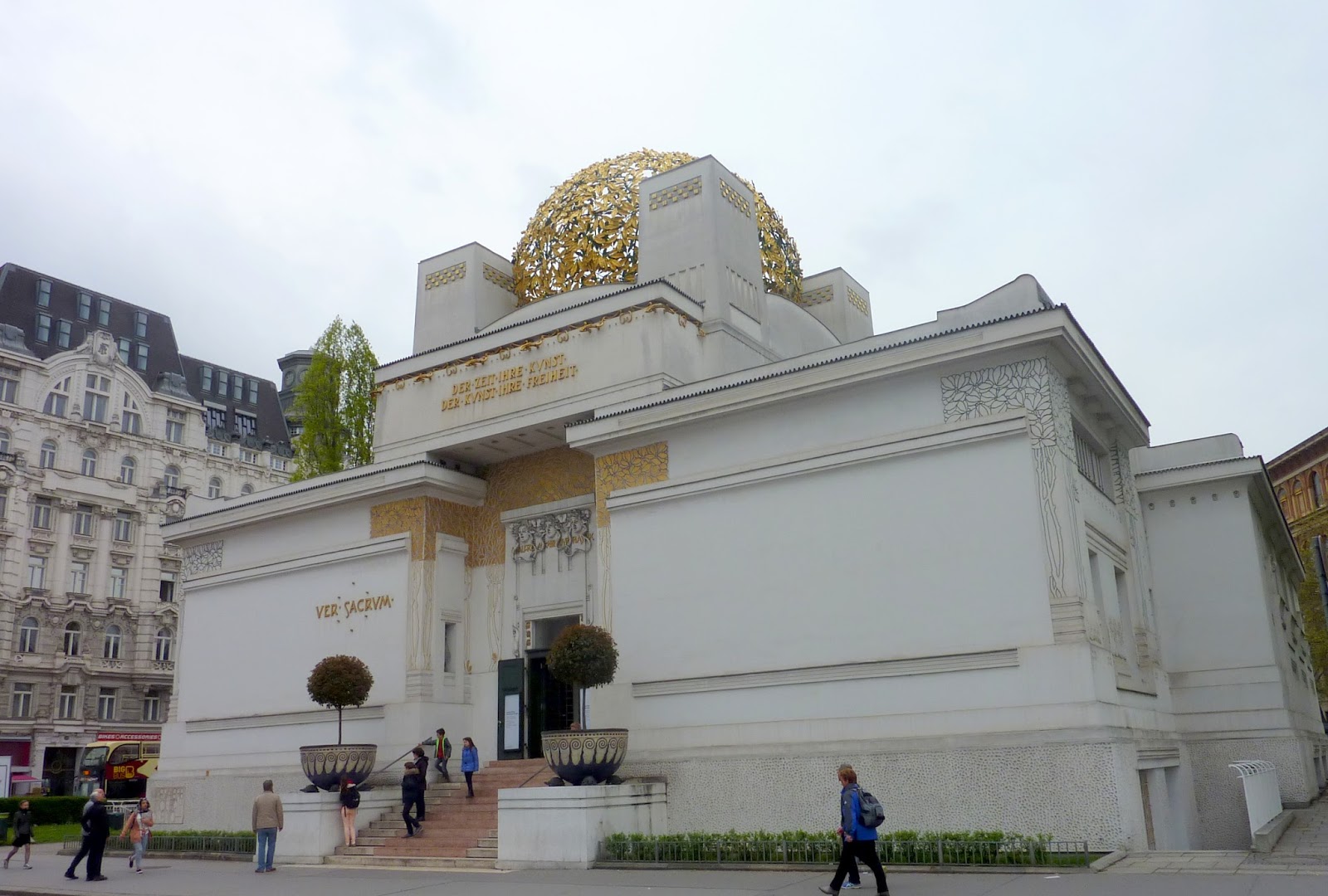
In 1897 a group of young artists headed by Gustav Klimt seceded from the Viennese Artists' Society to establish an association of their own: the Secession. When the founding members met on April 3, it was clear to them that above all they needed an exhibition building that would offer a suitable setting for the groundbreaking presentations of art they were planning. The foundation stone for the Secession was laid in April 1988. The building site on Linke Wienzeile had been provided free of charge by the Municipality of Vienna.


The architect Joseph Maria Olbrich designed the Secession as a 'Temple of Art'. While his plans show the influence of the buildings of his mentor and teacher Otto Wagner, they also refer to sketches made by Gustav Klimt. The building, which resembles a pavilion, is divided in two distinct parts: the ceremonial entrance hall and the exhibition rooms.


When the Secession first opened many critical voices were raised against its modern architecture. Epithets included 'an assault on good taste', 'a cross between a greenhouse and a blast furnace', 'a temple for bullfrogs', 'a bastard begot of temple and warehouse'. Today the building is widely regarded as one of the foremost works of the Viennese art nouveau style and its golden dome has become a Viennese landmark. The Secession has emerged as one of the best-known examples of European architecture at the turning point from historicism to modernism.


The gallery facades were decorated with frescoes by Koloman Moser and sculptural ornaments, some of which are still in place today. The floral elements adorning the walls resolve themselves into parts of a laurel bush with its upper branches joining to form a canopy. This articulates the 'return to the vital origin of art and culture' envisaged by the movement through the flowering of the 'ver sacrum' (sacred spring).


We walked around the outside of the building


detail


and then went in. Most of the building was closed to the public because they were mounting a new exhibition but we were able to view the entrance hall and one of the rooms that contains  the Klimt frescoes.


The foyer is minimalist, simple and austere.


Gustav Klimt's fresco, the Beethoven Frieze, takes its theme from Richard Wagner's interpretation of Beethoven's Ninth Symphony and depicts humankind's search for happiness.


To symbolise this yearning, Klimt chose floating genii who lead us into the story. This horizontal band is interrupted by one group of figures: a naked woman standing and a naked couple kneeling - symbols of suffering humanity - beg the knight in shining armour for help.


In the scene facing us as we enter the room, humanity must face the dangers and temptations of the 'Hostile Forces'. The giant Typhoeus, a hybrid monster with shaggy fur, blue wings, and a snake like body, extends across almost the entire wall, fixing the viewer with mother of pearl eyes. To his left stand his daughters, the three Gorgons, and above them, mask-like female heads stare out of the picture, allegorical representations of Sickness, Madness and Death. The women to the monster's right symbolise Lasciviousness, Wantonness and Intemperance, the latter identifiable by her large belly.


Slightly further to the right cowers the emaciated female figure of 'Gnawing Grief'. At the top right we see the head of a floating genie, that stands for humankind's wishes and desires overcoming the 'Hostile Forces'.


On the right-hand wall, humanity's yearning for happiness finds fulfilment in poetry, portrayed as a female figure with a lyre. This is followed by an empty section under which, in the original exhibition layout an opening gave a view of Klinger's Beethoven sculpture.


In the final scene, female figures symbolising the arts lead the way into the ideal realm of art.


Klimt's apotheosis of art consists of a kissing couple in front of the' Choir of Angels' referring directly to Beethoven.


In another small room we were able to see copies of Ver Sacrum, the official organ of the Association of Austrian artists. At their first general assembly on July 21, 1897, the founding members of the Vienna Secession resolved to produce their own art magazine in order to publicise their ideas about the integration of different media.

In the preface to the inaugural issue, titled 'Why we publish a magazine', the artists proclaimed: 'this magazine is meant to ... appeal to the population's artistic sensibility and stimulate, foster and spread creative engagement and creative independence'. Art, they argued, needed to become again what it once had been: a practice woven into the fabric of life.


The magazine featured contributions on the visual arts as well as works of avant-garde literature. Illustrations and typography, vignettes, margins, and selected original works of graphic art as well as the unusual almost square format made each issue a unique artefact. Ver Sacrum inspired generations of Austrian book designers.


Poster by Irma von Dutczynska


Saturday, 14 May 2016

The Viennese coffee houses (and two restaurants)


The Viennese coffee houses are a national institution. Coffeehouses first appeared in Vienna in the late 17th century and quickly became an established part of the culture. Their heyday was probably around the end of the 19th century and the beginning of the 20th century, when they were at the heart of Viennese intellectual life.

Vienna was a cultural melting pot at the time, attracting intellectuals from all over Europe and because the city is quite small they all knew each other: this favoured political dissidents and those on the run. If you wanted to find a place to hide out in Europe where you could meet lots of other interesting people then Vienna was a good place to do it. The city played host to Leon Trotsky, Joseph Tito, Sigmund Freud, Joseph Stalin and Adolph Hitler, amongst others.

The Viennese coffee house became a central part of life where debate and discussion thrived and where boundaries that later became so rigid in western thought, were fluid. The Viennese poet Peter Altenberg famously gave 'Café Central, Wien', as his home address.

We tried to sample as many as we could.


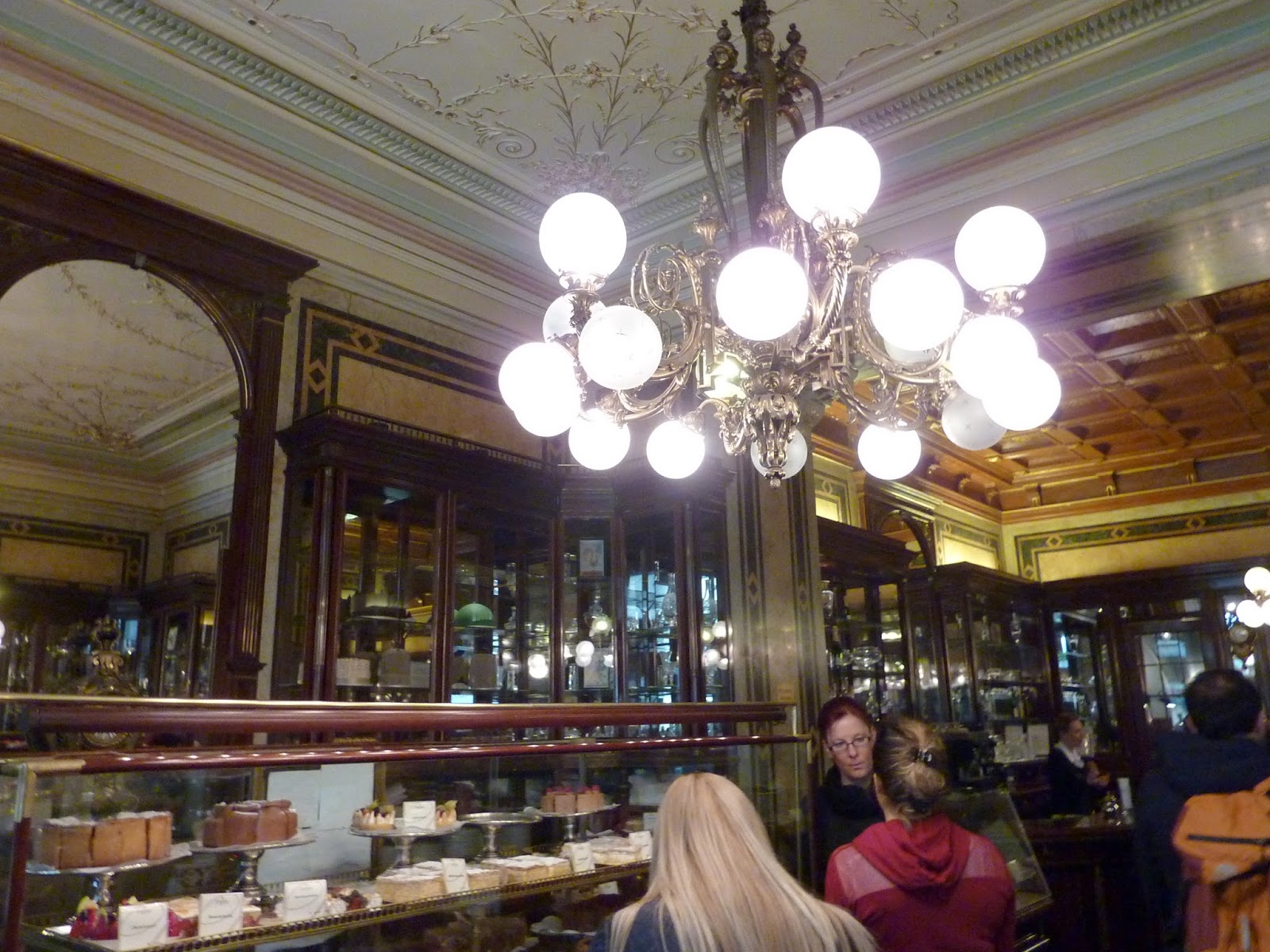
Demel's is in the pedestrianised part of the Innere Stadt


The two front rooms serve as a patisserie where various pastries and chocolates are for sale


it all looked delicious.


The kitchen has a glass front so that you can see the chefs as they prepare the cakes and chocolates - we could see all this going on from our table.


The interior is decorated in Neo-Baroque style


we only had tea and coffee, but the cakes looked delicious.


Café Sperl is in the Mariahilfe district


Grand dimensions, gorgeous Jugenstil fittings and cosy booths


this was one of the nicest coffee houses we visited.


It was very busy but there was an unhurried air about the whole place.


There are three billiard tables but one is used for the day's newspapers.


Café Museum is near the Secession building and the Opera house


The interior was designed by architect Josef Loos in 1899.


Designed in the peak of the Art Nouveau period, this coffee house is very simple and unadorned. It was nicknamed 'Café Nihilism'. Heinrich Kulka, Loos' pupil, described it as 'the starting point for all modern interior design'.


Light green walls contrasting with red bentwood chairs which Loos designed, dark red upholstery.


Gustav Klimt, Egon Schiele, Oskar Kokochka and Otto Wagner were regulars here.


Café Guttenberg is behind St Stephen's Cathedral, very near our hotel


we were exhausted after walking all day, and came here for a very late lunch before going back to the hotel.


Café Ritter is just off Mariahilferstrasse


we didn't like this one as it stank of cigarette smoke. There was a smoking room with an automatic door and all the smoke from the numerous smokers drifted into the rest of the coffee house.


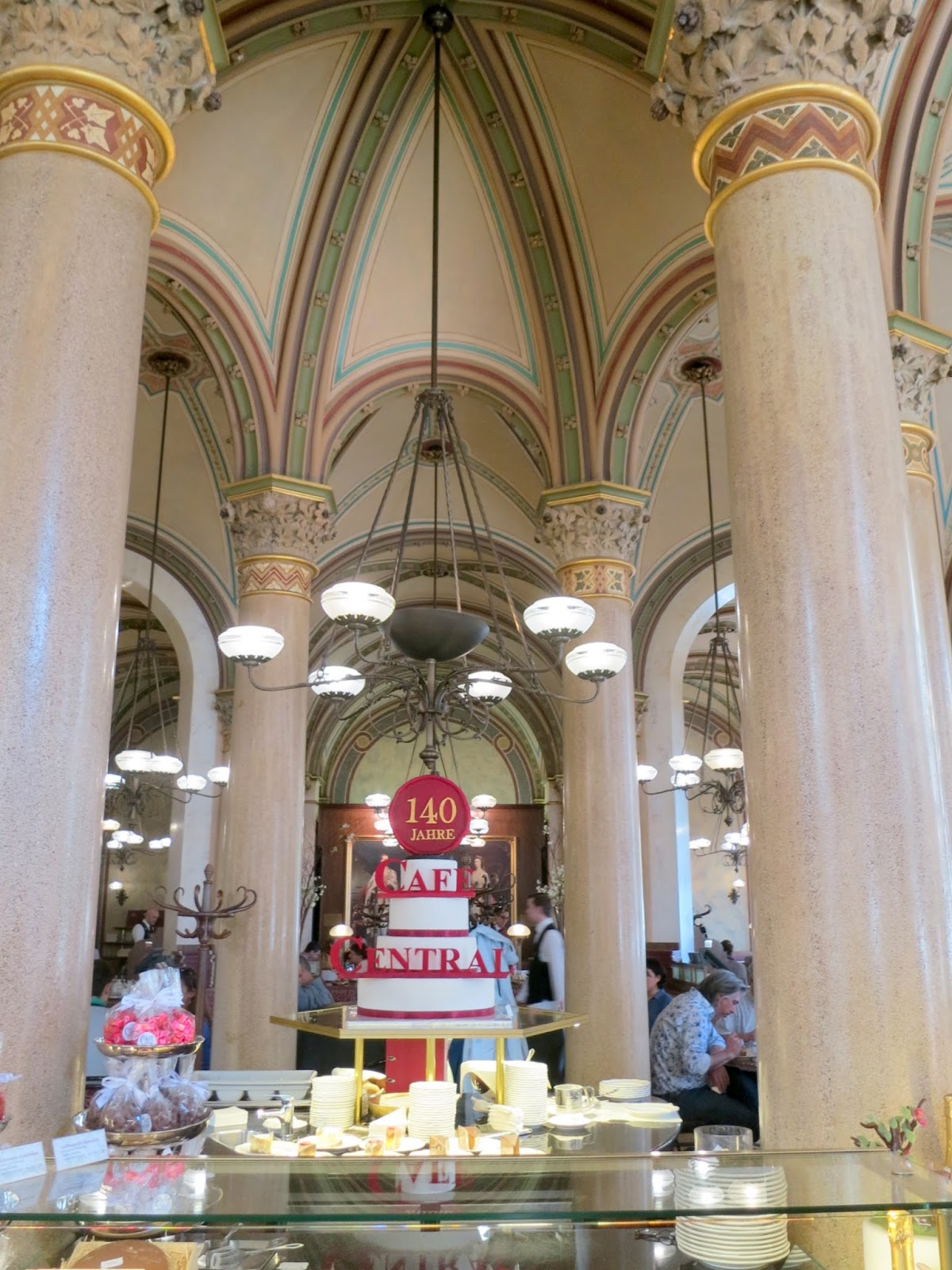
Café Central, the grandest of all coffee houses, on Herrengasse


It was opened in 1876 and became a key meeting place of the Viennese intellectual scene. Key regulars in the 20th century included: Leon Trotsky, Sigmund Freud, Adolf Hitler, Vladimir Lenin, Josip Tito.


Its impressive interior of marble pillars, arched ceilings and glittering chandeliers now plays host mostly to tourists


There was a queue of tourists waiting to get in when we tried to visit, and we really did not feel like joining the queue


so, I just walked in, had a look, took some photographs


of the impressive interior


and then we walked down the road to:


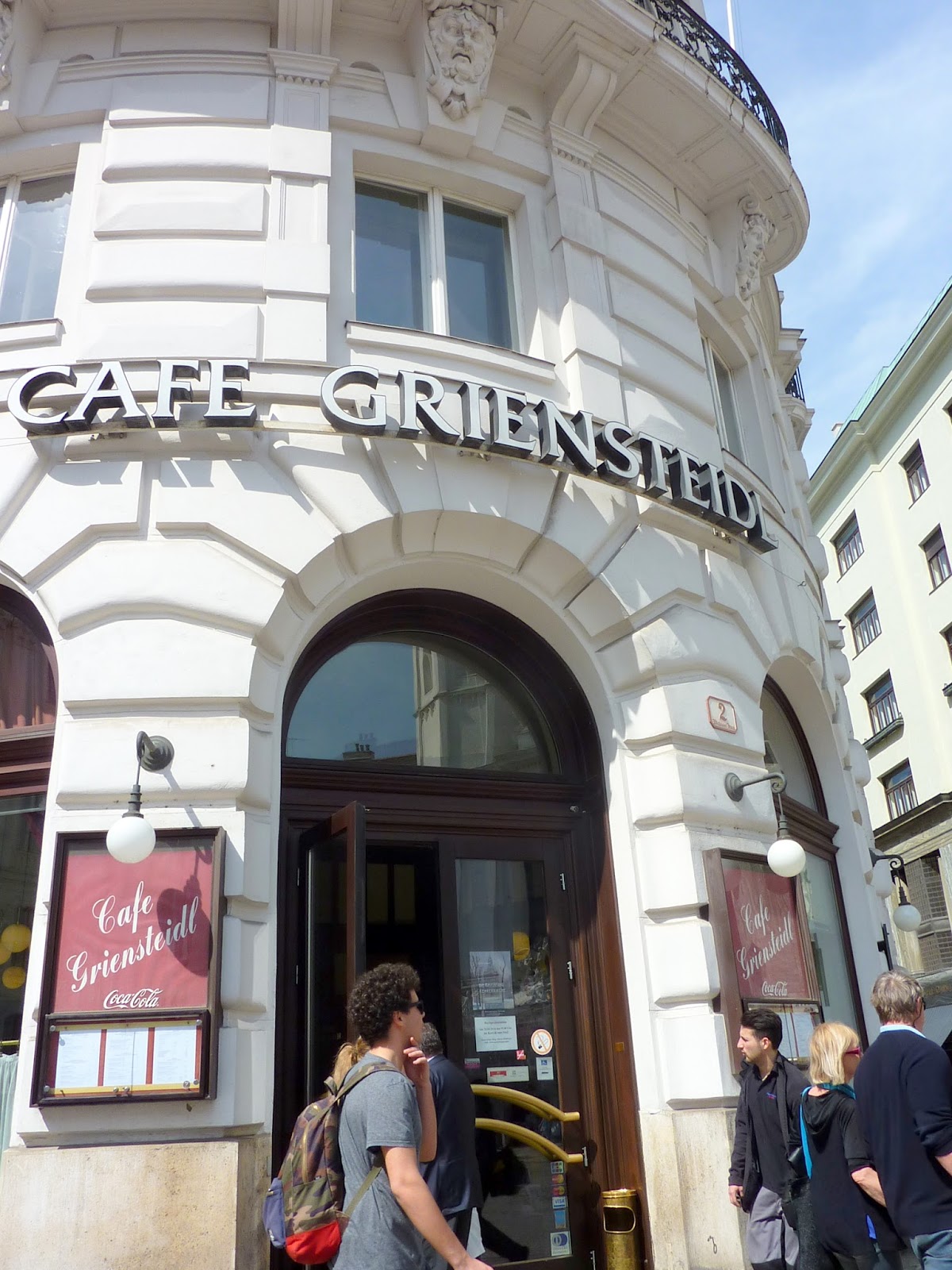
Café Gridnsteidl, which is opposite St Michael's church, next to the Hofburg, and just over the road from the Loos House.


It's a typical Viennese coffee house, comfortable and handsome.


It was packed when we arrived, and our waitress looked very harassed, but a lot of people left while we were there


and we were able to have a nice, quiet time and an apple strudel that was delicious.


                                                                   *   *   *

We ate locally in the evenings as we were too tired after all the wandering about to venture too far. Our hotel was near St Stephen's Cathedral just off Fleischmarkt Street where during the 17th century Greek traders came to Vienna and settled on the Fleischmarkt (the meat market).


On our first day as we were passing this building I noticed the plaque and recognised the face on the plaque - any Greek person would. It's Rigas Feraios (or Velestinlis), Greek writer, political thinker and revolutionary, active in the Modern Greek Enlightenment, Greek national hero, and pioneer of the Greek War of Independence against the Ottoman Empire.

Around 1793 he went to Vienna which was home to a large Greek community, as part of an effort to ask Napoleon for assistance and support. While in the city, he edited a Greek language newspaper and published a proposed political map of Great Greece. He printed pamphlets based on the principles of the French Revolution which he intended to distribute in an effort to stimulate a Pan-Balkan uprising against the Ottomans.


When he entered into communication Napoleon, he set out to meet him, was arrested at Trieste by the Austrian authorities (an ally of the Ottoman Empire) who were concerned the French Revolution might provoke similar upheavals in Austria. He was imprisoned and tortured. The Austrian authorities decided to send him to Constantinople to be sentenced. While in transit in 1798, he and his five comrades were strangled and their bodies were thrown into the Danube. His last words are reported as being: 'I have sown a rich seed; the hour is coming when my country will reap its glorious fruits'.


The Greek Orthodox church is on the Fleischmarket


as are shops that bear the Greek names of their owners.


Next to the Greek church is


the shambling, ivy covered Griechenbeisl, Vienna's oldest traditional inn, established in 1447, named after the Greeks who lived in the area and who made it their local.


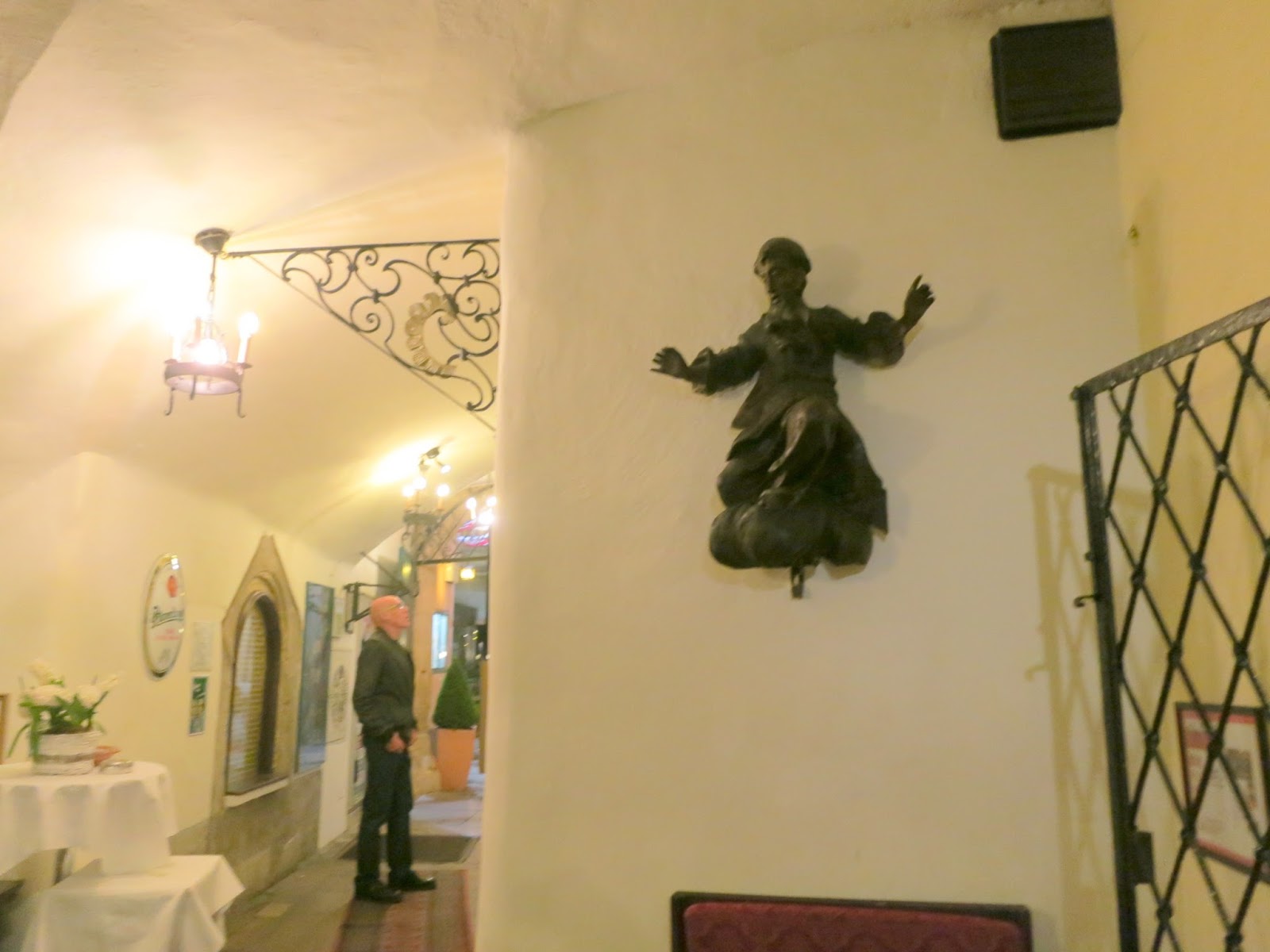
The inn is well-known for its carved sign that depicts Liebe Augustin (dear Augustus), a character from local folklore, author of the ballad 'Oh du lieber Augustin, alles is hin', which he composed and sang here in the Griechenbeisl at the end of the 17th century.


A replica of Augustin is to be found here, and people throw in coins for good luck


We ate here twice.


The inn is a large place full of rooms, nooks and crannies.


Augustin again


All the downstairs rooms were full the first night we ate here, but there was plenty of space upstairs, so up this spiral staircase we went.


We had a nice meal


the upstairs rooms emptied quite early


but downstairs the place was still buzzing with life.


Our second visit to the inn was truly memorable: we were shown in this room which has been classified as a historical monument 


it's called the Mark Twain room. The author stayed in one of the upstairs rooms while he lived in Vienna


the first thing I noticed when we entered was a portrait of Rigas Ferraios.


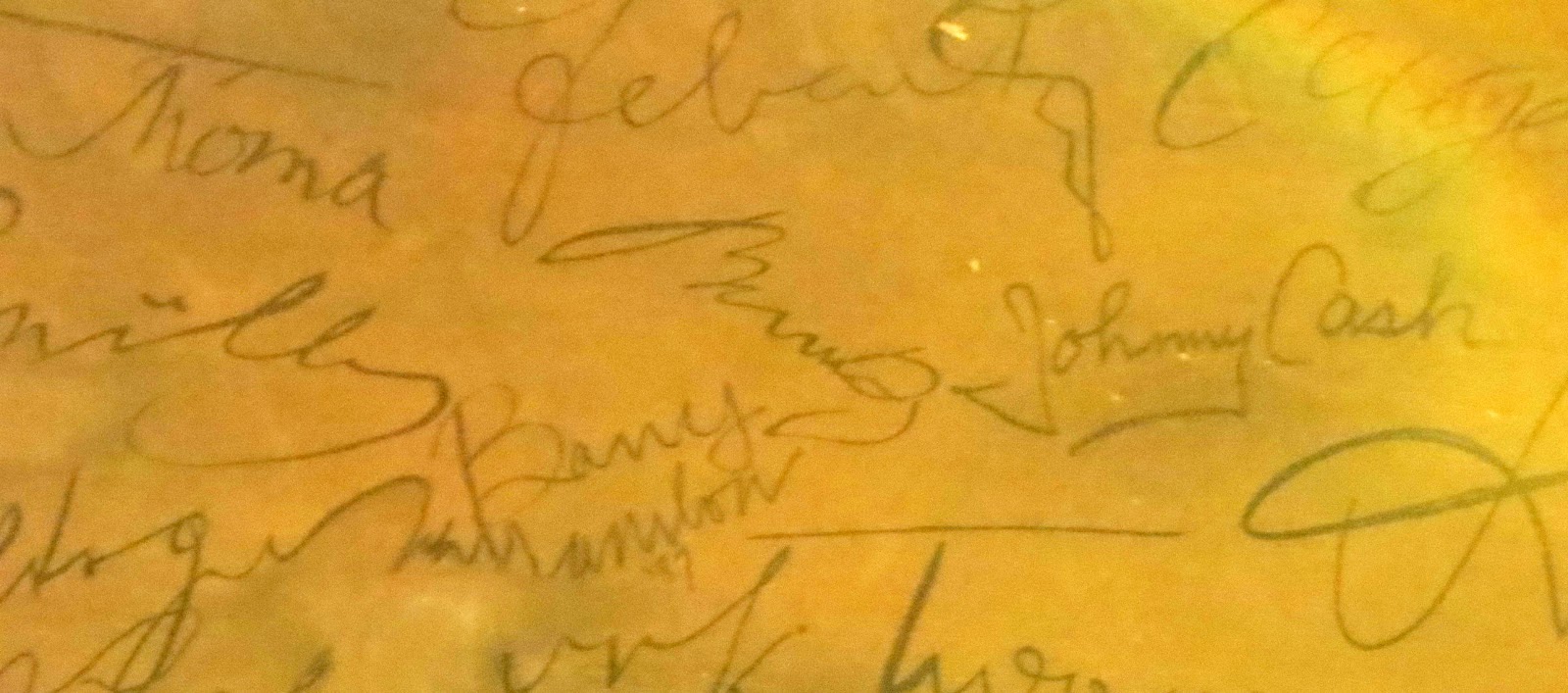
What makes this room special and a historical monument is that so many politicians and artists have signed their names on the vaulted ceiling and the walls.


The first one to sign was Mozart, but the list is endless: Beethoven, Pavarotti, Schubert, Brahms,


Otto von Bismarck


Richard Wagner


Johnny Cash


Egon Schiele


Rainer Maria Rilke,

and many many more


This is the score for the 'Oh due lieber Augustin' ballad.


There was only one other customer in the room, but lots of people kept coming in to be given the guided tour of the autographs by our extremely friendly waiter who in some sense, 'made' the evening for us. He was funny, entertaining, and loved showing people around.


Opposite the Greek church, in this alleyway we found another gem


Ef16. We ate here three times


not just because of the lovely atmosphere, and the excellent service


 but mainly because the food was outstanding - absolutely delicious.