Tuesday, 10 March 2020

The Circus in Bath


The Circus in Bath is a short distance up the hill from Queen Square.


A circle of large townhouses, designed by architect John Wood, the Elder, built between 1754 and 1768, it is a pre-eminent example of Georgian architecture.

The Circus is divided into three segments of equal length, and it therefore has three entrances. There is a lawn in the centre. Each segment faces one of the three entrances, ensuring a classical façade is always presented straight ahead.

When viewed from the air, the Circus, along with Queens Square and the adjoining Gay Street, form a key shape, which is a masonic symbol similar to those that adorn many of Wood's buildings.


The central area was originally paved with stone setts, covering a reservoir in the centre that supplied water to the houses. In 1880 the Circus residents enclosed the central part of the open space as a garden. Now, the central area is grassed over and is home to a group of large plane trees.


Saturday, 7 March 2020

Victoria Art Gallery - Bath


Victoria Art Gallery, Bath.

Located next to the Pulteney Bridge, the gallery houses a collection of paintings, sculpture and decorative arts. Unfortunately, we missed the Toulouse Lautrec exhibition which was going to start shortly, but we nevertheless, had a good time looking around. We started with their small collection of studio pottery.


James Tower, Oval Form


James Tower, Bowl, 1958


Lucie Rie, Long-necked vase, 1960


Eddie Curtis, Pot


Howard Hodgkin, Silence, 1997 and 2004


John Armstrong, Psyche Crossing the Styx, 1925


William Scott, Bottle and Fish Slice, 1949


Howard Hodgkin, Untitled (Reclining Woman), 1950


Walter Sickert, London Street, Bath, 1941


Paul Klee, Small Harbour Scene, 1919


William Roberts, The Dressmakers, 1931


Glyn Warren Philpot, The Pearl, 1914


Joseph Southall, Children at Play, 1920


John Nash, Canal Bridge, Sydney Gardens, Bath, 1927


Frank Brangwyn, Sketch of Two Figures, 1895


The Lichfield clock, mid-18th century. 


Peter Randall-Page, Solid Air III, 2010


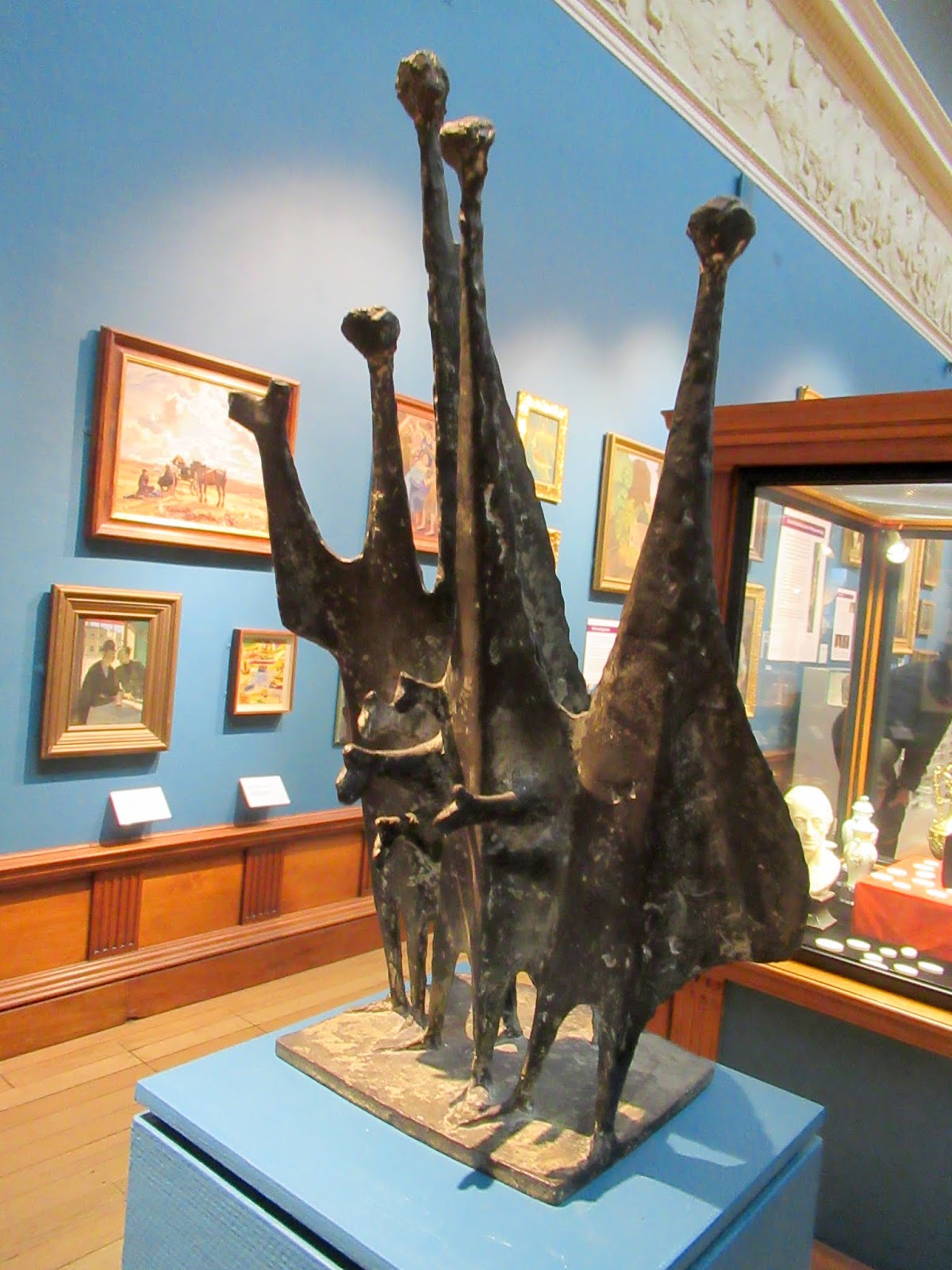
Kenneth Armitage, People in the Wind, 1950, (bronze) front


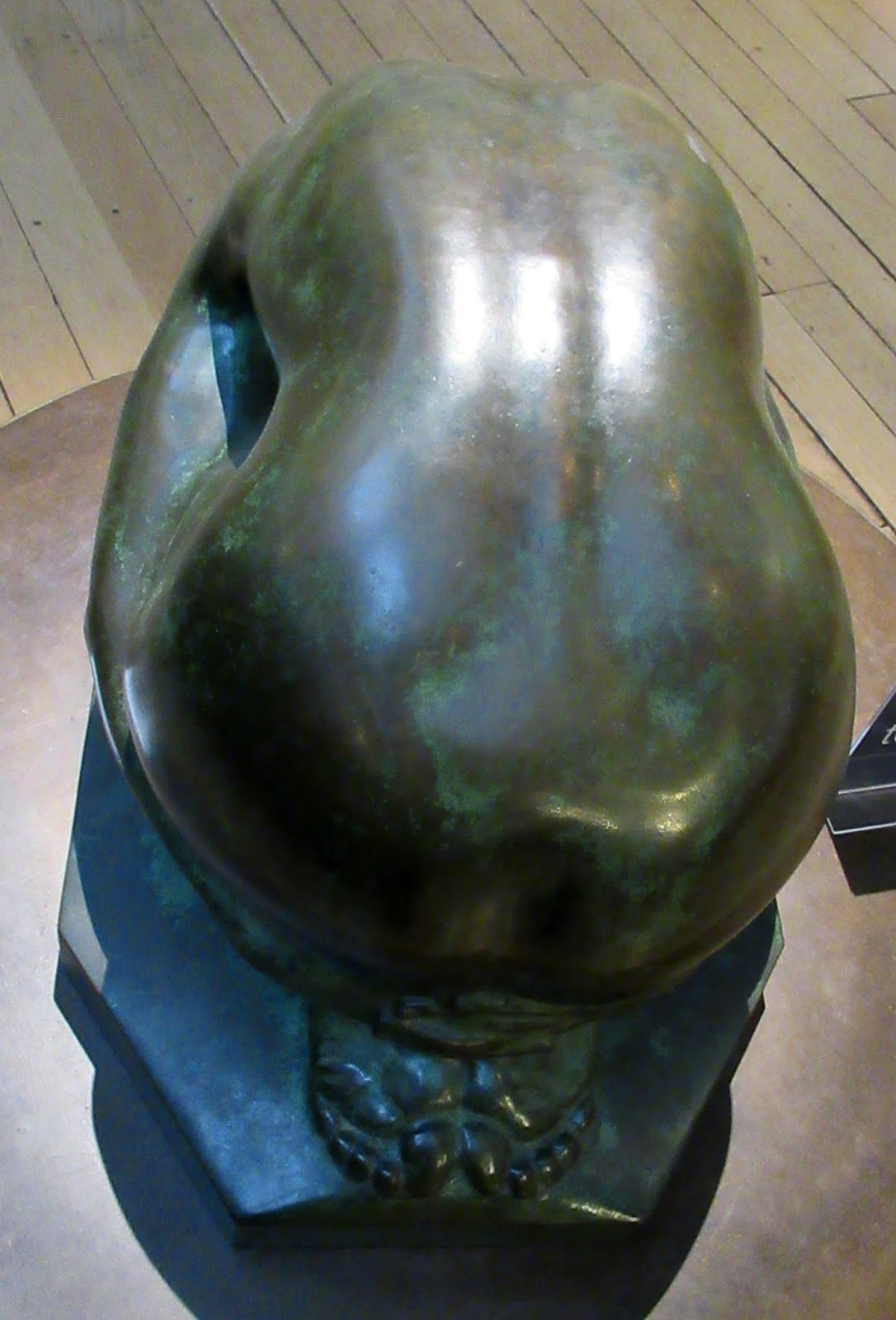
the back of the sculpture

Taut, streamlined shapes. The long necks of the four figures recall the stalks of a plant growing at Armitage's studio door. He explains however, that the sculpture is concerned primarily with movement.

'If you look at a crowd, you do not count the arms and legs, you just see odd arms swinging and the odd leg moving...  looking out of the window on a very windy day I saw a woman walking, holding two children, all three leaning against the wind, and this gave me an idea. I started making tiny maquettes with, I think three figures with long necks'.


side


E. Whitney Smith, The Scarab, 1924


Wednesday, 4 March 2020

Pulteney brige and riverside walk in Bath


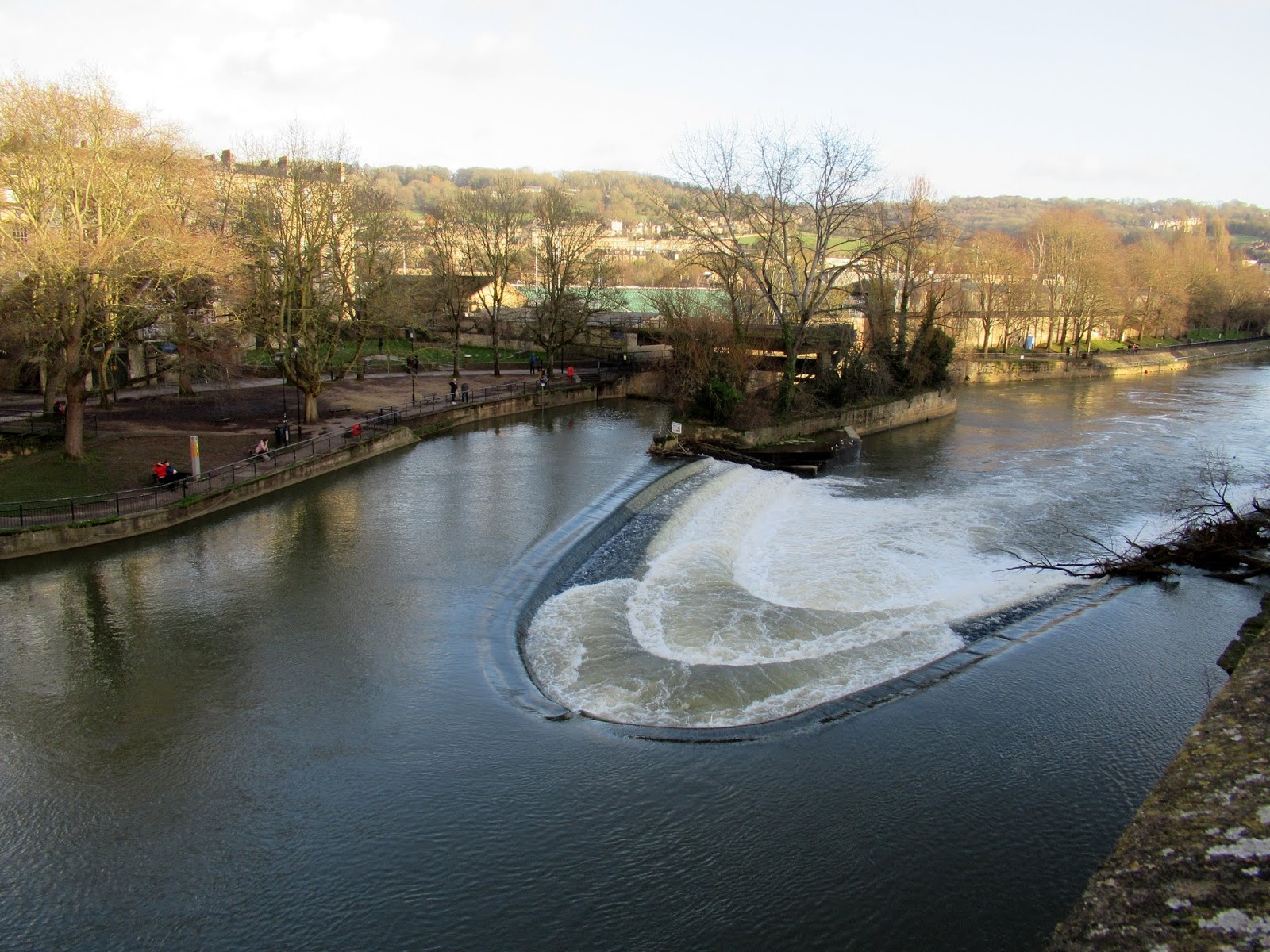
One of the iconic features of Bath is Pulteney bridge and its weir. The best place to look at both is from this bridge


Pulteney bridge crosses the River Avon. It was completed by 1774, designed by Robert Adam in a Palladian style: it is exceptional in having shops built across its full span on both sides.


The iconic V-shaped design of this weir is quite breathtaking


Flood-lit at night the bridge looks as spectacular as during the day


Access to the riverside walk is from here


down these steps.


Once we descended we got a different view of the bridge and weir


as well as of the building across the water.


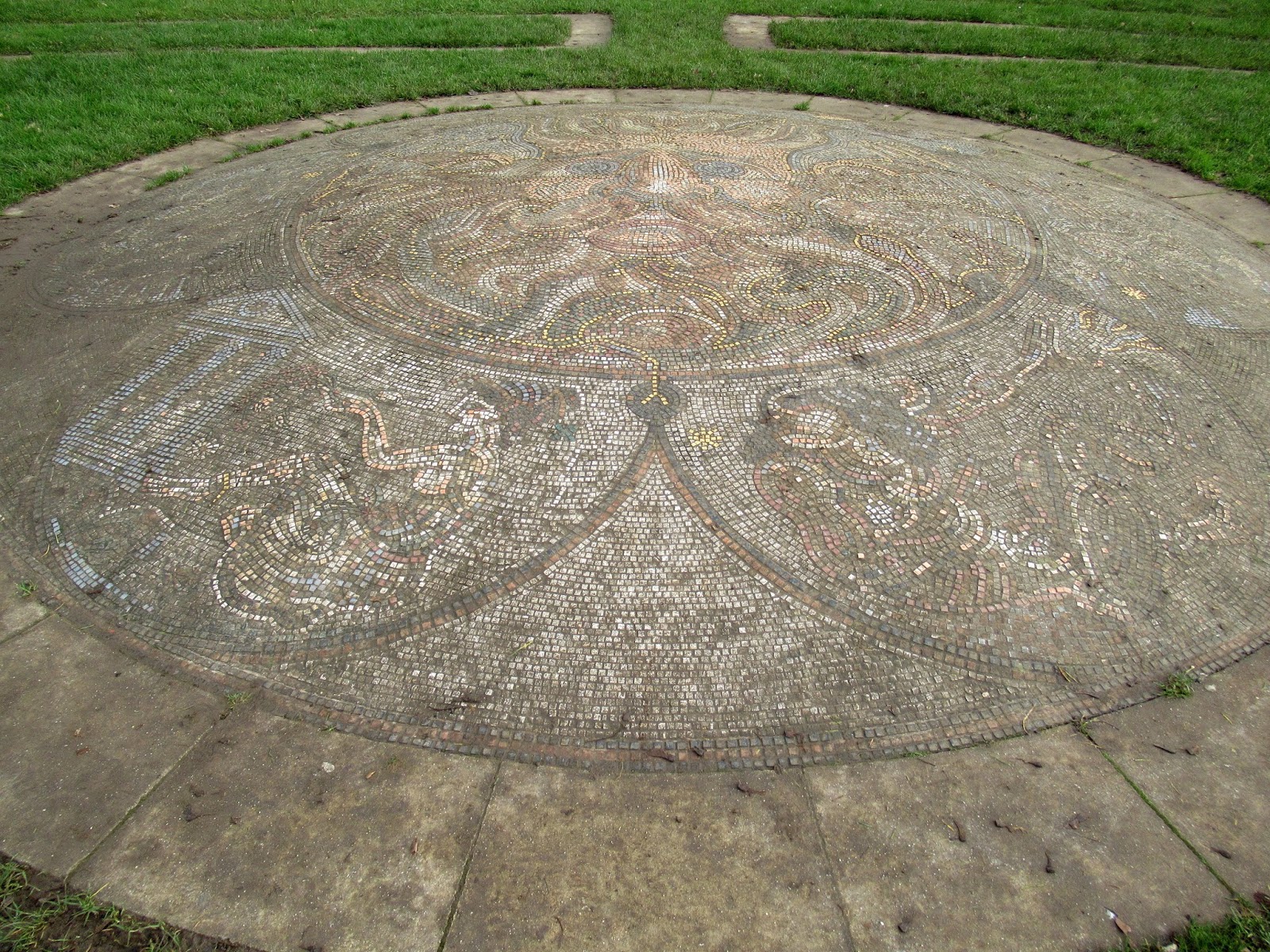
Before moving on we decided to try out the Beazer Garden Maze. Although called a maze, the design is technically a labyrinth; unlike a maze, which has a branching pattern, a labyring has only a single line, woven back and forth. It was designed by maze designer and labyrinthologist Randoll Coate in 1984. Coate designed over 50 mazes in England.


The maze is centred around a large Roman-inspired mosaic.


Ken was very happy to finish first.


We had a last look at the bridge and weir before moving on


It's a pleasant walk


ahead of us was another bridge


The sculpture of a harp


Eventually we retraced our steps and walked back into town.