Showing posts with label ancient art. Show all posts

Wednesday, 10 September 2025

Marlene Dumas - Cycladic Blues, Part 1


'When we look at the work of Marlene Dumas we see bodies. Lots of bodies. Young bodies and old bodies. Dead bodies and alive bodies. Stylised bodies and naturalistically rendered bodies. Defiant bodies and compliant bodies'.


Marlene Dumas - Cycladic  Blues, at the Museum of Cycladic Art.

Dumas was born in South Africa during the years of Apartheid but has lived and worked in Amsterdam for nearly five decades. The artist has spent her career using painting to explore all human states of being ranging from violence, mourning and melancholy to joy and tenderness. She's done this over and over by taking the human body as her subject.

This exhibitionn brings together a diverse range of over 40 of the artist's works spanning the past three decades. Whether it's in ink, crayon and pencil drawings on paper or some of her more monumentally scaled vertical canvases, these are testaments to the whole of human experience - life and death, love and hate, rememberance and forgetfulness. Dumas has suggested that 'painting is about the trace of the human touch'.


Dumas' paintings explore sexuality, love, death, motherhood, intimate relationships and political issues, often referencing art history, popular culture and current affairs. She describes her approach as one in which 'second-hand images generate first-hand emotions'. She infuses her source materials with personal feelings from her own lived experience.

She examines the complexities of identity and the nature of human existence, highlighting the unexpected coexistence of violence and innocence. Usually politically charged, her work addresses social injustices, challenging us to consider the often elusive truth. She works without a predetermined plan, relying on her intuition resulting in works full of ambiguity.

I love Dumas' work and experiencing her work alongside ancient objects from the Cycladic civilisation - a prehistoric culture that existed between 3000 and 1000 BC, about which we know little - was very touching. I love the female figurines of that civilisation, some of which are depicted with their belly pronounced, perhaps indicating pregnancy, and which are so mysterious and so minimalist.


Female statue, 2700-2300 BC (marble)


Cycladic Blues, 2020, (oil on canvas)

This painting is the only work whose source material is directly related to the heads of the Cycladic marble figurines, whose faces are blank and show no emotion. 'By working very fast in the diluted wet paint, I deliberately touched the canvas very lightly to make a suggestion of eyes and a mouth, allowing for an expression to emerge that seems to be mourning the fact that we all have to die.  So many different interpretations of these sculptures exist, but it does seem that they were regularly used in funerary practice, as they have been found mostly in graves'.


Skull (as a house), 2007, (oil on canvas)


Mask, 2020, (oil on canvas)


Torso and thighs of a female figurine, 4500-3200BC, (marble)


Phantom Age, 2025, (oil on canvas)

Phantom Age and Old (below) 'have the same source, an image of a Roman copy of a Hellenistic sculpture of the 2nd century BC called the Old Market Woman. The same woman photographed from two different angles. Both of these large paintings show exaggerated proportions. Phantom Age is quite stylized, and it is difficult to comprehend that her distinct shape was made by pouring the paint mixture onto the canvas and by me controlling the flow by moving the canvas. Her face was not touched by a brush. 

To my joy, I was told that this ancient lady, my muse for the night, was not being respectfully old and wise, but was apparently an aged courtesan on her way to the festival of Dionysus, the god of wine!'


Old, 2025, (oil on canvas)


'The face of this painting did not flow organically from her body but was made separately after several failed attempts at finding a fitting expression. Being old can make one feel bad and sad.'


Female figurine, known as the 'Mantle Dancer', 350-300 BC, (clay)


Candle, 2020, (oil on canvas)


Glass Tears (for Man Ray), 2008, (oil on canvas)


We moved out of that first exhibition room and before going up the stairs to the upstairs exhibition spaces


we stopped at the round room on the ground floor to look at a video screening of Marlene Dumas talking about her work


Unfinished figurine, 2700-2400/2300 BC, (marble)


50+, 2010-2018, (oil on canvas)

Dumas has said that the paintings of older women could be called 'self-portraits. 50+ was painted and repainted over time, inspired by a postcard of a close-up of a Roman marble copy of a Hellenistic sculpture of a drunken old woman with a wine jug in her hand. Some historians even link her to depictions of satyrs, in terms of posture, who pays tribute to Dionysus through her intoxication'.


Alfa, 2004, (oil on canvas)


Persona, 2020, (oil on canvas)

This painting was inspired by one of the plaster copies of a mask-like head.


Helena, 1992, (oil on canvas)

'My daughter Helena (Helen of Troy was described in Greek mythology as the most beautiful woman in the world) features in many of my works'.


Helena Michel, 2020, (oil on canvas)


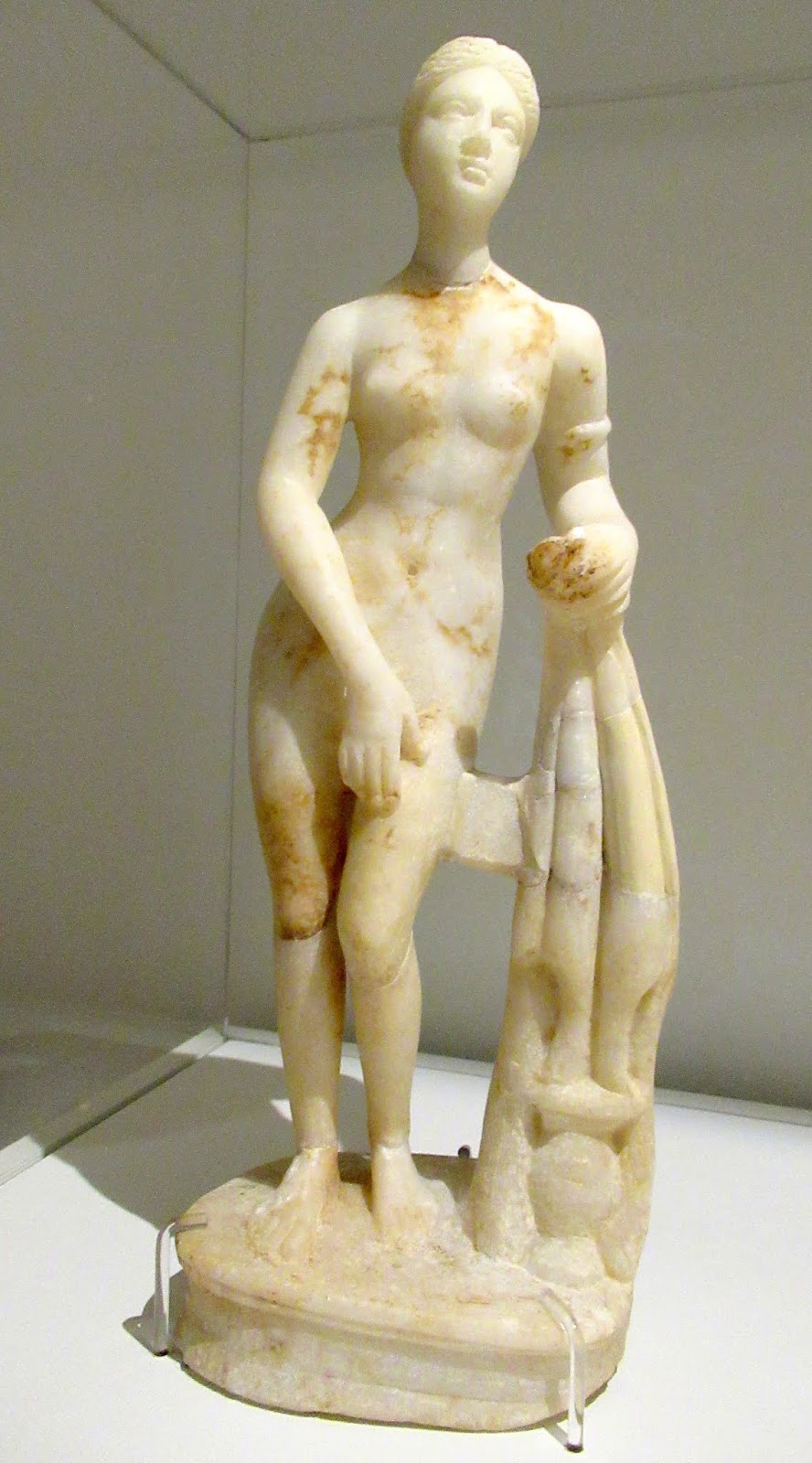
Statuette of Aphrodite, 2nd-1st BC, (marble)


Leather Boots, 2000, (oil on canvas)


High Heeled Shoes, 2000, (oil on canvas)


Bottle, 2020, (oil on canvas)


Donkey (daytime), 2021, (oil on canvas)


Composite vessel, 1900-1650 BC, (clay)


Two Gods, 2021, (oil on canvas)

Dumas on Two Gods: This painting 'happened unexpectedly. The painting started in a playful manner, giving chance a bigger role. The paint was poured onto the canvas in two large gestures without a preconceived idea. Eventually, they became these beautiful monumental male sexual organs. Unfortunately, one cannot help but think of the ugly, egocentric political state of the world, as some male world leaders yet again think they are God's gift to the world, or rather, gods themselves. I will deny them the pleasure of naming them'.


Torso of a male statue, 2700-2400/2300 BC, (marble)


Donkey (nighttime), 2021, (oil on canvas)


Sherkent and Eden, 2020, (oil on canvas)

Eden is Dumas' first grandchild.


Helena and Eden, 2020, (oil on canvas)


Pubic area and legs of a female figurine, 2700-2400/2300 BC, (marble)


Immaculate, 2003, (oil on canvas)


To see more work by this wonderful artist go here


Saturday, 31 August 2019

Picasso and Antiquity - Line and Clay


'To me there is no past or future in art. If a work of art cannot live always in the present it must not be considered at all. The art of the Greeks, of the Egyptians, of the great painters who lived in other times, is not an art of the past; perhaps it is more alive today than it ever was'. Marius de Zayas, Picasso Speaks.


Picasso and Antiquity - Line and Clay


at the Cycladic Museum, Athens.

Sixty eight ceramics and drawings by Picasso interact with sixty seven ancient works in this exhibition which is part of the Cycladic Museum's Divine Dialogues series.
This is what the curator of the exhibition says:
'Throughout his long and productive career, Picasso looked at a wide variety of sources, adapting and transforming them relentlessly. The classical tradition provided him with a vocabulary of endless possibilities to be manipulated and modified. Prominent among these sources was ancient Greece, for it created an enduring mythology as well as a fertile iconography.

Picasso's work articulates Nietzsche's famous tension between the Apollonian and the Dionysian; this is a powerful undercurrent, which can help us understand the contradictory forces at play in Picasso's work. The Apollonian emphasises nature's benevolent force, light, the linear, and the sculptural; the Dionysian, on the other hand, stems from raw animality, the unconscious, darkness and freedom. These primeval notions of the Mediterranean, of tragedy in which felicity is shadowed by death and destruction, can be seen as keys to Picasso's ambivalent relationship with classical antiquity.

The element that binds both ceramics, old and new, and Picasso's illustrations derived from the antique has to do with form and design, and not just iconography. Of particular relevance is the line, whether in drawings from the 1920s and 1930s or the lines traced on ceramics and reminiscent of Attic Red Figure vases. The line is the means to divide space and create light. What might be termed the 'stone-like clarity' of permanent, solid forms relating to the antique (the Apollonian) and the disruption of form, the line again, but oscillating and vexed, is the principal theme of this exhibition.

Picasso's inspiration from Greece, especially after the 1940s, has primarily to do with motifs and iconography. Yet, these works, unlike some earlier ones, are devoid of weighty associations with Greek myth; rather, Picasso invents a fictitious or imagined antiquity.  In the 1940s and 1950s, he develops an extraordinary body of ceramics, objects that give us a generalised idea of a mythical past, imbued with a timeless and idealised vision of Arcadia.'

This is a long post, but there are some fantastic works of art here, and I wanted to be able to remember them all. Many of Picasso's wonderful ceramics I had not seen before.


This was the first exhibit we saw as we entered the space. It somehow seemed to be fitting, given the man, and his life.


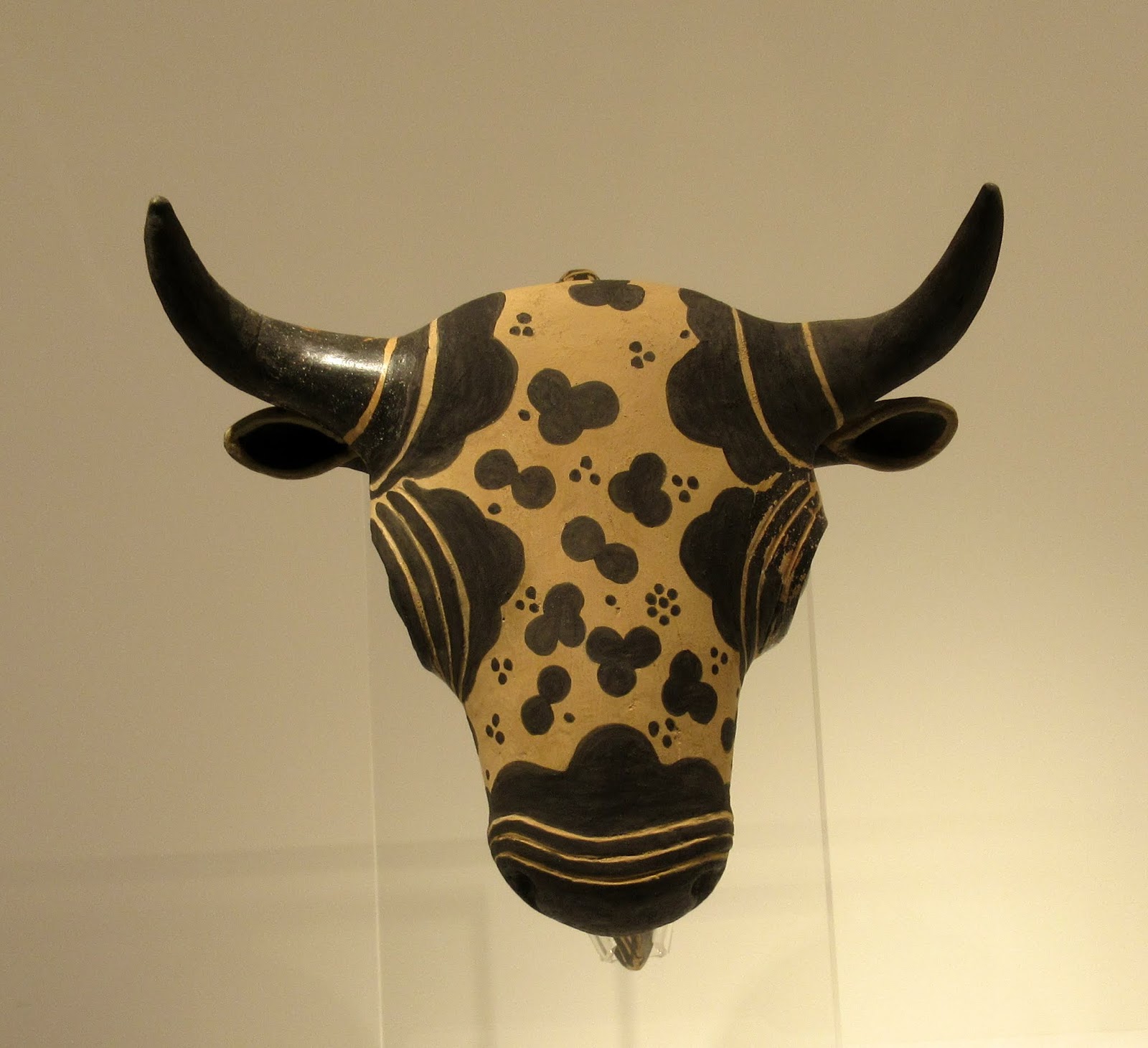
Bull's Head Rhyton, Final Palatial Period, 1450-1375 BC, (clay)


Pablo Picasso, Bull's Head, 1950 (grogged red earthenware, modelled and incised)


Statuette of Aphrodite, Roman period (mid-3rd century AD), marble


Statuette of Aphrodite, Hellenistic period (2nd century BC), (marble)


Pablo Picasso, Woman, 1949, (white earthenware, thrown, modelled and slip-painted)


Black Figure Kabirian Skyphos, classical period (last quarter of 5th BC), clay


Pablo Picasso, Etruscan Conversation, 1950, (pignate (cooking pot) in grogged red earthenware, slip-painted, interior glazed)


Attic Red Figure plate, Classical period, 400 century BC, (clay)


Pablo Picasso, Three Nudes (Three Graces, 1923, (ink on paper)


Pablo Picasso, Three Nudes, 1923, (ink on paper)


Female Figurine, final Neolithic period (c. 3200 BC), (clay)


Pablo Picasso, Tanagrea with Spiral, 1947-48, (white earthenware, slip-painted decoration)


Pablo Picasso, Woman, 1948, (white earthenware, thrown and modelled)


Figurine of Aphrodite (Venus Pudica) Roman period, 1st century AD, (clay)


Pablo Picasso, Woman with a Blue Dress, 1947-48, (white earthenware, thrown (assembled elements), incised, painted with slips and oxides, glazed)


Kernos Bowl, Mycenaean period, 12th century BC, (clay)


Pablo Picasso, Woman with Amphora, 1947-48, (white clay, thrown and modelled, painted decoration with slip and white enamel, incised details, patina applied after firing)


Teapot, Prepalatial period, c, 2400-2200 BC, (clay)


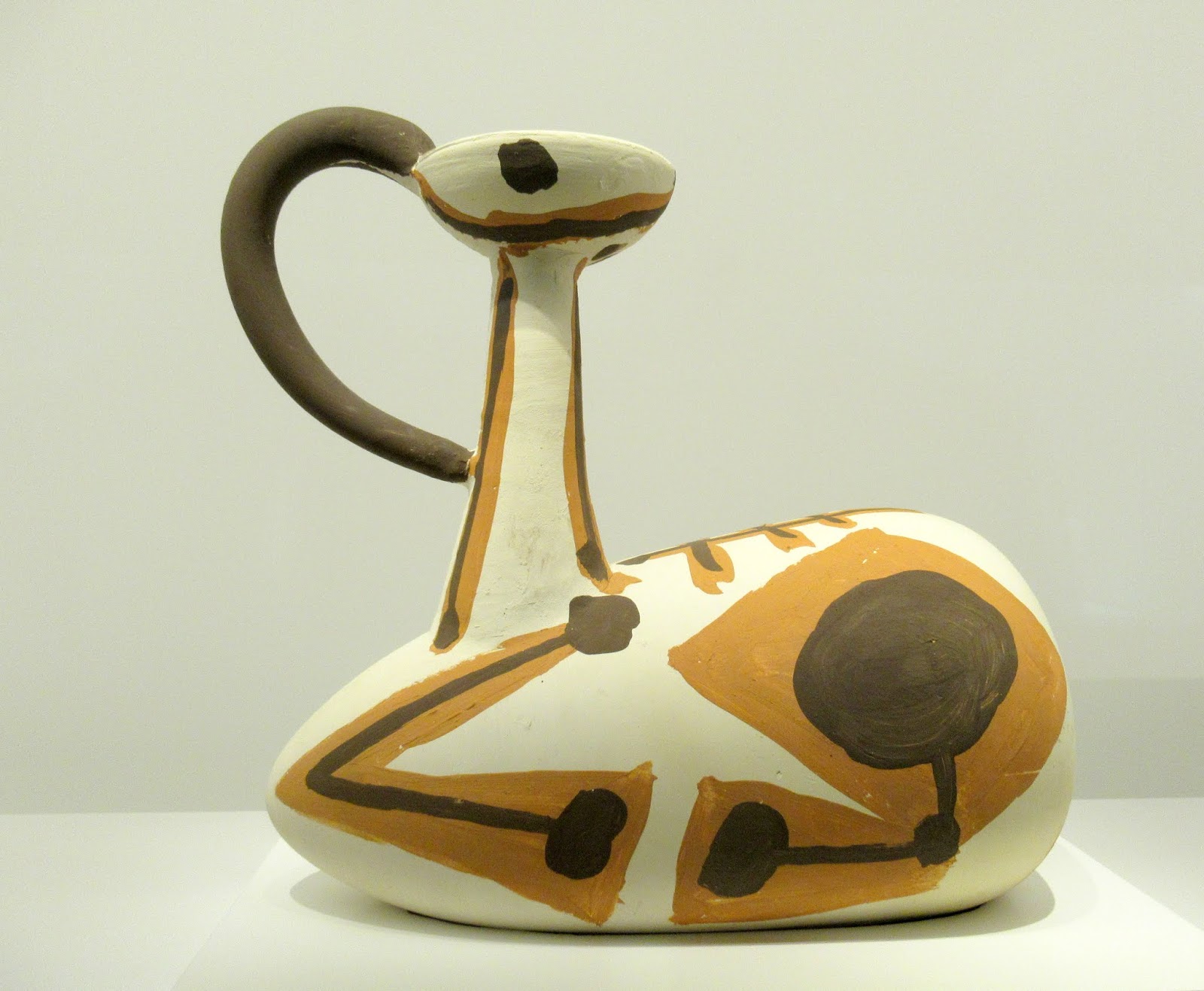
Pablo Picasso, Bird, 1947-48, (white earthenware (turned, modeled with attached elements), wax resist, painted with enamel and slip, partially glazed)


Head and part of the neck of a figurine, Early Cycladic period, 2700-2400 BC, (marble)


Pablo Picasso, Gothic pitcher decorated with lilies, 1953, (wheel-made and modeled, slip-painted, incised)


Proto-Phi type female figurine, Mycenaean period, 14th century BC, (clay)


Pablo Picasso, Draped Woman, 1951, (white earthenware, modelled, sculpted, incised and slip-painted)


Pablo Picasso, Standing Woman, 1947, (white earthenware, modelled and incised)


Female Figurines, Mycenaean period, Final Palatial Period, Old Palace/Neopalatial period, (clay)


Pablo Picasso, The King, (white earthenware)

Many works on Lysistrata formed part of the exhibition. It is not surprising that the man who was obsessed with sex, should also be obsessed with the woman who attempted to end the Peloponnesian War between Greek States by denying all the men of the land any sex. Lysistrata persuaded the women of the warring cities to withhold sexual privileges from their husbands and lovers as a means of forcing the men to negotiate peace.

I was not able to include a lot of the works here as they were drawings and reflection from glass made this impossible.


Pablo Picasso, Study for Lysistrata, (The Women's Oath), 1933, pencil on blue paper)


Pablo Picasso, Bearded Greek Dreaming of War, 1938, (etching on copper, printed on paper by the artist)


Trefoil Oenochoe (wine jug) Depicting Wild Goats running, Archaic period, 630-600 BC, (clay)


Pablo Picasso, Vase Decorated with Goats, 1952, (original impression in white earthenware, thrown, modelled, incised and slip painted)


Pablo Picasso, Head of a Goat, 1950, (original impression in white earthenware, painted with oxides, wax resist, glazed)


Figurine of Pan, Late Hellenistic - Early Roman period, 2nd-1st century BC, (clay)


Pablo Picasso, Seated Flute-Player, 1050, (white earthenware, cut, folded, modelled and incised)


Pablo Picasso, Seated Flute-Player, 1950, (earthenware, slip-painted)


Owl Figurine, Orientalizing period, 7th century BC, (clay)


Laconian Red Figure Pelike Depicting an Owl, Classical period, 410-400 BC, (clay)


Pablo Picasso, Spanish Plate Decorated with an Owl, 1957, (red earthenware, slip-painted decoration)


Pablo Picasso, Owl, 1957, (Spanish plate in red earthenware, thrown, painted with oxides)


Owl Figurine, orientalising period, 7th century BC, (clay)


Pablo Picasso, The Owl, 1952, (white earthenware, slip-painted, partially glazed)


Pablo Picasso, Owl, 1956-57, (grogged red earthenware, slip-painted, partially glazed)


Red Figure Skyphos Depicting an Owl, Classical period, mid-5th century BC, (clay)


Pablo Picasso, Owl, 1958, (painted wood panels, assembled)


Pablo Picasso, Fish, 1951, (white earthenware, thrown, modelled, incised)


Red Figure Bell Krater with a Scene Depicting the Return from a Symposium, Classical period, 440-430 BC, (clay)


Pablo Picasso, Bacchanal, 1957, (grogged red earthenware, slip-painted, partially glazed)


Group of Male Dancer Figurines, Neoclassical period, 1650-1550 BC, (clay)


Pablo Picasso, Dancers, 1956, (original impression in white earthenware, slip and enamel painted decoration, enhanced with paraffin and oxides)


Pablo Picasso, Flute-Player and Dancer, 1947, (white earthenware, painted with enamels, glazed)


Pablo Picasso, Silenus in the Company of Dancers, 1933, (gouache and ink on paper)


Bull Figurine, Post-Palatial period, 1250-1150 BC, (clay)


Pablo Picasso, Blind Minotaur Guided by a Girl by the Sea, 1934, (pencil on paper)


Bull-Shaped Rhyton, Late Cypriot II period, 1450-1200 BC, (clay)


Pablo Picasso, Pignate (cooking pot) Decorated with a Bull and Three Running Women, 1950, (coarse red earthenware, slip-painted decoration)


Centaur Figurine, Protogeometric period, late 10th century BC, (clay)


Pablo Picasso, Winged Priapus-Centaur with Owl, 1950, (bronze, green patina)


Picasso with a wicker bull mask originally intended for bullfighters' training, he becomes a living Minotaur. Beside him a sculpture made of scrap wood with the features painted on it.


Minoraure, 1933, (front cover: Pablo Picasso)

The periodical Minotaure was founded by the Surrealists in the early 30s and Picasso illustrated the publication's first cover. He adopted the myth and imagery of the Minotaur throughout the period leading up to WWII. The Minotaur (the mythical half-beast, half-human Dionysian creature) symbolised the dark regions of the psyche, the irrational forces of war in the 30s.


Dove Figurine, Classical period, 5th century BC, (clay)


Pablo Picasso, Dove, 1953, (white earthenware, thrown, modelled, incised and slip-painted)


Pablo Picasso, Dove, 1954 


Dove Figurine, Classical period, 4th century BC, (Pentelic marble)


Pablo Picasso, Dove, 1953, (white earthenware, modelled, incised and slip painted)


Crouching Bird, 1947-48, (white earthenware, decoration slip painted and oxides)