Showing posts with label Jugendstil. Show all posts

Thursday, 12 May 2016

Mariahilf in Vienna


This is a tightly packed commercial district that stands on the site of a medieval village that grew up in the Middle Ages around a small church. Today it's packed with cafes, clubs, restaurants, bookshops and clothing stores. It is also home to Vienna largest gay and lesbian community. The Wienzeile, a large street runs through the district, divided into the Rechte Wienzeile and the Richte Wienzeile: between the two sections of the street is the local market.


We walked along the Linke Wienzeile because we wanted to see two Jugenstil buildings designed by Otto Wagner, dating from 1899.

The first one, no. 38 is one of Europe's prime Art Nouveau jewels, and features on a 100 Euro gold coin. The corner is shaped as a quarter of a circle, which was a ground-breaking solution then.


It's main feature is the great golden ornaments decorating the white façade, done by Koloman Moser, another Austrian Art Nouveau artist and painter.


They are fabulous


looking closer


looking closer


Two wonderful female bronze sculptures decorate the roof.


The second one, at no. 40, is the Majolikahaus - unusually colourful and decorative while maintaining a simple shape. Its name comes from the Spanish tile tradition in Mallorca. The building is tiled all over with glazed red poppy tiles.


And a photograph that includes both buildings.
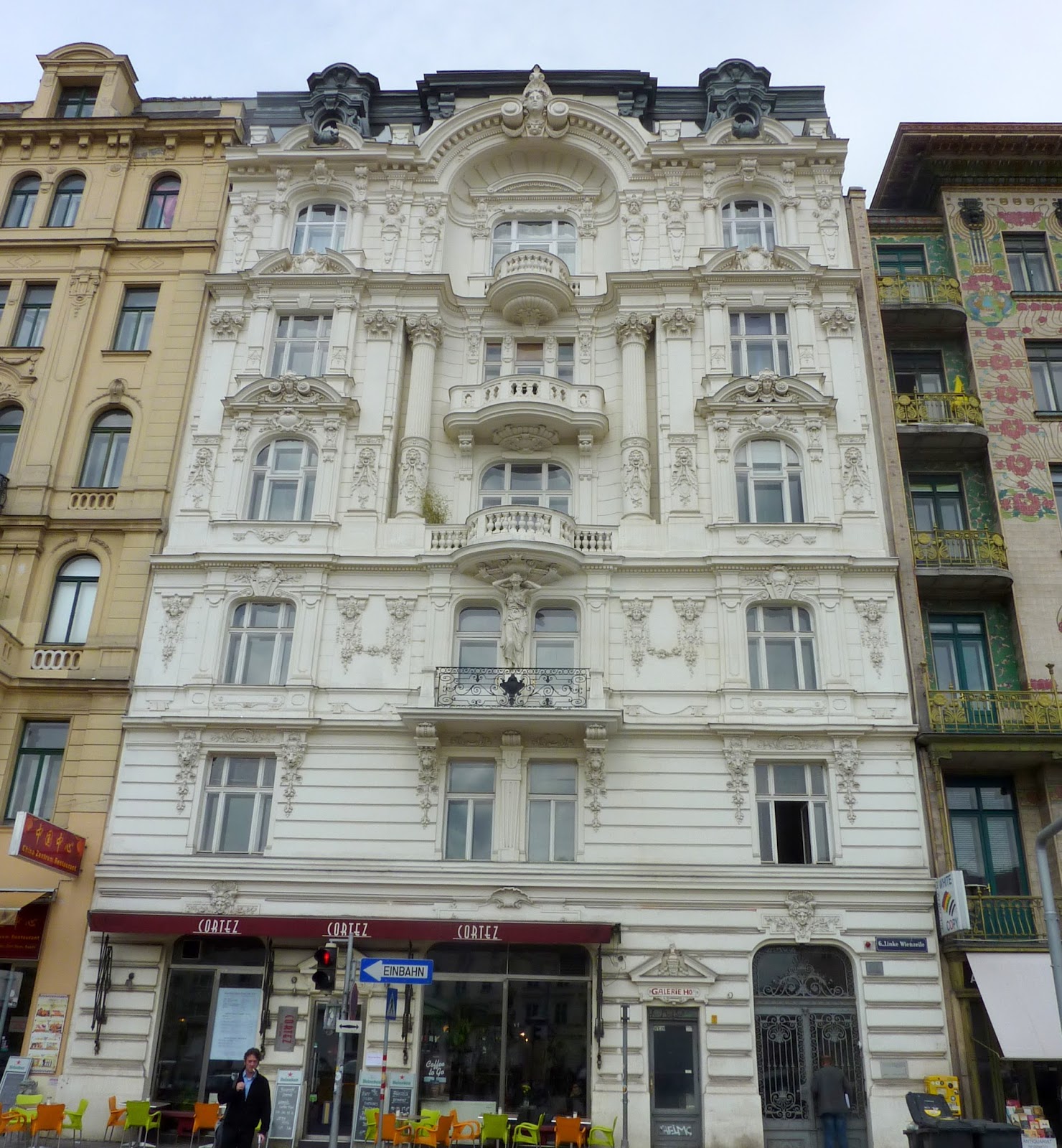


The building next to Majolikahaus is also interesting, but I could not find anything about it.


detail


The U-Bahn station is across the road


looking closer


detail.
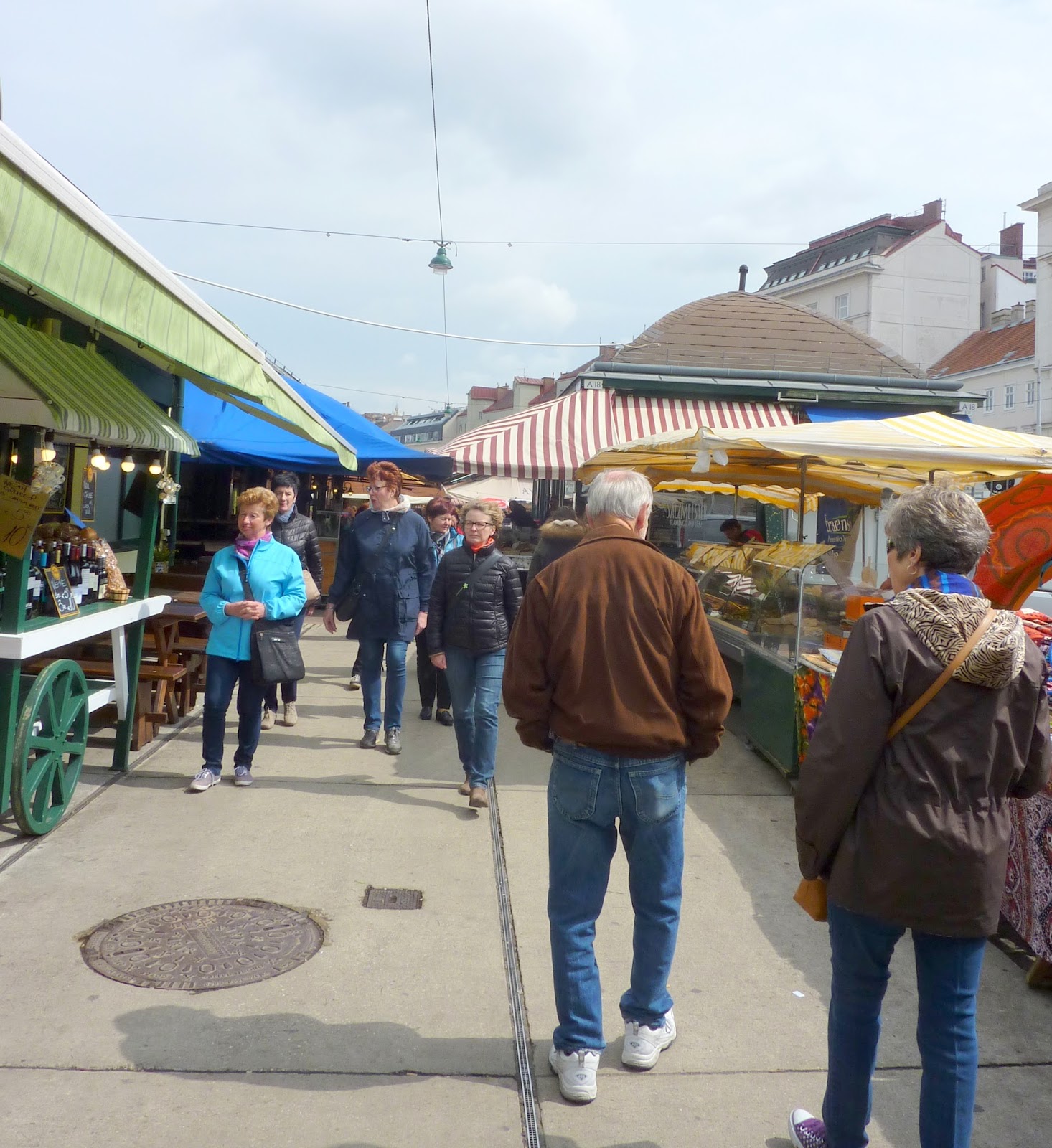


We then walked along the market which dates back to the 16th century.  The stalls are amazing


incense and water pipes


fruit


dried fruit and nuts


deli produce


herbs and spices


teas and infusions


macaroons


cured meats and lots more.


We liked the pedestrian traffic lights in Vienna - note the heart above the two people holding hands


and here's one for cyclists.


By then we were ready for refreshment and a sit down, so we chose Café Sperl, one of the traditional Viennese cafes,


which is situated on the edge of this tiny square.


Following our stop at Café Sperl we walked along Schadekgasse and reached


the Haus des Meeres, a reinforced concrete tower that was built in 1944 to bolster the city's defences. Today it's an aquarium and aviary.

A banner around the top, designed by Lawrence Weiner, proclaims 'Smashed to pieces... (In the Still of the Night)', a memorial against war and fascism.


Friday, 6 May 2016

The area around the Burggarten


We started with the Burgring, which is part of the Ringstrasse, a circular road surrounding the Innere Stadt. Our aim was to visit the Burggarten.


The statue of Mozart is right by the gates  - it overlooks a flower bed that is carefully maintained in the shape of a treble clef.


It was, yet again, a gorgeous day, 22oC and sunny, so lots of Viennese and tourists alike, took the opportunity to bask in the sun - the park was packed.


We walked round the ornamental pond


and then sat here on a bench, the pond behind us, facing what we had come to see


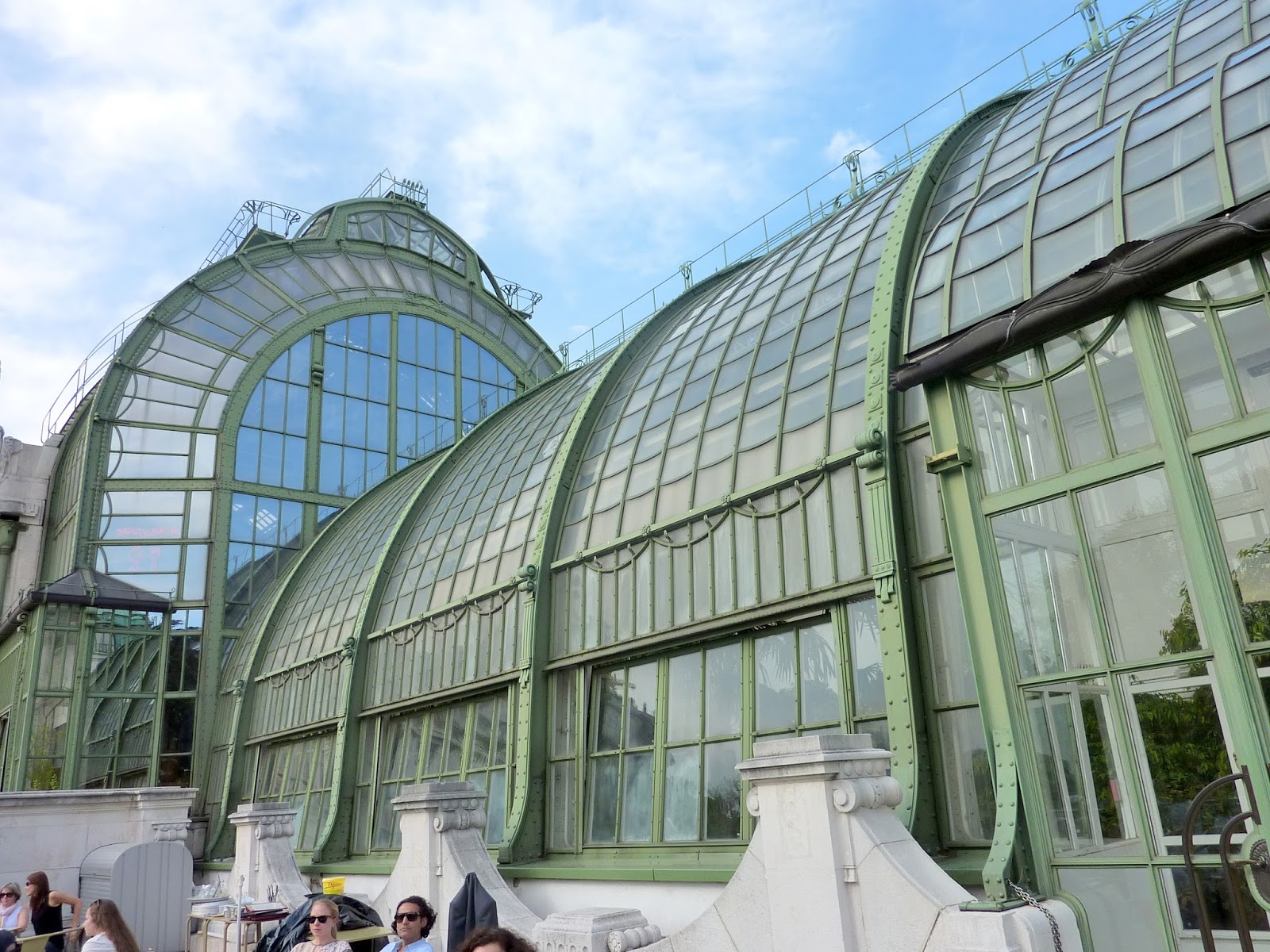
the Art Nouveau Palmenhaus, an enormous greenhouse designed by the Jugendstil architect Friedrich Ohmann and built between 1901 and 1907


It's a magnificent structure


Today the central part is home to a popular café. The left part of the Pamenhaus houses the Schmettlerlinghaus, a butterfly garden where you can see tropical butterflies and even bats.


The 'butterflyhouse' was closed when we visited but we were able to go inside the café


detail


detail


behind the Palmenhaus is the Albertina, a museum and art gallery


which you can reach by going through these gates


The Albertina was erected on one of the last remaining sections of the fortifications of Vienna. In early 1919 ownership of the building and its collection of prints passed from he Habsburgs to the newly founded Republic of Austria. In 1945 the Albertina was heavily damaged by Allied bomb attacks. The building was rebuilt in the years after the war and was completely refurbished and modernised from 1998 to 2003. Modifications of the exterior entrance sequence, including a signature roof by Hans Hollein were completed in 2008.


the roof as seen from below


We liked what they had done with the stairs


advertising one of the current exhibitions: Chagall to Malevich - the Russian avant-garde which we saw. Another exhibition in the Albertina is Anselm Kiefer - the woodcuts which you can see here


We then moved on to Karajanplatz where the Wiener Staatsoper, the Vienna State Opera, is. It was built in 1869 in Neo-Renaissance style by Czech architect Josef Hlavka.


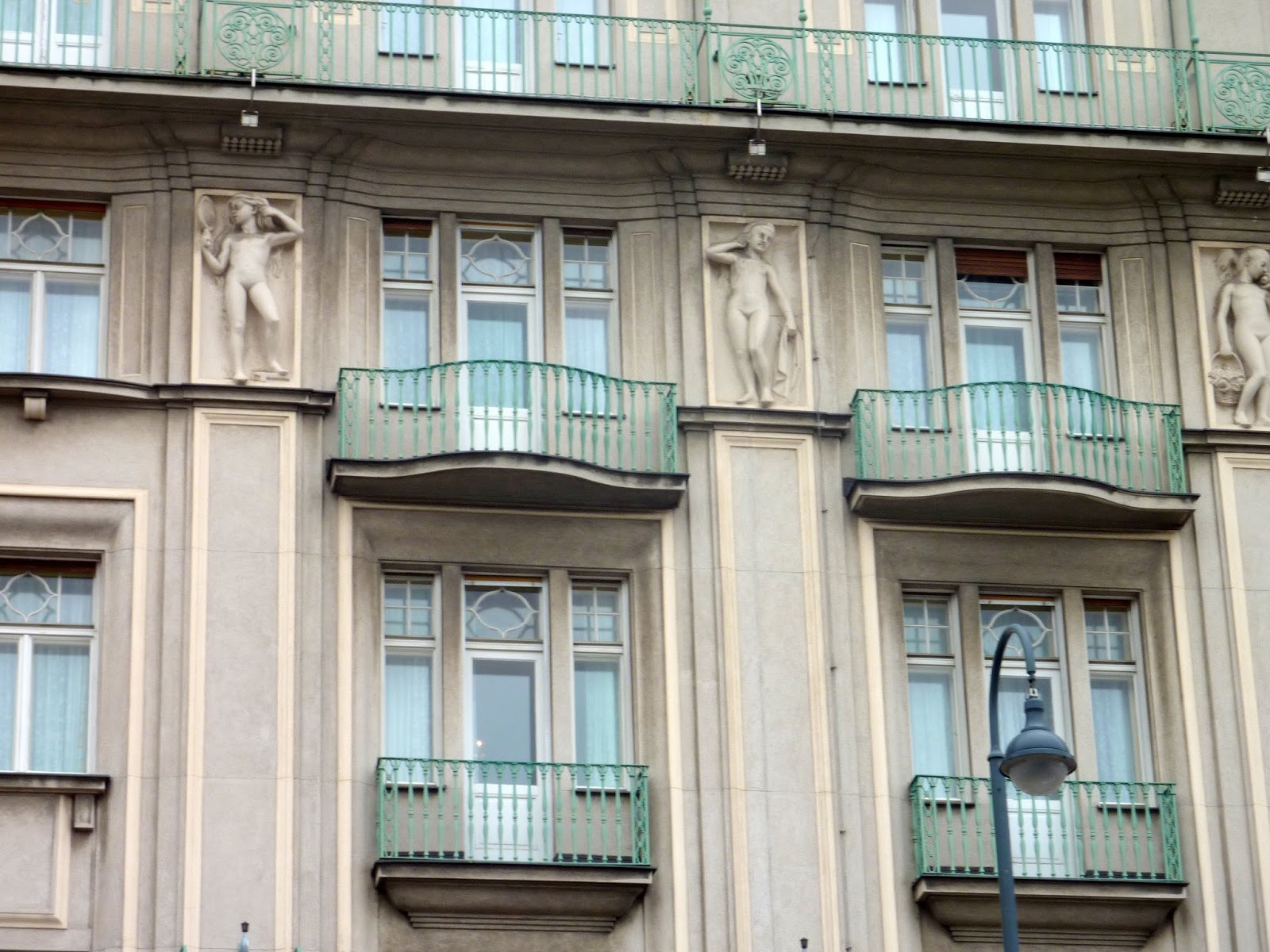
This building which is now a hotel is next to the opera


and has some nice relief work


while these pink bunnies were everywhere.