Thursday, 21 July 2022

Maman by Louise Bourgeois


We went to the Niarchos Cultural Centre to see a photography exhibition and Maman by Louise Bourgeois.


We walked along the artificial canal


and eventually we could see the sculpture across the water.


We crossed over to the other side


and reached the sculpture.


Bourgeois' giant spiders are amongst her most famous works of art.  This is one of the first of the series, made of steel, nearly fifty years after she made her first drawing of a spider in 1947. 

Maman, the largest in the series, is made of steel and marble and stands at over 10 metres tall. It was created for the Tate Modern's first Turbine Hall commission in 2000. 

We did see the installation at the Turbine Hall but it was before I started blogging, so I have no record of it. You can however see more of Bourgeois' work, including some of her spiders, here


With marble eggs in its abdomen, the sculpture embodies ideas of maternal protection. Bourgeois stated that Maman was symbolic of her mother, a weaver and tapestry restorer, with whom she was very close and whose early death propelled Bourgeois into using art to explore feelings of loss and abandonment. 'My best friend was my mother, and she was deliberate, clever, patient, soothing, reasonable, dainty, subtle, indispensable, neat and useful as a spider'.


The body of spider creates a unique architectural experience that acts as a metaphor for the home and its web of human relationships and woven interdependencies. Maman also reflects Bourgeois' ambiguous, contradictory and complex feelings about her own experience of motherhood. Dominating its surroundings, Maman evokes fear by suggesting entrapment, and challenges our psyches by revisiting questions of intimacy, co-existence, and shared predicaments. 'I have failed as a wife, as a woman, as a mother, as a hostess, as an artist, as a business woman... as a daughter, as a sister, I have not failed as a truth seeker'.


Tuesday, 19 July 2022

Back in Greece

We've been back in Greece for three weeks now. Had a shaky start, too many things in the apartment going wrong, but it's all settled now and we can relax and get into our Greek routine.


Going swimming, a great pleasure.


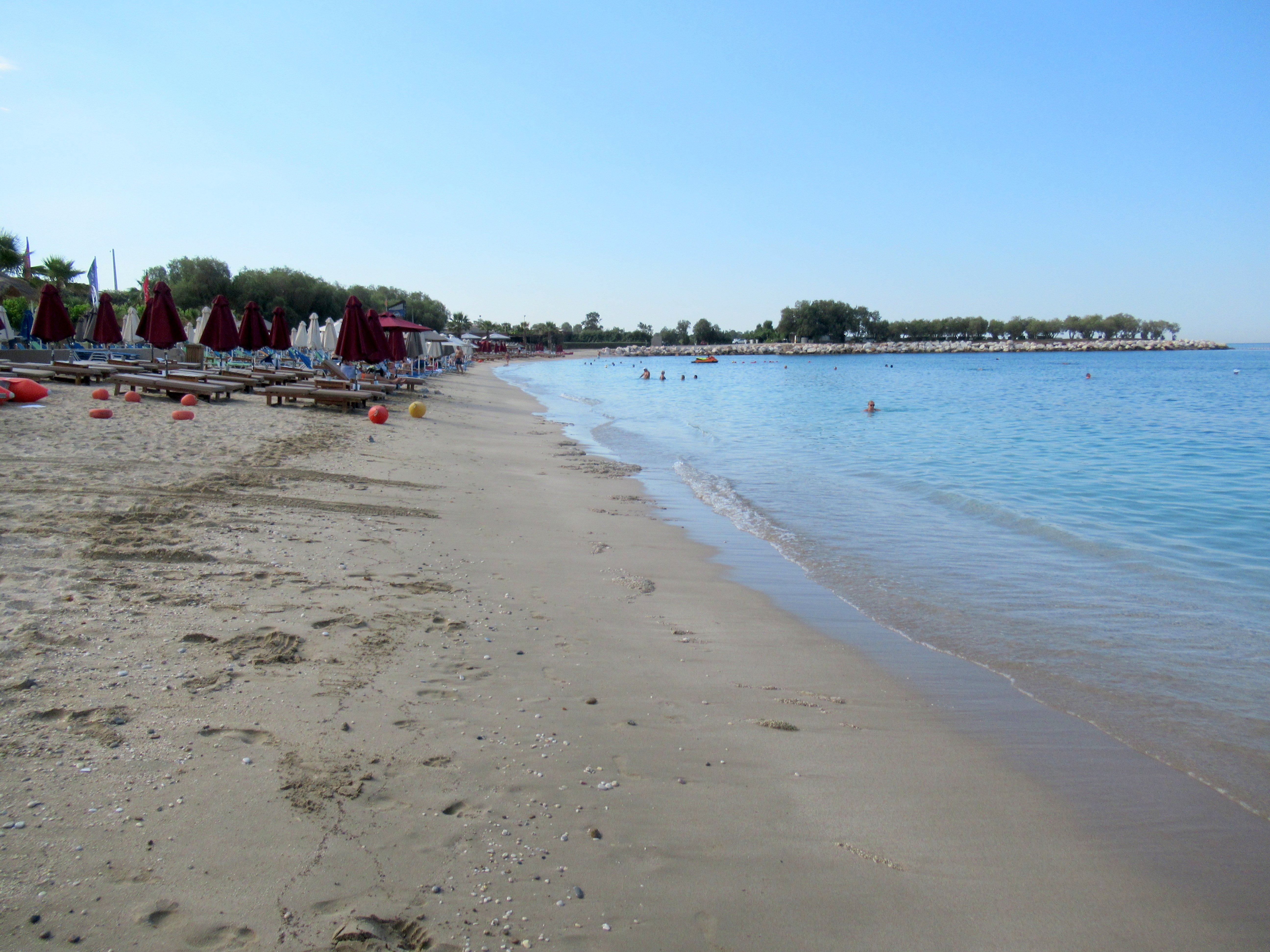
We always have an early start and reach the beach at around 9:00 when it's fairly quiet and we can get an umbrella and beds in the front row.


Things are different this year however. Purple jelly fish have appeared for the fist time as far as I remember.  Apparently they are very different to the 'normal' jelly fish: their sting is extremely painful and and there can be complications for some. So, people swim near the shore and we have yet to see anyone going all the way to the net. One of our great pleasures used to be swimming up to the net, but, like everyone else, we only swim half-way to the net and then swim across. I used to get stung by jelly fish on a regular basis when I was a child and throughout adolescence, but I have to admit, that I would rather not get stung by these guys, so we're being careful.

Why the sudden emergence of these purple ones? One theory I have heard is that the population of sea turtles, whose main diet is these jelly fish,  has drastically declined. Why has the population of sea turtles declined? Because of plastic in the seas which they infest and then choke.  But, it could also have something to do with climate change.


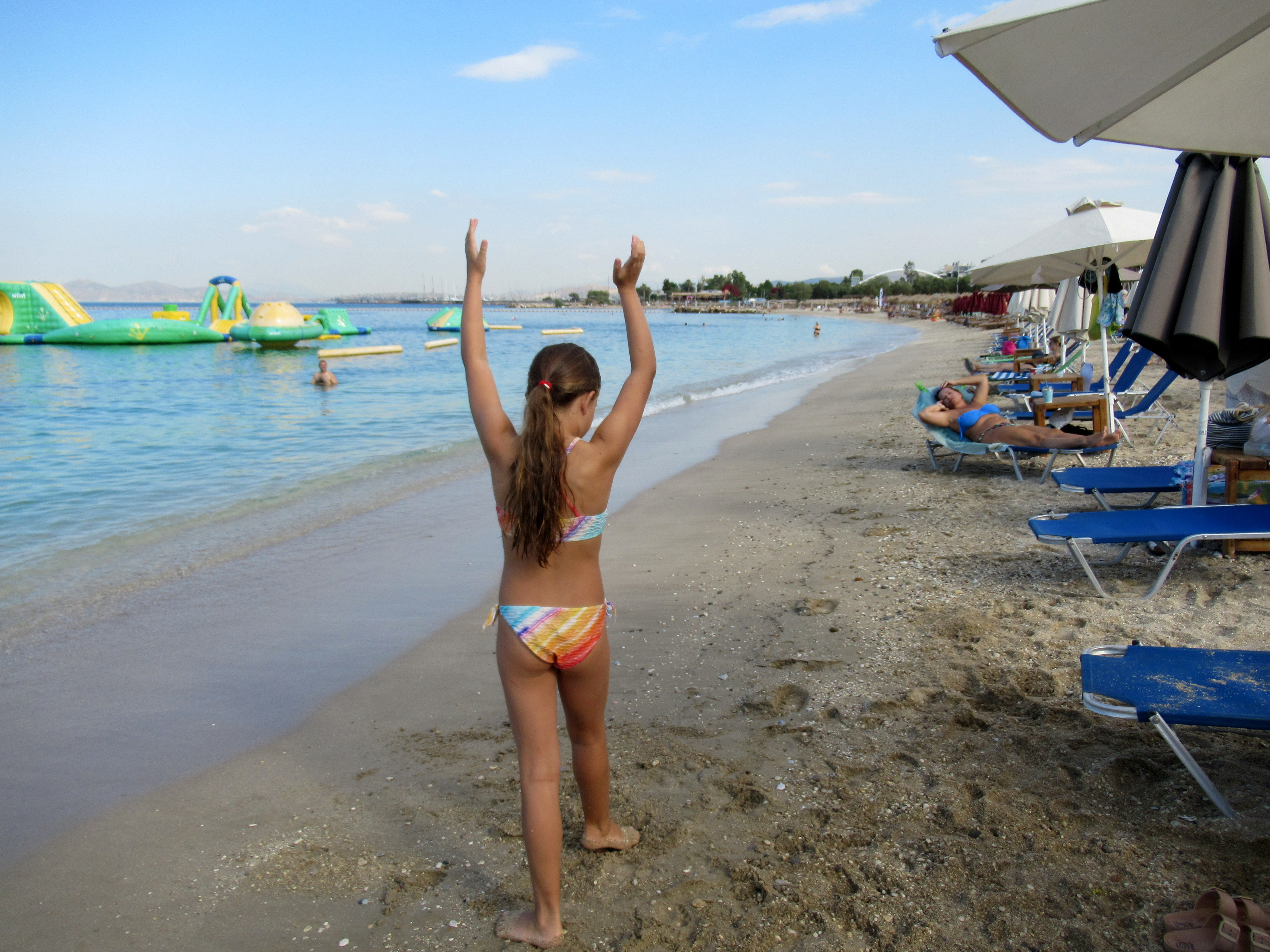
This little girl, who was sitting next to us with her grandmother, was doing cartwheels. With her permission, and her grandmother's, I took a photograph.


Perfect.


And then, the splits.


One thing I have noticed here, on the beach is the number of butterflies: they are everywhere, 3-4 flying near us every minute, and even when we are swimming they hover over our heads. Butterflies are becoming such a rare phenomenon in the UK: if we see three during a two-hour walk in the countryside, it's a good day. Here, they are everywhere - such a pleasure.


Saturday, 16 July 2022

Minimalisms and Conceptualisms of the Berardo Collection


Minimalisms and Conceptualisms of the Berardo Collection, Lisbon.

In the 1960s, the world was still recovering from WWII, while enduring the Cold War. With American imperialism and Soviet influence, new counterculture movements - against not only capitalism and consumerism but also Soviet culture - emerged and influenced the visual arts.

In this exhibition the collection starts with works from the 1960s, including the first minimalist experiments, based on ideas of plainness, simplicity and neutrality, and made with industrial materials. These works presuppose an interaction with and new forms of perception from the viewer, offering the latter new experiences. This contemporary tendency - to turn to space, to embody and/or transform the artwork - was also explored in Post-Minimalist and Conceptual practices.


Elsworth Kelly, Yellow Relief with Blue, 1991


Morris Louis, Beta Tau, 1961


Frank Stella, Hagamatana II, 1967


Agnes Martin, Untitled, 1989


Carl Andre 144th Travertine Integer, 1985


John McCracken, Gate, 1995


Sol LeWitt, Eight-Sided Pyramid, 1992


Larry Bell, Vertical Gradient on the Long Length, 1995


Imi Knoebel, Eva 


Bruce Nauman, Smoke Rings, 1980


Bruce Nauman, Double Poke in the Eye, 1985


Richard Serra, Point Load, 1988


Rebecca Horn, The Trembling Tale, 1979


Haino Unido, Secret Painting (Ghost), 1968


Reino Unido, Painting/Sculpture, 1967


Michael Craig-Martin, Looking, 1996


Joseph Kosuth, Self-Described and Self-Defined, 1965


Joseph Kosuth, One and Three Plants, 1965


Olivier Mosset, Douglas, 1985-1986


Claude Viallat, Bleu de Methylene - Toile Teinte, 1971


Anish Kapoor, Eyes Turned Inwards, 1993


Robert Mangold, Four-Colour Frame Painting 2, 1983


Fernando Calhau, Untitled, 1988


Thursday, 14 July 2022

Paula Rego's house


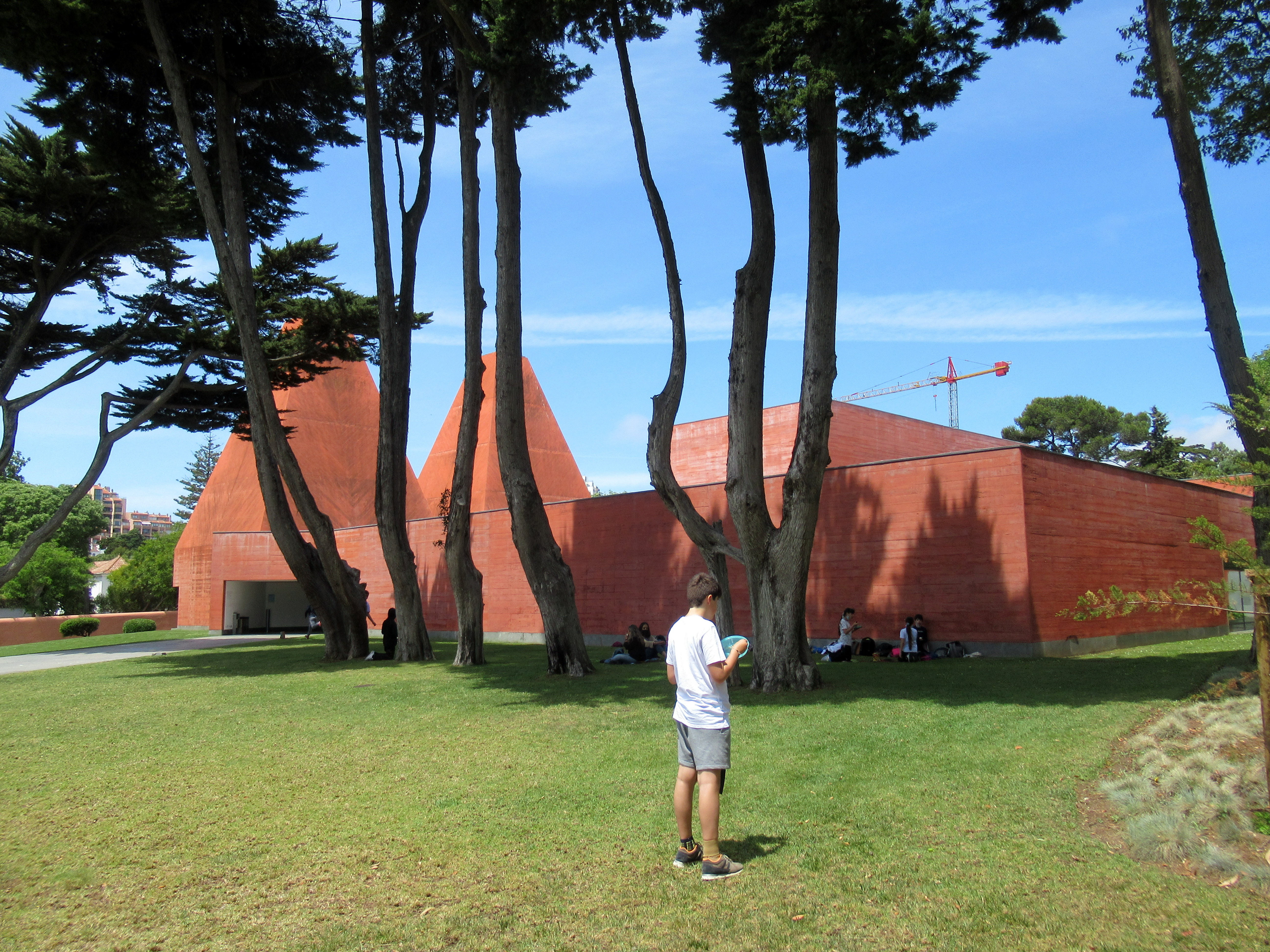
The House of Stories, Paula Rego's museum was built in her childhood hometown, Cascais. It opened in 2009 in a red building designed by Eduardo Souto de Moura.


The land and trees which previously existed at the site are incorporated as fundamental elements.


The building makes use of certain aspects of the region's historical architecture, which is here reinterpreted in a contemporary way. It can be immediately recognised thanks to its two pyramid-shaped towers and the red-coloured concrete used in its construction.

Four wings, of varying heights and sizes, make up the building. The building itself is subdivided into rooms which lead into one another and are laid out around the higher central room which houses the temporary exhibition. There is a shop, a cafe which opens onto a verdant garden and auditorium with 200 seats. It was Paula Rego herself who was responsible for the choice of architect.


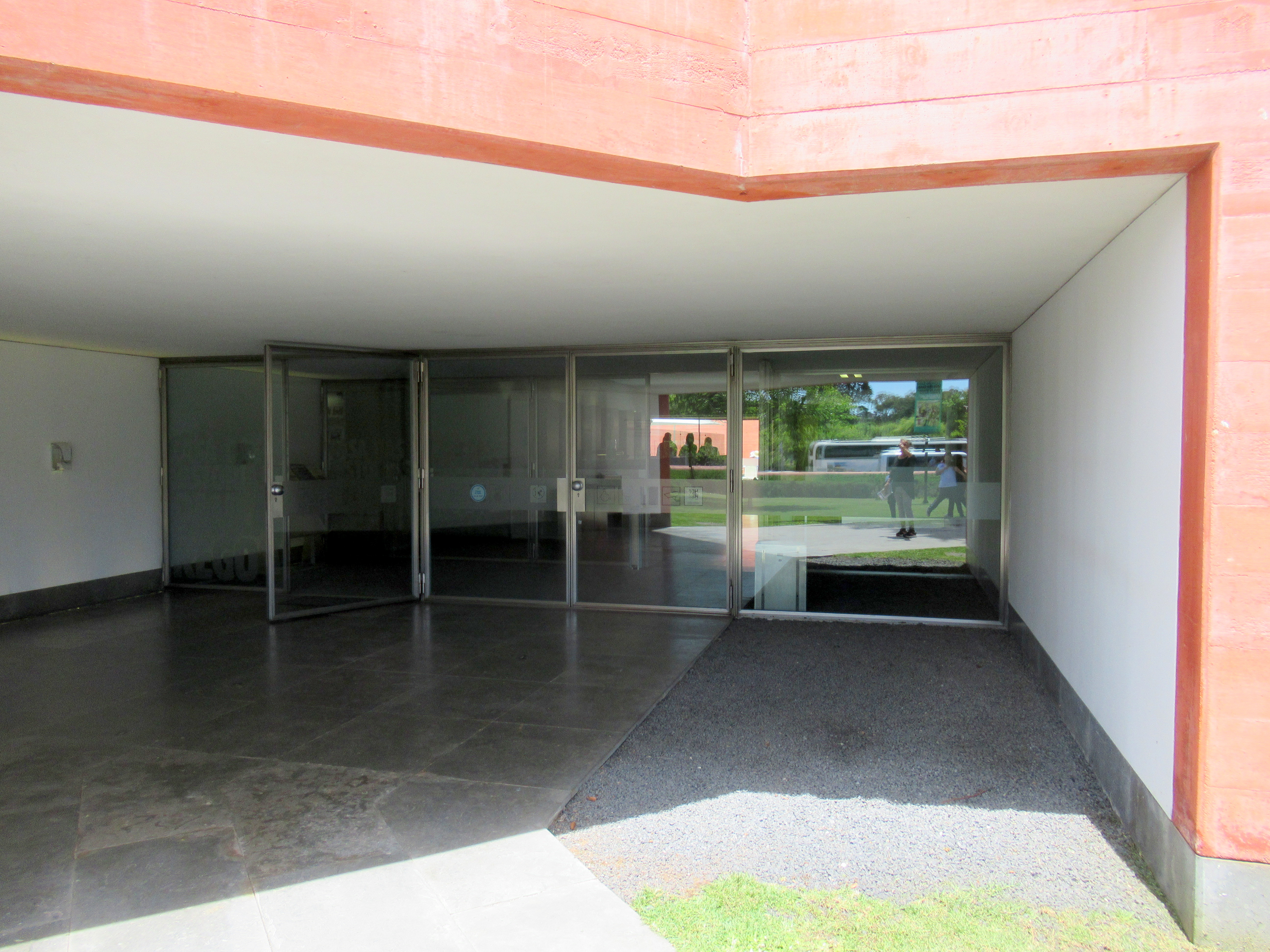
Minimalist simplicity at the entrance.

After seeing the exhibits


we walked all around the house and the grounds


taking in the whole of the structure of the building


parts of which are a series of cubes.


The grounds have the same minimalist simplicity as the interior.

I will not blog about any of the art we saw here until October as it's time I got back to the present and started blogging about what we are doing now, in Greece.