As I started writing this post I realised that I did not take any photographs of the place where we stayed in Adamas in Milos. It was a guest house, what they call in Greece 'rooms'. It consists of four three-storey buildings built in the traditional Cycladic style. Each floor has one or two rooms and each building has its own outdoor winding staircase. It was very comfortable, our room was large, with basic kitchen facilities and our own small balcony.

I did take some pictures of the garden at night though

which was delightful and very welcoming when we got back each night.

In my previous post I wrote about how we spent most days exploring the island, but then would come back to spend the evenings in Adamas. Our evenings would start here where we would have pre-dinner ouzos.

Comfortable seats, not too many people, and right by the sea - what more could one want?

It was delightful

sitting in the shade of these trees which are called almyres in Greek, which translates as the 'salty ones'.

They only grow by the sea and in a lot of cases you can see the roots right inside the sea water.

The views were fantastic

We would watch the sunset,

the way the light changed at dusk

and then, the first lights that came on the boats as evening set in.


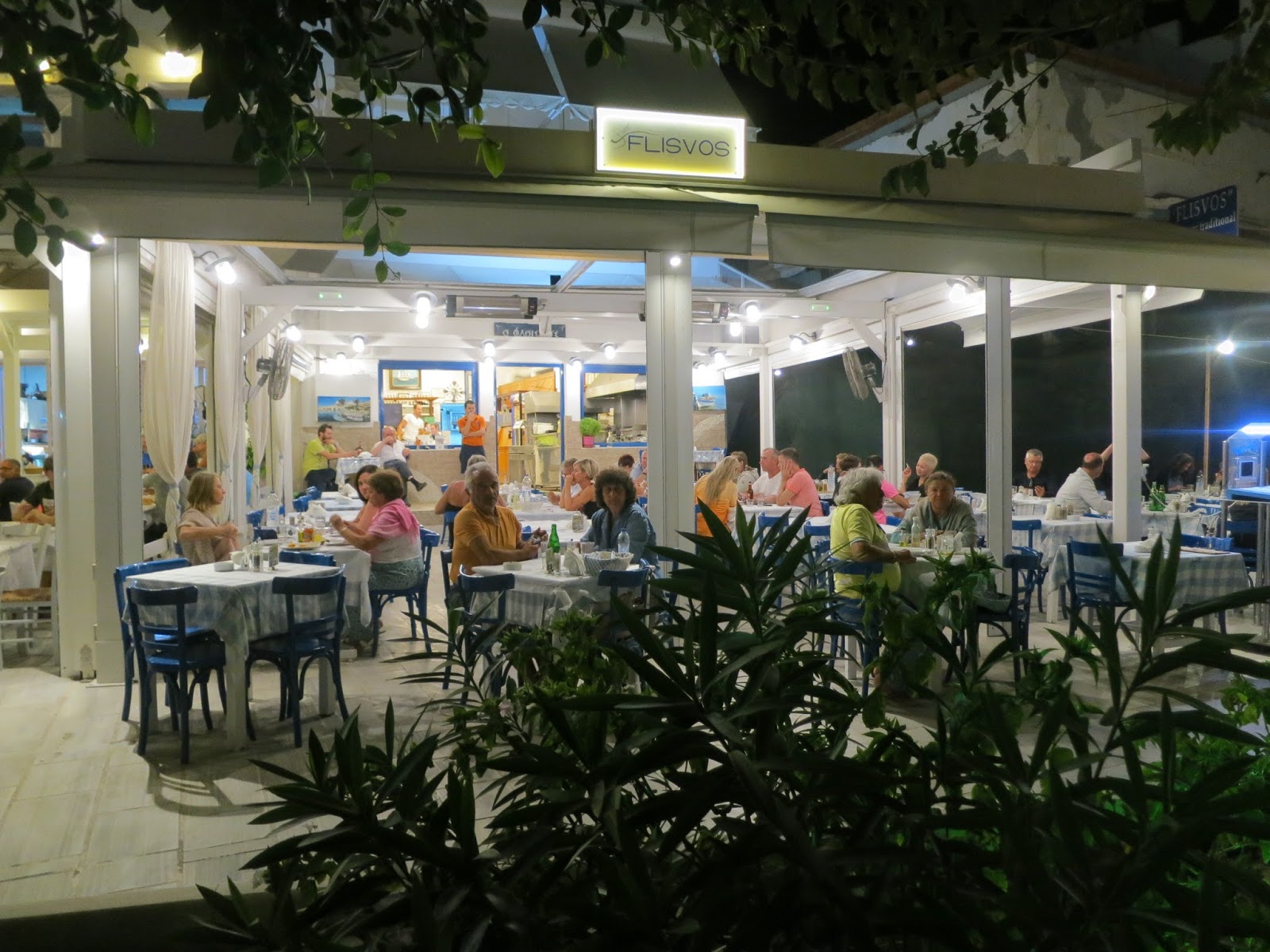
We had lunch at one of the group of tavernas near our 'rooms' on our first day which was a disaster: the food was awful. We later found out that it was the worst of that group of 6 tavernas. Bad luck on the first day! We then discovered this little gem, O Mikros Apoplous.

We were the only customers on our first day of eating here because it was 4:00 and most people had eaten and left.

Most of the time it was packed, and unless we booked we could not find a table before 10:30 in the evening. The food was outstanding, with the freshest ingredients and an imaginative, experimental chef. And it was ridiculously cheap. We ate here every evening we spent in Adamas.

The tables and chairs were traditional Greek taverna ones, except for this lot, an example of the care and attention to detail that the owners bestowed on this place.

As with our ouzo place, the views were great.

This was the second best taverna in Adamas. The best one according to the locals is called O Hamos! (note the exclamation mark), translated as Mayhem, and it was mayhem indeed. Apparently you had to queue on the main road into Adamas for one to two hours to get a table, it was so good. We decided not to go there for two reasons: it was out of town,

and we did not fancy the walk there and back, particularly since it would probably involve queueing. Secondly, it was set on the main road, and we prefer having sea views. Maybe we missed out, but we were happy with our decision.

We didn't look at the shops much, but I liked this one, Bottiglia, in honour of the Italians, the largest ethnic group holidaying on the island, I presume

it sold nuts, dried fruit, spoon sweets

and booze.

This was the patisserie par excellence,

with an amazing range of pastries, jams, spoon sweets and condiments, including the local tomato paste used as a dip which is to die for

We enjoyed having a look here.

This display is of the local spoon sweet, called koufeto.

Koufeta (the plural) are sugared almonds given to guests at weddings and christenings.
(I've re-posted this image for easy access). In Milos however, they also make a spoon sweet made from the flesh of the white pumpkin in this photograph, then they add almonds, and it's the traditional sweet served in weddings. I tried some in the taverna in Palaiolohori (post to follow) and it is lovely indeed.

This souvlaki place was always busy, and we were tempted to go there

as it looked very inviting, but no sea views, so that was that.

I will finish on a negative note. I needed to buy something from a pharmacy and unfortunately we chose this one, in the center of the town, and the prices were outrageous - double what we would pay in Athens. Shame on you G.S. Martakis, cashing in on the tourists in such an outrageous manner!
There is another pharmacy in the town but we discovered that later.