
We have a lot of pine trees in our area: in public parks like this one, where our neighbourhood outdoor gym is ,

in people's gardens or lining the streets. It's wonderful.

Except for this. In the spring, gardens, parks and the streets fill up with long chains of caterpillars or cambies, as we call them here. Nothing as much as when I was a child, when the whole place would fill up. The numbers have decreased considerably, just as the numbers of all insects have decreased due to human destructive activity. (I actually get excited when I see a butterly these days and it used to be such a common sight).

The pine processionary (Thaumetopoea pityocampa) is a moth of the subfamilyu Thaumetopoeinae, known for the irritating hairs of its caterpillars, their processions and the damage they cause in coniferous forests.

The species is notable for the behaviour of its caterpillars, which overwinter in sack or tent-like nests high in pine trees and which process in nose-to-tail-columns, protected from predators by their irritating hairs.

These hairs cause harmful (and in some cases allergic reactions) in humans and other mammals. These include severe rashes and eye irritation. My childhood every spring was marked by the extremely itchy bumps and that would form on my skin every time I left the house. Not only was our area full of pine trees (a lot more than today) but we also had four in our garden. Now, the ones in the garden have gone, and as I said earlier, their number has decreased, but I still get some red bumps that are so itchy, and for the first time in his life, so has Ken.
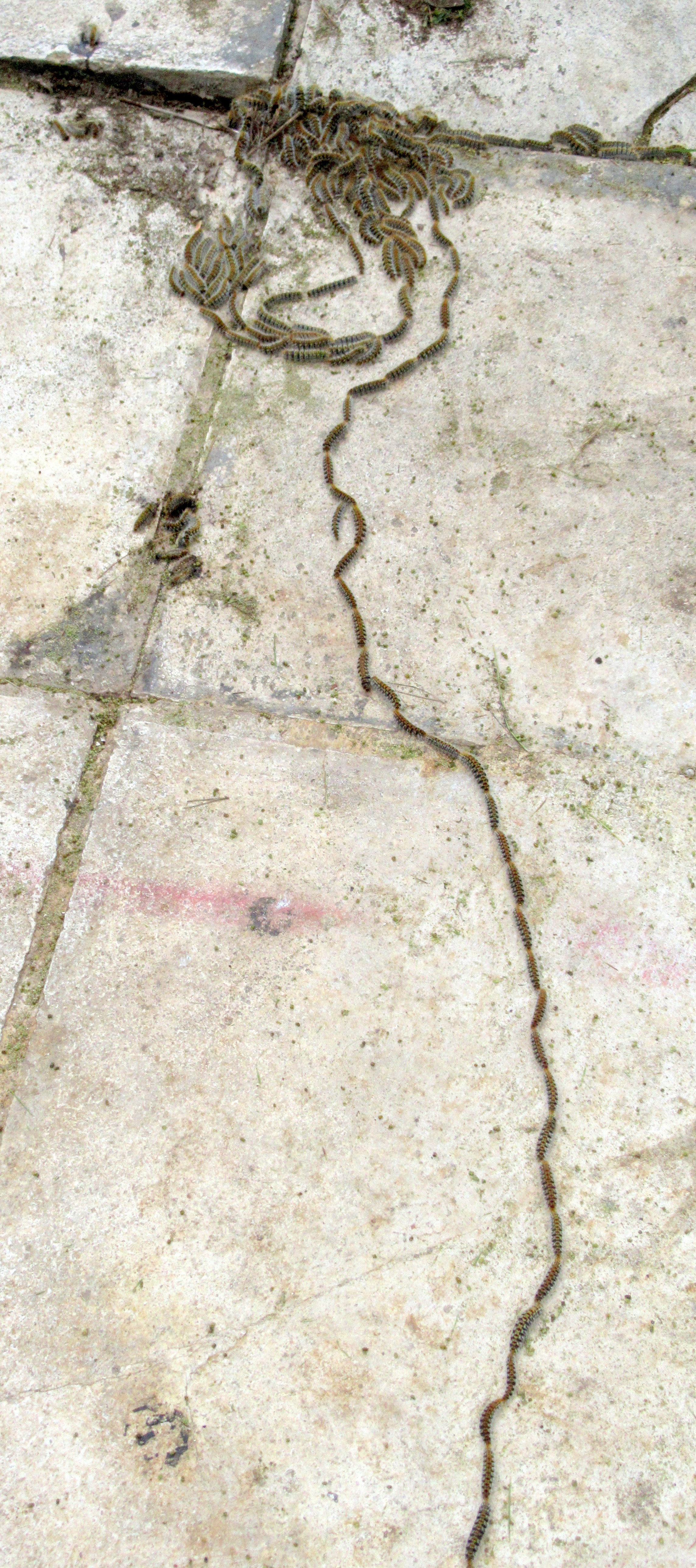
Once the catepillars have fully grown they form lengthy processions, abandon their host tree in search of pupation sites, when as many as three hundred caterpillars may travel long distances from the natal tree looking for soft soil in which to bury themselves and form white
silken cocoons. They burrow underground, pupate and emerge between mid May and August as moths which have predominantly light brown forewings with brown markings.
Finally, I saw something similar in the UK, you can see my post here : a different type of caterpillar, and even though the web was different, and for a different purpose, the basic fabric of it looked similar.


