Radical Landscapes
at the Mead Gallery, Warwick Arts Centre.
This exhibition offers an expanded view of British landscape art focusing on the early 20th century until today. Traditional landscape painting is associated with idyllic rural scenes, which can express an artist's appreciation of nature and have helped form perceptions of the national identity. Ancient symbols embedded in the land, such as Stonehenge, are often imbued with mysterious or sacred meanings becoming a mirror for individual and communal identities. The pictorial conentions of landscape art can also express the status of land ownership, themes of exclusion, or control over nature. Outside of painting, artists have turned to techniques including film, performance and installation art, showing how art can be made in and of the land, rather than by viewing it as a constructed 'scape'.
The exhibition interrogates the relationship between land, history and identity. It explores themes of trespass, using art to explore the thresholds between public and private land, showing how these relate to our sense of identity and belonging. The enclosing of rural land and its perceived misuse has triggered protests throughout history, linking to broader arguments around civil freedoms alongside the long shadow of colonialism.
Against the context of the global climate emergency, nature is increasingly seen as something to protect and preserve, and many artists have produced work in parallel to the development of the modern environmental movement. All of this has provided fertile ground for artists and activists. Radical Landscapes presents the rural as a site of artistic inspiration and a heartland for ideas of freedom, mysticism, experimentation and rebellion.
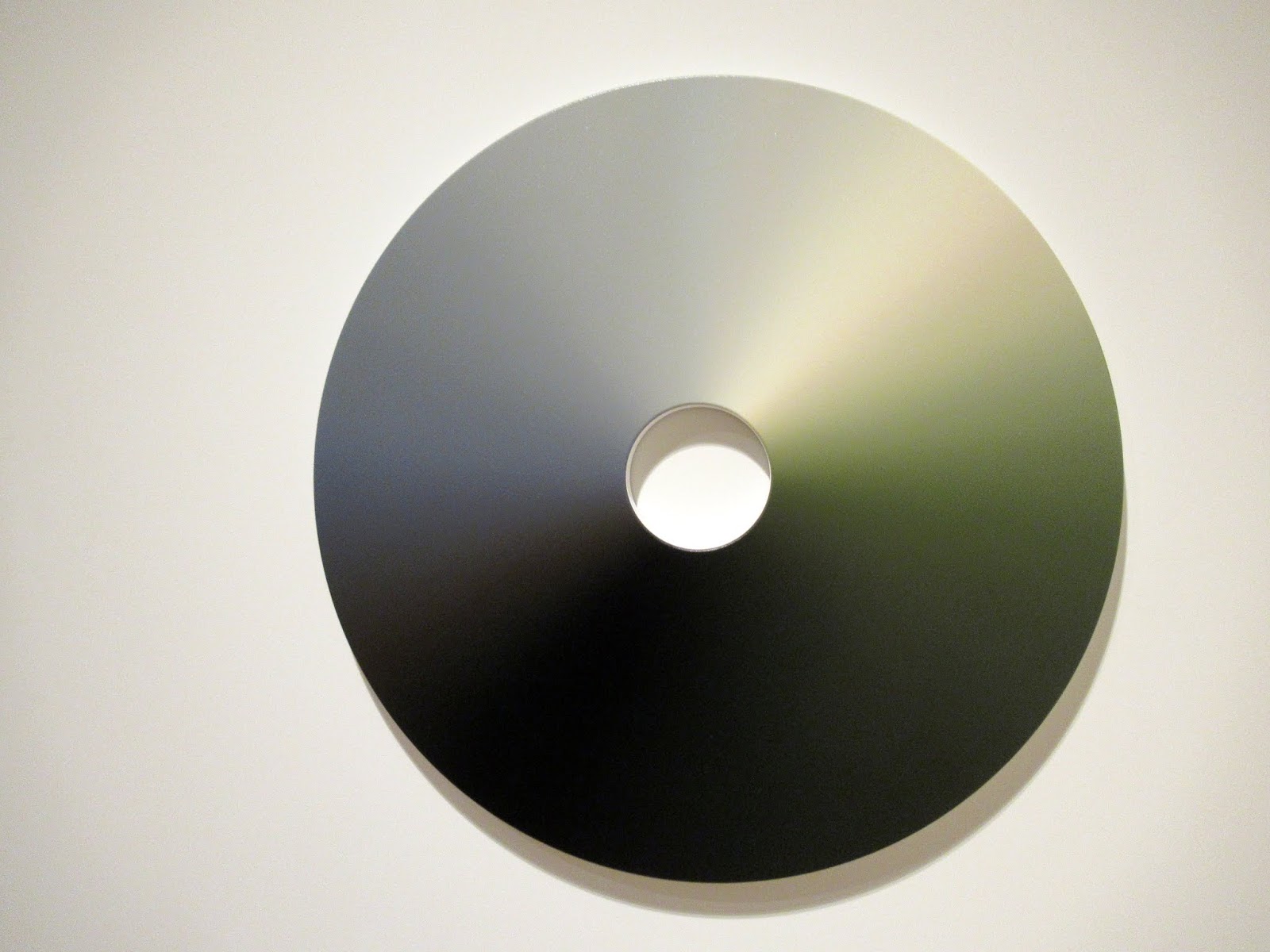
Richard Long
Marianne North, Sterculia of Mesico, 1880 (oil on card)
Aubrey Williams, Summer 1956, (oil on canvas)
Before moving to the UK, Williams had served as an Agricultural Field Officer on sugarcane plantations on Guyana's east coast, and though it conflicted with his official position, he played an important role in helping exploired farmers organise against the plantation owners. This led to him being sent away to a more remote British agricultural experiment station in the north-western rainforest settlement of Hosororo. While there, Williams met Indigenous Warao people and became interested in Indigenous knowledge systems. Williams identifies this as a turning point for his artistic career. His interest in indigenous American cultures deepened when he became a full-time artist after moving to the UK. Summer reflects this interest, especially the 'claw-like forms' he identified as a 'sort of Caribbean signature theme'.
Ingrid Pollard, Oceans Apart, 1989, (photographs, gelatin silver prints on paper)
A history lesson referring to borders, as well as maritime routes sailed by colonists, enslavers and explorers, whose voyages resulted in disease, death and the mass transportation of enslaved people.
David Medalla, Sand Machine Bahag - Hari Trance, 1963-2015, (wood, brass, sand, bamboo, acrylic sheet, glass beads and other materials)
Medalla has made a number of 'sand' machines', works he has described as 'a metaphor for the future, when technology will be able to use solar power to help irrigate the world's deserts'.
Yan-chia Li, Hanging Disc Toy, 1980, (steel wood and magnets with photographs on paper)
Eileen Agar, Figures in a Garden, 1979-81, (acrylic on canvas)
Tacita Dean, Majesty, 2006, (gouache on photograph paper)
Majesty is one of a group of works based on photographs of ancient trees in the southeast of England. This image depicts one of the largest and oldest complete oak trees in England. All the area surrounding the tree's leafless branches and trunk has been overpainted with white gouache isolating the structure and form.
Hurvin Anderson, Double Grille, 2008, (oil on canvas)
This seemingly abstract painting references the security grilles found around properties in Jamaica, where Anderson's parents were born. Anderson, who was born in Birmingham, often uses his work to explore his feelings of dislocation arising from his experience of being positioned between two different places and cultures.
This painting also reflects the privatisation and enclosure of land, as the fencing prohibits access to the verdant scene in the background.
Bryan Wynter, Seedtime, 1958-59, (oil on canvas)
The fragmented composition of Seedtime demonstrates Wynter's interest in space, structure and movement. His paintings of the late 1940s had been dramatic representations of the Cornish landscape. While his later paintings were increasingly abstract, he explained that they were still linked to nature. 'The landscape I live among is base of houses, trees people; it is dominated by winds, by swift changes of weather, by moods of the sea... These elemental forces enter the painting and lend their qualities without becoming motifs'.
Graham Sutherland, Green Tree Form: Interior of Woods, 1940, (oil on canvas)
Tanoa Sasraku, Swaling Gorse, 2018, (newsprint, pastel, ink, polyester thread, linen thread, wood, charcoal, steel)
Sasraku's flags are borne from a process of accumulation: newspapers pressed and stitched together to create inseparable layers of congealed contemporary history. In the 17th century in British Ghana, the Asafo people adopted European military practices; it was with the arrival of European cloth that Asafo companies were established. Asafo flags illustrated historical events and proverbs, often using visual metaphors (such as the crocodile, a symbol of strangth in Fante communities). In Swaling Gorse, Sasraku performs a kind of abstraction in which her displacement from Ghana to the United Kingdom, interest in Celtic symbols and tartan and experience of alienation as a child of dual-heritage in English countryside culminate in minimalist repetitive patterns referencing fire and smoke.
Veronica Ryan, Untitled, 1985, (plaster and bronze)
Untitled appears to represent a large, ripened seedpod, a shape that was inspired by the fruits, pods and other natural forms Ryan knew from her early childhood in Montserrat in the Caribbean. The island of Montserrat is a living link to Britain's colonial past, as it is a British Overseas Territory, which is internally self-governing but with the King as head of state and defence remaining the responsibility of the UK. This sculpture sits directly on a plinth, ready to spring to life like the strewn seeds of the natural environment.
looking closer
Anwar Jalal Shemza, Apple Tree, 1962, (oil on hardboard)
Shemza was an artist, writer and teacher who worked in Pakistan before relocating to England in 1962. Shemza was initially influenced by modern art, most notably Paul Klee. His migrant perspective led him to expand the language of modernism through the prism of Islamic aesthetics. His work combined calligraphy and geometry with painterly patterning evoking the rural landscapes of Staffordshire, where the artist lived from the early 1960s onwards.
Rose English, Bed in Field, 1971, (photographs, gelatin silver prints)
English was part of a generation of women artists in Britain in the 1970s who used performance to highlight and disrupt oppressive gender roles and ideas of class and social hierarchy. Bed in Field draws on the conventions of landscape art. It playfully documents the artist and her then partner under a duvet, tucked into a ploughed rural landscape. English was commenting on the absence of self-representation by women in traditional landscape art, as well as the patriarchal histories of land ownership.
Carol Rhodes, Airport, 1995, (oil on hardboard)
Rhodes was known for the unique style of landscape painting she developed in the 1990s, depicting scenes from aerial views, where the countryside meets human-made infrastructure such as roads, towns or airports. In the 1980s Rhodes was politically active in nuclear disarmament causes, and and she joined the Greenham Common Women's Peace Camp. These political views informed her later paintings, which show landscapes that have been distorted and imposed on by human developent such as the airport depicted here.
Delaine le Bas, Rinkeni Pani (Beautiful Water), 2022
Le Bas is an English Romani artist. This self-portrait is a homage to water as a limited natural resources while exploring the ownership of nature and land. The imagery on the dress references historical themes and the artist's own ancestry, including her great grandmother who urged Le Bas never to waste precious water. The log with wheels alludes to nomadism which is a historical way of life for many Romanies. By presenting herself in the landscape, Le Bas is commenting on the the uneven distribution of access to water and land, which is inseparably tied to socio-economic factors and attitudes in contemporary society.
looking closer
Monica Sjoo, Earth is Our Mother, 1984, (oil on board)
Sjoo was known for her eco-feminist politics and she joined the peace camp at Greenham Common. She was an early exponent of the Goddess movement, a varied system of beliefs inspired by pagan religions which arose as a reaction to male dominance in mainstream organised religion. She believed in a 'Great Mother' as the cosmic spirit and generative force behind the universe. These beliefs influenced her paintings, which regularly reference birth, the female body, nature, as well as archaeological stone circles. This painting refers to the earth itself as our 'mother'.
Greenham Common Women'sPeace Camp
At Greenham Common Women's Peace Camp creativity was at the centre of communication and action. Protestors used potent banners, posters, sculpture, performance, songs, poetry and zines to convey their messages. The Greenham women's protest art built on a lineage of rtistry present in the women's suffrage campaigns of the early 20th century - such as the banner designs of Mary Lowndes - and the creative activities of the Campaign for Nuclear Disarmament and women's liberation movement. The language of recent environmental campaigns continues this radical artistic tradition.

Thalia Campbell, Greenham Common Peace Camp, 1982, (textile)
Melanie Friend, Greenham COmmon, 14 December 1985, (photograph, gelatin silver print on paper)
Brenda Prince, RAF Molesworth, Cambridgeshire, 1982, (photograph, gelatin silver print on paper)
Brenda Prince, RAF Greenham Common, 12 December 1982, (photograph, gelatin silver print on paper)
Joanne O'Brien, 26 Women Cut Their Way into the Base, 12 May 1984, (photograph, gelatin silver print on paper)
Jenny Matthews, Greenham Common 'Embrace the Base' Protest, 12 December 1982, (photograph, gelatin silver print on paper)
JennyMatthews, Greenham Common Airbase, 1982, (photograph, gelatin silver print)
Melanie Friend, Coulport, Scotland, Mass Tresspass at Royal Naval Armanents Depot, 4 October 1986, (photograph gelatin silver print on paper)
Stephen McKenna, An English Oak Tree, 1981, (oil on canvas)
Henry Moore, Atom Piece (Working Model for Nuclear Energy, 1964-65, (bronze)
Atom Piece is an apparent modernist celebration of the power of the atom bomb, sculpted after Harold Wilson was celebrating the 'white heat of technology'. Yet look more closely at Moore's sculpture, and beneath the metallic exterior, the helmet-like shape of a skull emerges. The British government did not yet wish to admit the full horror of what a domestic nuclear strike would mean, but Moore - a founding member of the Campaign for Nuclear Disarmement in 1958 - would have been all too familiar with events at Hiroshima in 1945, and what this could mean for the British landscape.
A different view
Various publications about Greenham Common Peace Camp
Jeremy Deller, (A303) Built by Immigrants, 2019, (mixed media)
The A303 road runs across the south of England, on a route that runs directy past Stonehenge. Deller's message applies to both the past and the present. In the present day, it is a literal reminder that Britain relies on migrant labour in many sectors and that the people behind this labour aften often invisible or demonised in the media. Alongside this, Deller also created a partner artwork (not present in this exhibition) which reads 'Stonehenge Built by Immigrants', referring to the stone itself which is likely to have been transported from Pembrokeshire in Wales. Such statements undermine ideas of 'Englishness' associated with the countryside and sites such as Stonehenge, reflecting the complexity of the real story.
Jeremy Deller, Smileys, 2019, (straw)
Ithell Colquhoun, Landscape with Antiquities (Lamorna), 1955, (oil on canvas)
Ithell Colquhoun, Attibutes of the Moon, 1947, (oil on wood)
Colquhoun was a surrealist painter whose images of the 'divine feminine' provide a precursor to Goddess spirituality and the gendered landscapes of later artists such as Monica Sjoo. Throughout Colquhoun's work, she fused natural and bodily forms, with a particular focus on the relationship between women and the land. Here, she takes inspiration from pagan mythology as well as the Virgin Mary to create her own goddess figure.
Paul Nash, Landscape from a Dream, 1936-38, (oil on canvas)
John Nash, The Cornfield, 1918, (oil on canvas)
John Nash served in the army in WWI. In 1918 he left the army and became an official war artist. The Cornfield was the first painting he made after that, which did not depict the subject of war. In its ordered view of the landscape and geometric treatment of the corn stacks, Nash wrote that he and his brother Paul used to paint for their own pleasure only after six o'clock, when their work as war artists was over for the day. Hence the long shadows cast by the evening sun across the field in the centre of the painting.
Derek Jarman, Prospect - Archaeology of Soul, 1987, (acrylic paint, glass, flint, string and lead on canvas)
looking closer
In 1986, film director, artist, author and activist Derek Jarman retreated into nature's arms after being diagnosed HIV positive, leaving London for a house in Dungeness, on the remote Kent coast, called Prospect Cottage. Here he focused on his films and art practice, while creating and cultivating his famous garden on the shingle shore. He created pieces like Archaeology of Soul in which used the stones from the landscape aound Avebury, Wiltshire, as his materials, absorbing inspiration from the natural environment.
Derek Jarman, Photobook 15, 1888-91, Prospect Cottage Garden Book, 1989
photo of his famous, stunning garden
Paule Vezelay, Garden, 1935, (plaster, paint, sand and shells)
Garden is one of a small group of sculptures in plaster that Vezelay made in 1935 using simple organic forms and incorporating natural objects. The forms of these sculptures were similar to her paintings of the 1930s, and here we see Vezelay exploring the relationship of form and space in three dimensions. The work's use of found natural objects recalls the playful character of surrealist sculpture.