Showing posts with label neo-expressionism. Show all posts

Saturday, 11 November 2023

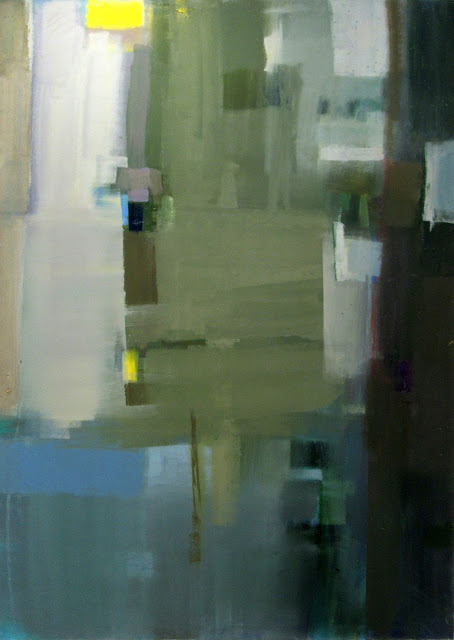
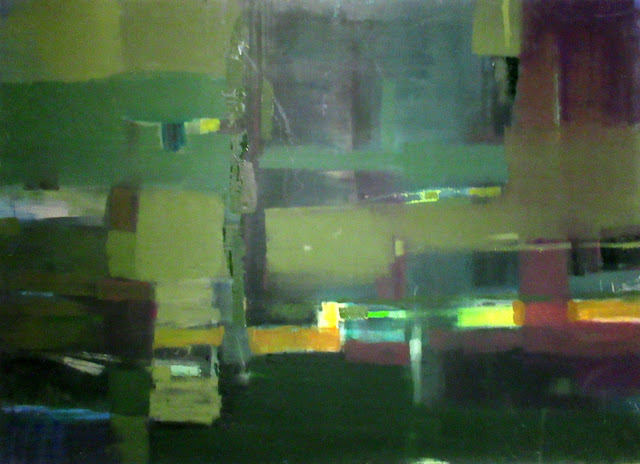
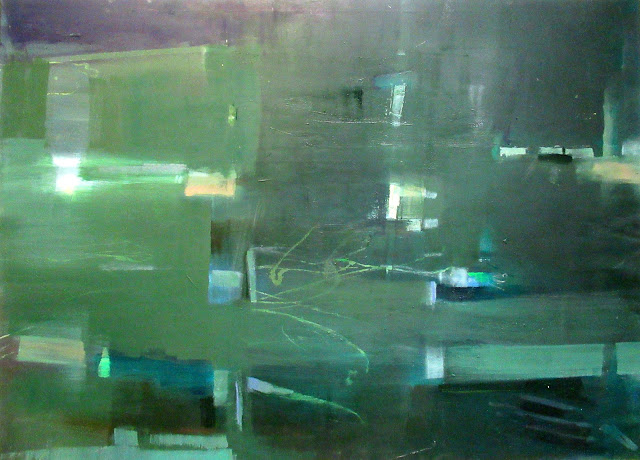
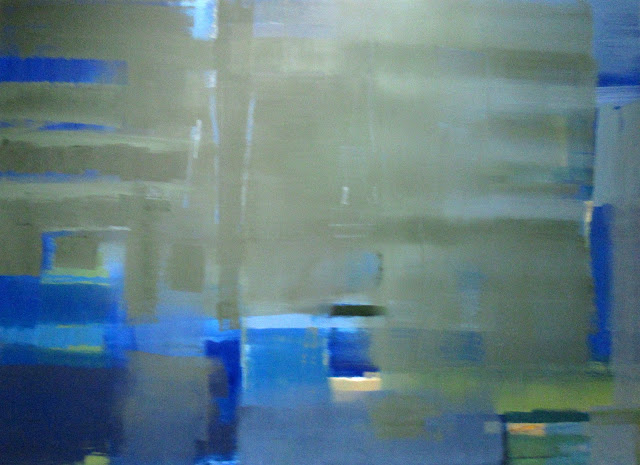
Yannis Adamakos at Art Athina, 2023


Yannis Adamakos at Art Athina, 2023, at Zappeion Megaron, Athens.

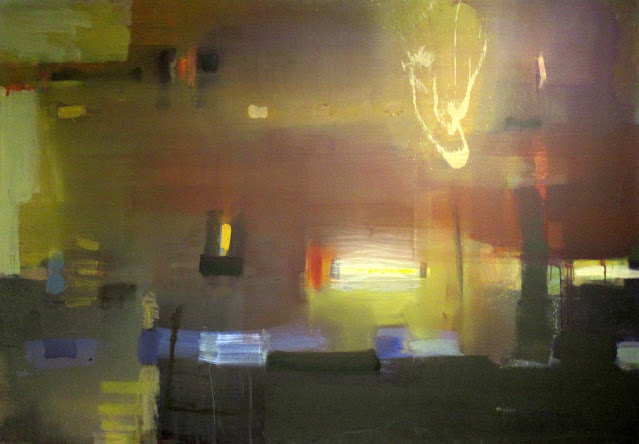
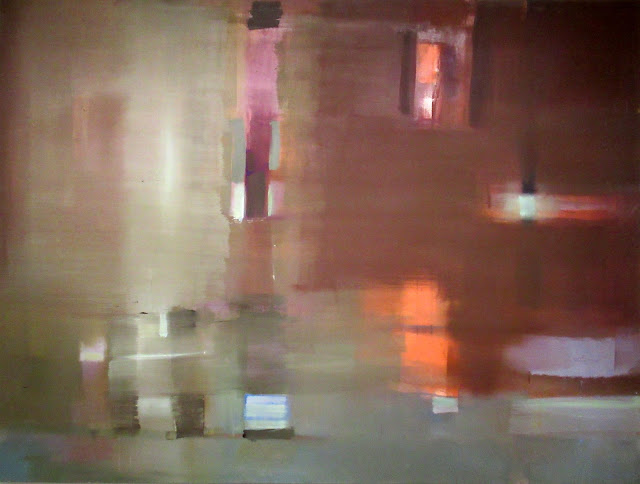
I love Adamakos' neo-expressionist paintings. 

He was born in Pyrgos in 1952. He studied at the Athens School of Fine Arts. He died in 2021. 

Throughout his artistic career, he investigated the inherent possibilities of abstraction and the contemplative qualities of colour. He noted: 'I seek to capture the distance between the concrete and the abstract, between the explosion and the lull; I strive to incorporate randomness into an organised pictorial surface. The horizon, the serenity conveyed by the horizontal line, and the restlessness, the uplist induced by the vertical line, create the grid on whih I build my painting'.

His paintings emanate serenity and calm. There is nothing calm in the creation of them however, which, until he achieved them he was confronted with 'incredible conflict. It is the conflict between mind and emotion, that is, between conscious and unconscious - that which often comes out and you cannot control'. As with the serene landscapes that appear before you after a cleansing storm, these works hide within an explosion, a glow, a dark heat.

As to the issue of abstract art being inaccessible to the general public, Adamakos' feelings were clear on this: 'I don't believe that painting must explain things', he noted.


Five paintings titled Insight A - E, oil on canvas.


Friday, 9 December 2022

Young and Wild?


Young and Wild? Punk, Painting and Prints - Art in 1980s Germany


at the Ashmolean, Oxford.

The 1980s saw an international revival of painting in expressive, gestural styles. The works are often colourful, figurative, experimental and energetic, and contrast with the then dominant trend of conceptual and minimal art. This new artistic movement was soon called 'Neo-Expressionism'. It was particularly prominent in Germany, where the Expressionism art movement had originated in the early 20th century. West Berlin artists worked with diverse artistic materials and found inspiration in urban subcultures, like in Punk or in the gay scene. Their art became known internationally as of 1981 and within a very short period of time.


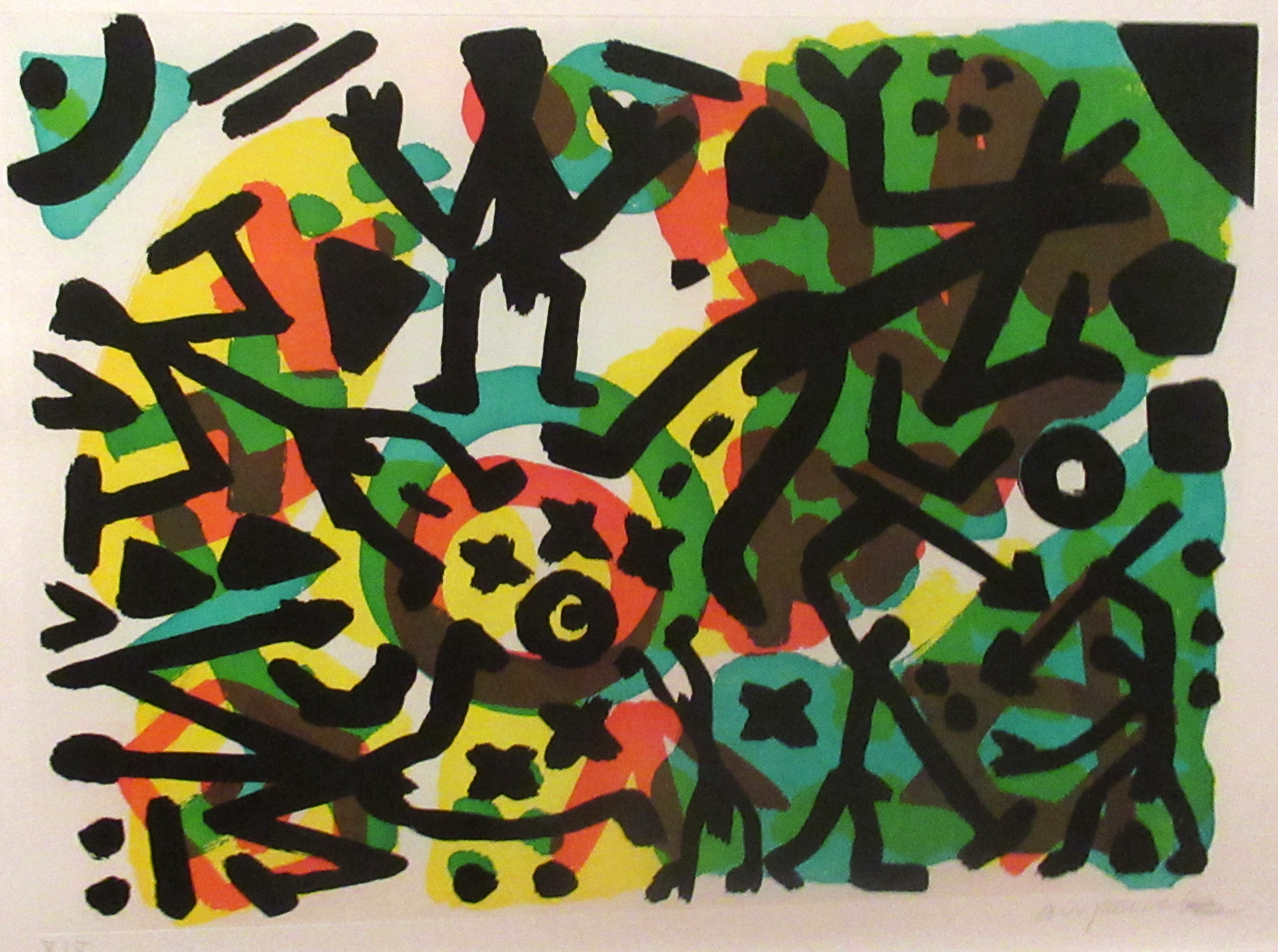
A.R. Penck, The Problems of England (northern Darkness IV), 1987, (emulsion paint and synthetic resin on canvas)

This energetic painting suggesting human encounters, action and conflict can be related to violent incidents in England, and the bombings and armed confrontations of the Troubles in Northern Ireland. The work was created after Penck's Northern Darkness solo exhibition, which was shown in Derry, Dublin and Edinburgh.  The abstracted, simplified visual language and the animals depict battles as timeless phenomena of society.


A.R. Penck, Night Vision, 1982, (woodcut)

These woodcuts that the artist made a few years after he was expatriated from East Germany and had moved to West Germany give an idea of Penck's life-long interest in the Stanart stick man figure. Although the posture of the figure often remains the same - standing still while raising his arms - the focus of each work is different: the compositions range from static to dynamic, from archetypal to ornamental, and the stick men range from detailed figures to radically reduced geometric forms. 


A.R. Penck, Berlin Suite, 1990, (aquatint)

This series of prints comprises scenes inspired by the artist's experiences in West Germany. The images range from a saxophone player, who might relate to the artist's own band activities, to a tiger and abstract stick men. Black outlines are floating rhythmically on colour fields. The bright primary colours convey a feeling of happiness and hope in Berlin, following the end of the Cold War. 


Luciano Castelli, Untitled, 1988, (gouache and chalk)

This energetic drawing of a nude couple in front of a colourful abstract background exemplifies Luciano Castelli's fascnation with naked bodies and bright colours.


Salome, Red Dots, 1978-95, (offset print)


Rainer Fetting, Portrait of Shaun, 1989, (3 etchings)

These portrait etchings created in New York not only represent Fetting's artistic interest in the male (often black) nude as an erotic subject but they also show his experimental approach to printing, exploring the same motif in different colours. Fetting had moved to New York in 1983 after becoming known internationally with expressive-figurative paintings as one of the most important protagonists in the 'Junge Wilde' in West Berlin.


Elvira Bach, Untitled, 1980 


Markus Lupertz, Landscape, 1998, (lithograph)


George Baselitz, Sea Eagle, 2000, (etching and aquatint)

This image of an inverted eagle is highly representative of Baselitz's work. The artist works on his paintings and prints upside down. He has maintained this practice since 1969, to concentrate on foral structure rather than literal content. The eagle is a key motif in his oeuvre - in the quest for pure and non-representational art, it is shown as an abstracted bird rather than a traditional German symbol ingrained in his country's complex national consciousness.


Georg Baselitz, Otto Piedi, (Eight Feet), 2000, (etching and drypoint)

Eight feet in high heels, four of them upside down, convey a feeling of dynamic movement. The motif of feet has been recurring in Baselitz's oeuvre since the 1960s - it is often linked to his autobiographical experiences, such as fleeing during WWII as a child from Dresden to the village of Deutschbaselitz. But here, the women's legs contrasting against a bright yellow background suggest a sense of rhthm and dance.


Georg Baselitz, A Fascist Flew Past, 1998, (etching)


Georg Baselitz, A Fascist Flew Past, 1998, (etching)


Georg Baselitz, A Fascist Flew Past, 1998, (etching)


Ina Barfuss, Untitled, 1991 (gouache, watercolour and ink)


Tuesday, 8 March 2022

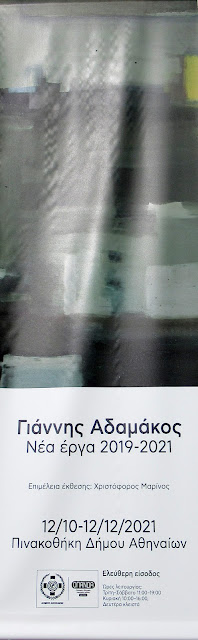
Yiannis Adamakos


Yiannis Adamakos


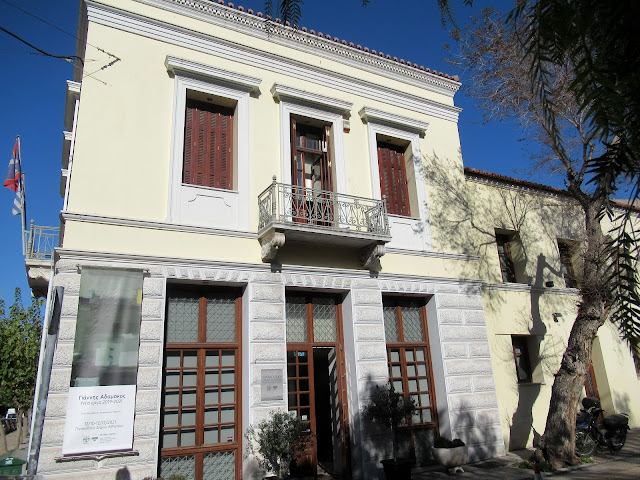
at the Municipal Gallery, Athens.

We went to so many exhibitions last time we were in Athens, in the summer and autumn of 2021. I have not had time to post most of what we saw, but hopefully, I will be doing so in the next few months.


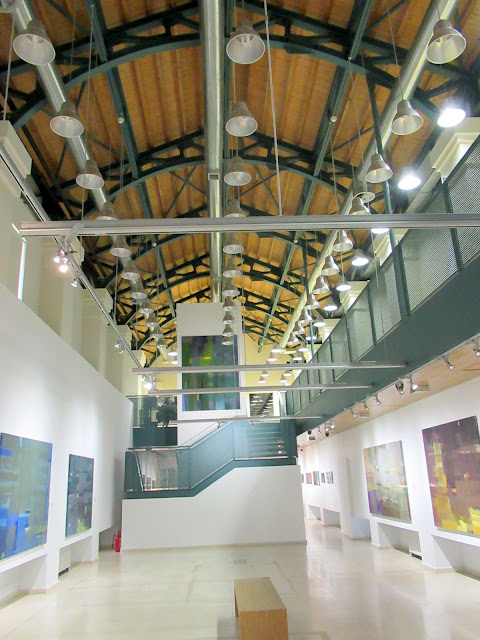
This exhibition was staged at the Metaxourgeio building, the old silk factory.

The building was designed by Danish neo-classicist architect Christian Hansen around the 1830s and was intended to house a large shopping centre similar to those found in major European cities.

These plans did not come to fruition however. A British company, A. Wrampe & Co bought the building in order to install in it a large silk factory. Launched in 1855, the silk factory was the first steam-powered plant in Greece, with excellent silk production that garnered international awards. It became a model factory, employing a large number of workers until 1875, when its operation was brought to a halt due to various problems.

In 1993, the site was donated to the Municipality of Athens. In 2007, work began restoring the complex, and the Metaxourgeio building was refurbished as the new Athens Municipal Gallery.


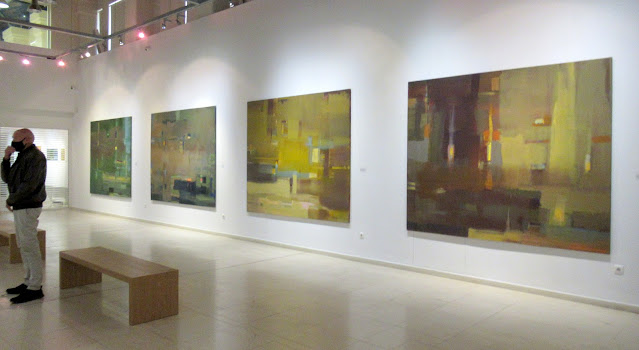
I love Yannis Adamakos' neo-expressionist paintings. Even though they are abstract, after careful observation, one can see everyday scenes emerging: a bathroom mirror, a busy street, an office.      There were hundreds in this exhibition - a real feast - and in this post I have only included the large ones. The much smaller ones which are equally breath-taking, will probably appear in a later post.

Yiannis Adamakos was born in Pyrgos in 1952. He studied at the Athens School of Fine Arts under the painters Dimitris Mytaras, Georgeo Mavroides and Panayotis Tetsis. He died in 2021. This exhibition brings rogether works of the last three years of his life, (2019-2021), vividly reflecting the artist's inquisitive approach and firm belief in the emotional power of colour.

Throughout his artistic career, Adamakos has investigated the inherent possibilities of abstraction and the contemplative qualities of colour.

The motif of the cross - as an underlying building block - prevails in his latest work. The artist notes: 'I seek to capture the distance between the concrete and the abstract, between the explosion and the lull; I strive to incorporate randomness into an organised pictorial surface. The horizon, the serenity conveyed by the horizontal line, and the restlessness, the uplift induced by the vertical line, create the grid on which I build my painting'.

His paintings emanate serenity and calm. There is nothing calm in the creation of them however, which, until he achieves them he has been confronted with 'incredible conflict. It is the conflict between mind and emotion, that is, between conscious and unconscious - that which often comes out and you cannot control'.  As with the serene landscapes that appear before you after a cleansing storm, these works hide wihin an explosion, a glow, a dark heat.

' I would love my works to emit the emotion and serenity that Moralis' works bring in me', Adamakos confesses during an interview. 'This work (he shows an invitation from Bonhams' Greek Sale which features a painting by Yannis Moralis titled Positive), constantly generates feelings through its geometry which accompany me as I paint'.

Looking at one of his own works, he thinks out loud: 'I wonder if it needs fewer elements. The bet is to integrate reason into emotion. Because this is a brain process. Yet, how to go about it so that it doesn't show? I thik of some of Turner's works, made up of only a handful of brushstrokes, where it's as if you could actually hear the wind. How can this be done? I don't know, I'm looking for it'.

As to the issue of abstract art being inaccessible to the general public, Adamakos' feelings are clear on this: 'I don't believe that painting must explain things', he notes. 


Insight A, (oil on canvas)


Insight I, (oil on canvas)


Insight J, (oil on canvas)


Insight H,2021, (oil on canvas)


Insight G, 2019, (oil on canvas)


Insight B, 2019, (oil on canvas)


Insight C, 2020, (oil on canvas)


Insight K, 2019, (oil on canvas)


Insight S, 2021, (oil on canvas)


Insight R, 2020, (oil on canvas)


Insight Q, 2021, (oil on canvas)


Insight P, 2020, (oil on canvas)


Insight O, 2021, (oil on canvas)


Insight N, 2020, (oil on canvas)


Insight M, 2020, (oil on canvas)


Insight L, 2021, (oil on canvas)