Saturday, 12 March 2016

Martin Brewster


Martin Brewster at Waterhouse and Dodd, Albermarle Street, London.

Experiencing Martin Brewster's life-affirming, vibrant paintings was a real pleasure. I was drawn by those wonderful blues, but then found that I equally liked the paintings with the more muted colours. His work reminds me of William Scott's work, a painter who has been a favourite of mine for a long time now.

Martin Brewster creates paintings, prints and drawings based on abstract and landscape themes. Through the application of layers of vibrant colour different places, moods and sensations are evoked. He lives and works in Dorset. 

A recurring motif is the square, which Brewster says is 'a device that I have used all my life and which now underpins work which is much softer'. Dissatisfied with the flatness of acrylic he has started adding collage. The colours are in most cases strong: vibrant reds or dark luminous blues.
The sense of light and space that he experiences living on the edge of the sea is reflected in the paintings, particularly evident in the 'Coastal light' series.


Evening Coast 2, (acrylic and collage on canvas)


looking closer


 looking closer


Deep Water (acrylic and collage on canvas)


Into the Light, (acrylic and collage on canvas)


Winter Day 2, (oil on canvas)


To the Sea, (acrylic and collage on canvas)


Last Light, (acrylic and collage on canvas)


The White Boat, (acrylic and collage on canvas)


Into the Light 1, (acrylic and collage on canvas)


Coastline Evening (acrylic and collage on canvas)


Blue Harbour (acrylic on canvas)


Evening Walk, (acrylic and collage on canvas)


Coastline 1, (acrylic and collage on canvas)


Seascape series 36 (oil on canvas)


Winter Skies, (oil on canvas)


Evening Coast 1, (acrylic and collage on canvas)


Winter Day series, study no. 6, (acrylic and ink on board)


Wednesday, 9 March 2016

This Common Wild - John Caple


This Common Wild, by John Cape at the John Martin Gallery, London.

It was a real pleasure seeing John Cape's atmospheric and evocative paintings again.

The paintings that make up This Common Wild are set in the Quantock hills in Somerset where Cape's family, the Palmers, made their living collecting brush wood and heather from the hills from which they made brooms to be sold in nearby towns. They were part of a small community known as Broonsquires who lived in simple shelters, relying on access to common land for their food, firewood and materials for brooming. The Enclosure Acts of the first half of the 19th century removed access to the land on which they depended and effectively brought to an end their way of life.

'In discovering the stories of the Broomsquires, their lives and eventual exile from the land, I was struck by the symmetry of the story of Eden and this small place in the Quantock hills. It was in Nether Stowey in the 1790s that Samuel Taylor Coleridge had conjured up his own Eden, Xanadu, which for me seemed a perfect evocation of this idyllic life before Enclosures and titles. The Palmers therefore became my Adam and Eve, their lives, customs and celebrations easily imagined on my walks through the surrounding woods of Nether Stowey. From their lives I also began to look at other Edens and other Eden stories, and realised how important these stories are to understand the importance of a relationship with the natural world that is not about possession. I had glimpsed Eden in these simple lives and communities and these paintings are my attempt to reimagine this relationship with the natural world'.


Dusk Wood Village


Dusk Hill Village


Woodman's Cottage (acrylic on canvas)


The Broomsquire's Cottage


A Broomsquire (acrylic on linen)


The Journey (acrylic on linen)


Gathering in Mothlight


Wild Horse, Full Moon


Crow Wood


Goose on the Common


Roosting in the Woods


An Eden


Evening Moon, (acrylic on canvas)


*   *   *


Where the Alph, the sacred river, run
Through caverns measureless to man
Down to a sunless sea.
So twice five miles of fertile ground
With walls and towers were girdled round:
And there were gardens bright with sinuous rills,
Where blossomed many an incense-bearing tree;
And here were forests ancient as the hills,
Enfolding sunny spots of greenery.

from Kubla Khan
by Samuel Taylor Coleridge.


Monday, 7 March 2016

One Billion Rising


Every February through March 8th, thousands of Risings take place in hundreds of countries across the world and within local communities. The 'billion' refers to the UN statistic that one in three women will be raped or beaten in her lifetime, or about one billion. In 2016 the theme of the campaign is Rise for Revolution.


On Saturday 5th of March, women demonstrated in central London.


Despite suffrage for women being won almost a century ago, gender inequality remains stubbornly entrenched. At its very sharpest end is violence against women, which kills two women a week in the UK. Austerity has brought on an abrupt reversal in the progress of gender equality as women's services begin to run out of funding and get shut down. Average numbers suggest that 150 women are turned away from domestic violence refuges each day. Furthermore, domestic violence and violence against women have increased since 2009, researchers have found, pushing up overall levels of violent crime.


Official statisticians in the UK cap the number in a series of crimes that a single person can report to the survey at five. This method excludes the experiences of 'high frequency' victims - particularly victims of domestic violence - who often make up more than 5% of respondents. Survivors of domestic abuse most often report not just one incident of violence and intimidation, or even several, but a systematic and sustained campaign of repression that can last years.

'How can you possibly put a cap on something and say that after five times it does not count?', said one victim of domestic violence who spent 27 years with her abusive husband. 'I remember all the incidents, I remember all the things that were done to me, and to say we are only going to count five times makes me feel worthless. It's like somehow this is your fault, it's like if this had happened more than five times then you must have been asking for it'.


The outrageous devaluing of women's lives has been allowed to persist because our society lacks the courage to name the problem - that the ideas we teach men and women to have about one another creates a culture in which gendered violence can thrive. There are so many men who believe they have the right to own and control the women in their lives, and that they are justified in using physical violence and emotional abuse in order to do it. The World Health Organisation argues that sexual violence against women is to an extent rooted in 'ideologies of male sexual entitlement'. In other words, men are not naturally more violent than women, but are taught to have certain expectations of relationships that can lead some men to assault, and in many cases, kill, their partners.


According to Catherine McKinnon, we need to adopt a gender-inclusive approach to the meaning of torture itself.  In certain circumstances, domestic violence should be considered a form of torture: when women are tortured because they are women through domestic violence, battering, rape, sexual abuse, by being prostituted and made into pornography - coercive circumstances and the politics of female subordination which may render consent meaningless and simply an alibi for abuse.


The destruction of women as women, because they are women, what we call femicide,  is largely ignored in international law. If things are going to change, crimes against women need to be recognised as such, so that women can begin to get the protection from the law that is necessary.


Sources:

The Guardian
One Billion Rising website
The writings of Catherine McKinnon


Thursday, 3 March 2016

Andy Warhol at the Ashmolean


Andy Warhol


at the Ashmolean, Oxford.

'The substance and significance of Andy Warhol's art becomes more evident with each passing decade and this exhibition aims to add to what we know about Warhol by highlighting unfamiliar and surprising works from across his career', Ashmolean director Alexander Sturgis explained.

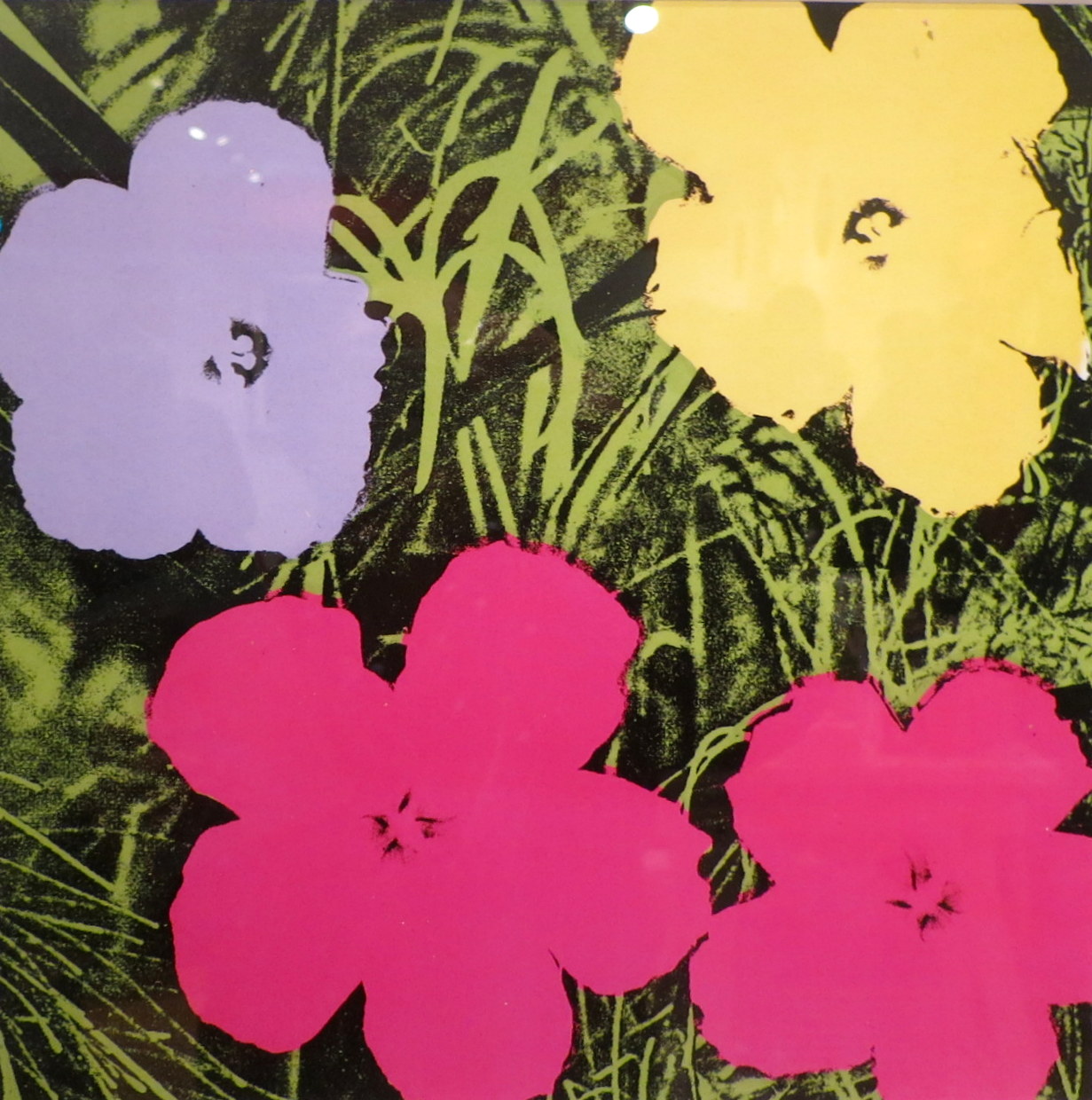
In collaboration with the Hall Art Foundation, the exhibition includes over 100 paintings, screen prints and drawings. The collection consists of a number of slightly less-viewed works that show a darker side of the artist. The exhibition opens with Warhol's early pop portraits and includes works from key series such as


Flowers


Flowers


and the Brillo Soap Pads Box.


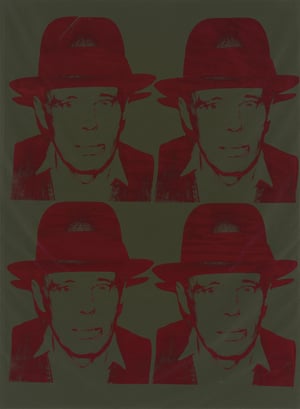
The main room of the exhibition is dominated by a display of Warhol's commissioned portraits spanning the 1970s right up to the year before his death. This display highlights Warhol's power as a 20th century portraitist.


Joseph Beuys, 1981, by Andy Warhol.

Joseph Beyus.

As we progressed through the exhibition the works became darker showing Warhol's obsession with death and with his own mortality. This fear of death began when Valerie Solanas shot him in 1968 and concluded when Warhol checked into hospital in 1987 for a gallbladder operation that proved fatal.


The Map of Eastern USSR Missile Bases aimed at America is not a political statement, but a statement of death.


666 The Mark of the Beast

is another of his late paintings.


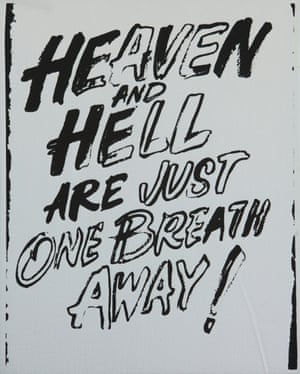
Heaven and Hell are Just One Breath Away (positive), 1985‒86, by Andy Warhol.

Heaven and Hell are Just One Breath Away (image taken from the Guardian)


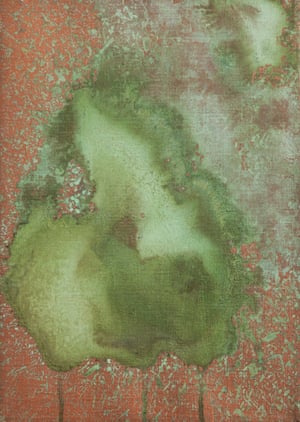
An untitled Oxidisation painting from 1978.

I had not seen his oxidation paintings before. Warhol and his associates at the Factory made them by urinating on copper paint.

Despite the crowds we enjoyed this exhibition and it was a treat being able to see some of his lesser-known work, a lot of which I was unfortunately, not able to photograph, as photography was not allowed.