An exhibition we saw in Athens two months ago.
Yannis Moralis, a retrospective, at the Benaki Museum, Pireos Avenue, Athens.
A retrospective that follows Moralis' progress from decade to decade, through all the stylistic stages of his oeuvre.
Moralis is one of the most distinguished 20th century Greek artists and part of the so-called
'Generation of the 30s', a group of Greek artists active after WWII, who combined folk and modern artistic elements in the quest for
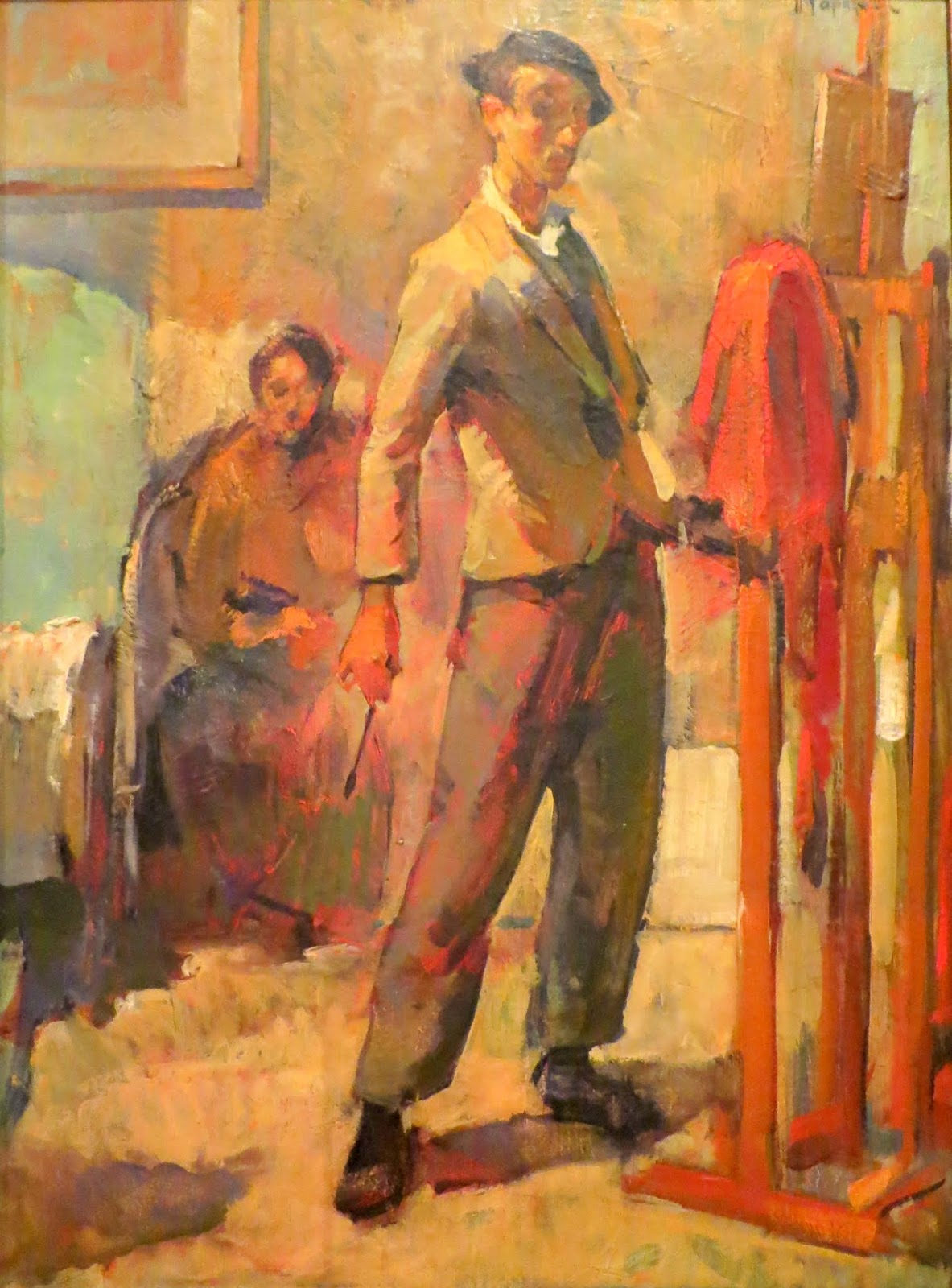
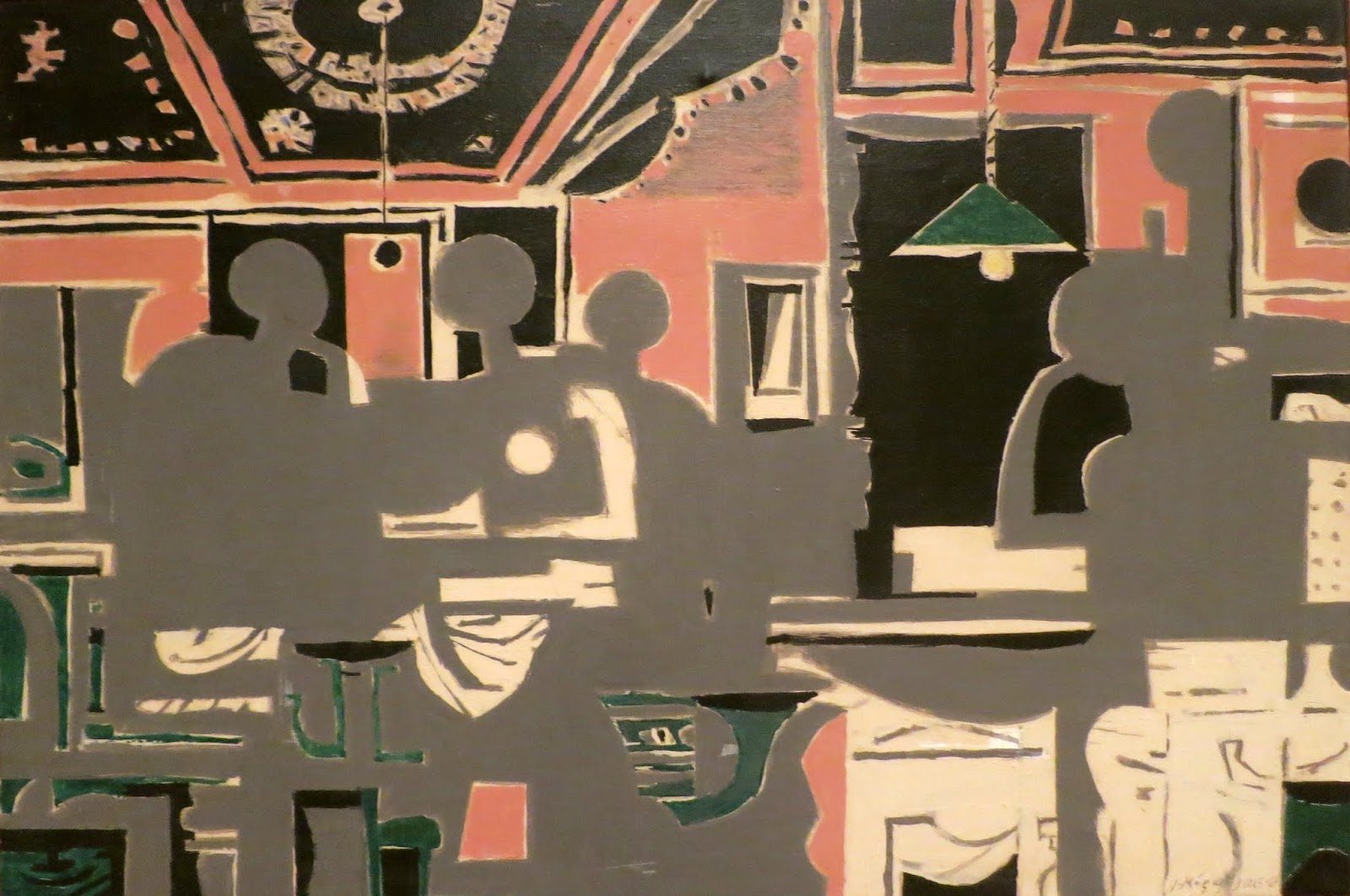
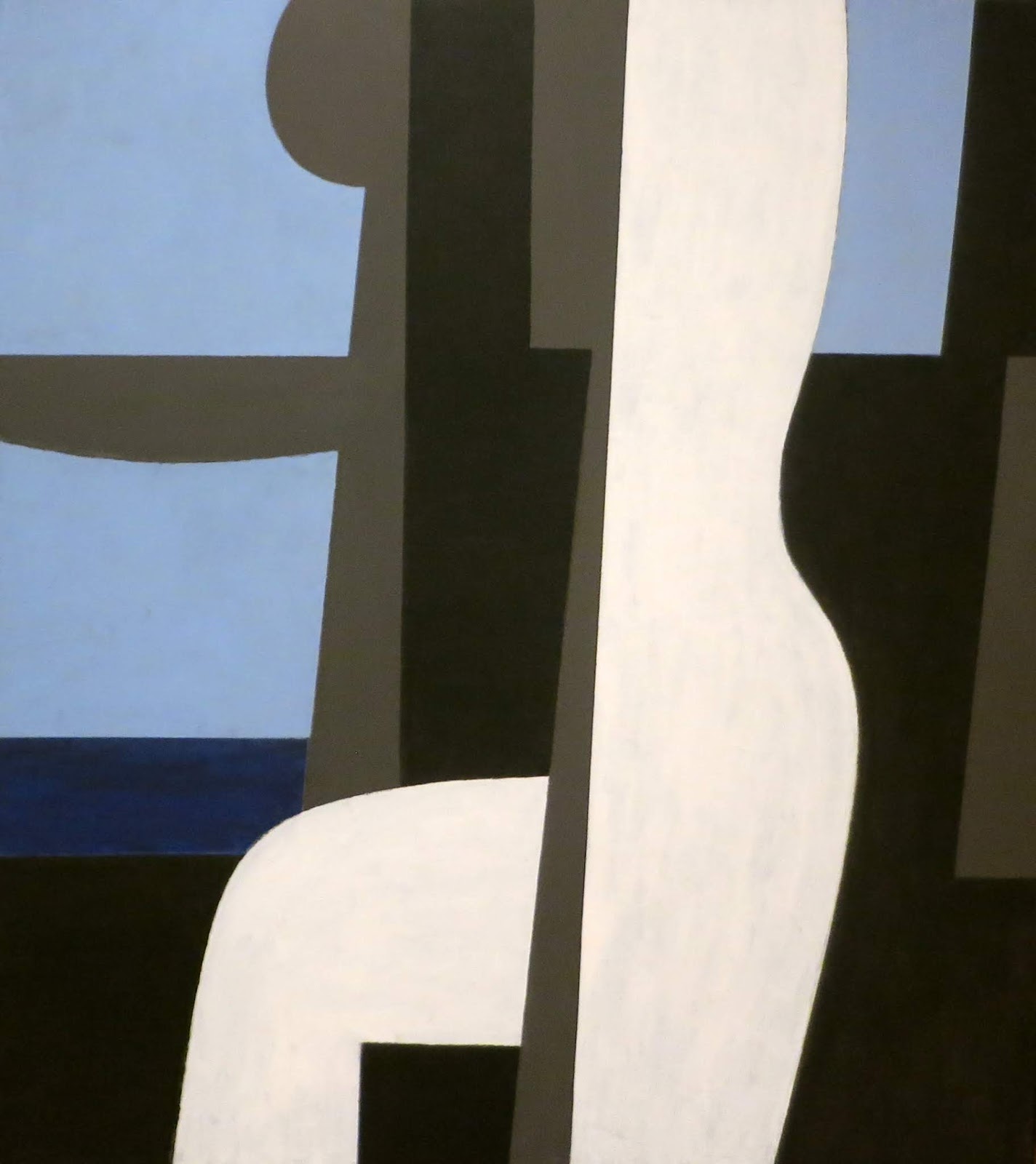
'Greekness'. Moralis' influences ranged from Greek art and Byzantine iconography to neoclassicism, romanticism and realism. In the 1950s the academic approach of his early career gave way to more abstract formulations. In a quest for harmony and balance, in accordance with the fundamental spirit of classical antiquity, Moralis selected geometry as the ideal means of rendering space and the figures that inhabit it. Rhythm, order, a shunning of detail and description, and the simple palette which he gradually imposed in the course of an organic evolution underscore his work.
Distant and elusive, he was an artist known for avoiding publicity, as he rarely gave any interviews:
'One of the reasons I don't give interviews is that I feel the spectrum of my paintings is reduced afterwards. I want my works to be free like myself, as I want the viewer to feel free to read in them the meanings he or she wishes'.
Self-Portrait, 1934, (oil on wood)
Self-Portrait, 1934, (oil on canvas)
By the Outdoor Photographer, 1934, (oil on canvas)
Female Nude, 1936, (oil on canvas)
Male Nude, 1932, (oil on canvas)
Male Nude, 1932, (oil on canvas)
Self-Portrait, 1938, (oil on canvas)
The Painter with Nikos Nikolaou, 1937, (oil on canvas)
The Table, 1947, (oil on canvas)
The Painter with his Wife, 1942-43, (oil on canvas)
Two Friends, 1946, (oil on canvas)
Figure, 1951, (egg tempera on panel)
Figure, 1948-49, (oil on canvas)
Study for 'Composition I' 1948, (oil on canvas)
Figure, 1951, (oil on canvas)
Seated Figure, 1952, (oil on canvas)
Figure, 1952, (oil on canvas)
Composition III, 1952-58, (oil on canvas)
Composition III, 1952-58, (oil on canvas)
Composition, 1951, (oil on canvas)
Funerary Composition, 1958, (oil on canvas)
It was during 1958 that Moralis' style changed, evolving in stages, until, finally, a decade later, his painting becomes abstract. However, before reaching the point of abstraction Moralis is exploring. Traces of this exploration become manifest in a series of six paintings under the title Funerary Composition, where he alternates between abstraction and representation. Moreover, abstraction in the work of Moralis does not signify the disappearance of subject matter, but refers to the simplification of figures and motifs, to the elimination of superfluous detail.

Funerary Composition II, 1958-62, (oil on canvas)


Funerary Composition VII, 1963, (vinavyl glue on canvas)
Funerary Composition V, 1963, (vinavyl glue on canvas)
Funerary Composition IV, 1963, (vinavyl glue on canvas)
Daydreaming, 1959, (oil and egg tempera on hardboard)
Interior, Aegina, 1950, (tempera on paper)
Megalos Erotikos, (oil on panel)
Spring B, 1963-66, (oil on canvas)
Painted Comment for the Collection of Poems by Giorgos Seferis, 1964, (oil on canvas)
Summer, 1968, (vinavyl glue on canvas)
Couple, 1963, (oil on canvas)
Carnival Masks, 2007, (pastel on paper)
Bride, 1968, (oil on canvas)
Submerged City, 1960, (tapestry)
Contemporary Athens, 1966-67, (oil on canvas)
Byzantine Athens, 1966-67, (oil on canvas)
Roman Athens, 1966-67, (oil on canvas)
Classical Athens, 1966-67, (oil on canvas)

Young Woman Undoing her Sandal, 1973, (acrylic on canvas)
Full Moon VII, 1976, (acrylic on canvas)
Erotic, 1993, (acrylic on canvas)
Nude, 1981, (acrylic on canvas)
Erotic, 1977, (acrylic on canvas)
Erotic, 1986, (acrylic on canvas)
Summer, 1995, (acrylic on canvas)
Abstract, 1991, (oil on canvas)
Far Away, There, by the Sea, 2006, (acrylic on canvas)
Summer, 1999, (acrylic on canvas)
Can-Can, 1996-2001, (oil on canvas)
Erotic, 1990, (oil on canvas)
Erotic, 2002, (acrylic on canvas)
Dialogue, 1974, (oil on canvas)
Epithalamion, 1969-70, (acrylic on canvas)
Aegina, 1974, (acrylic on canvas)
Full Moon M, 1977-78, (acrylic on canvas)
Aegean, 1972, (oil on canvas)
Erotic Scene, 1982, (acrylic on canvas)
Young Woman Painting, 1971, (oil on canvas)
Three sculptures in the museum courtyard