Saturday, 8 August 2015

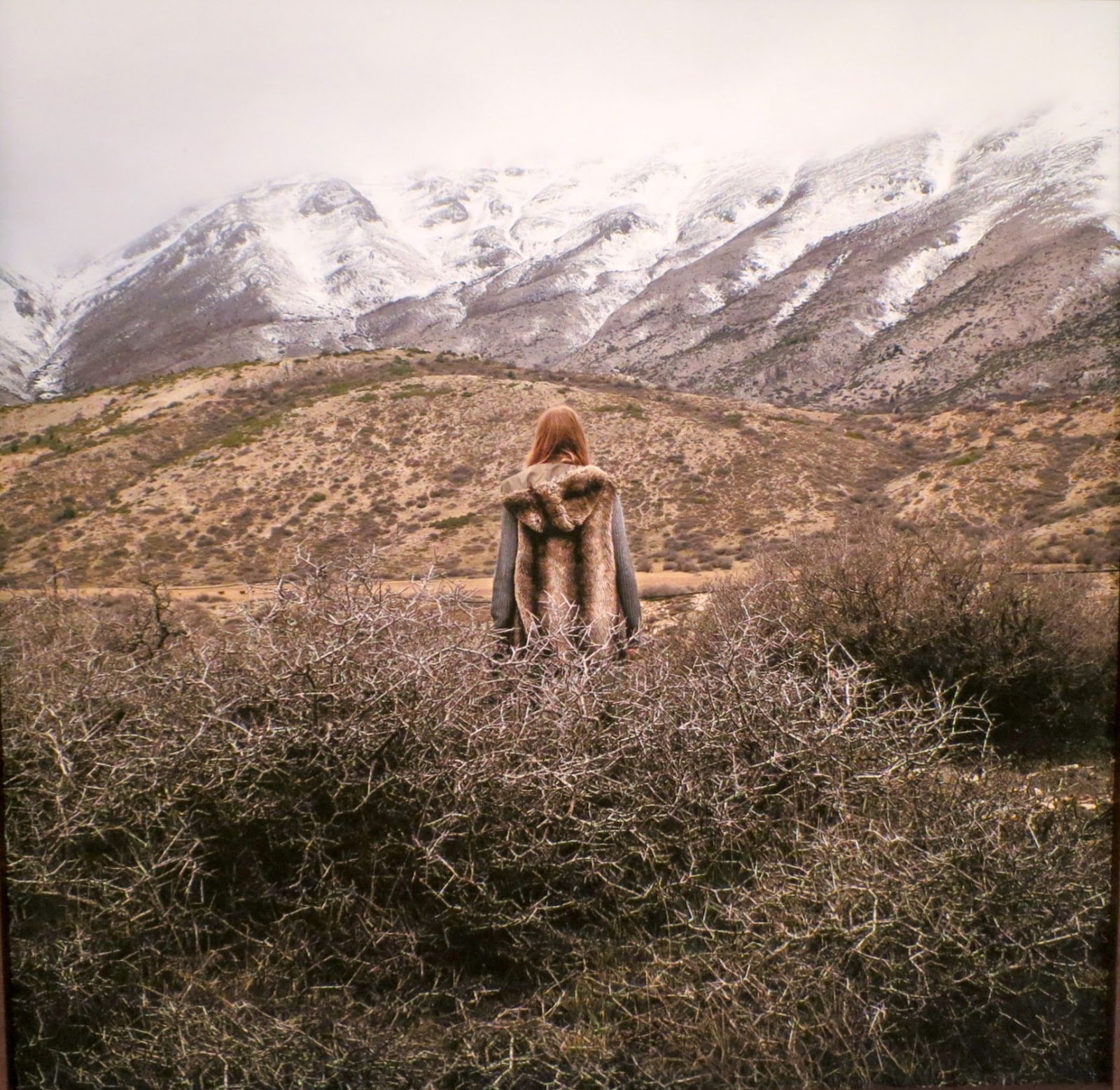
Young Greek Photographers


Young Greek Photographers - Athens Photo Festival,


at the Benaki Museum, Pireos, Athens.


Artists' statements in italics.


Lilly-Vassiliki Zoumpouli:

 Self documentation


Georgia Maragkopoulou:

'...horrific images, unbecoming, paranoid, with the primary component of the dark...'


Athanasios Karatzas:


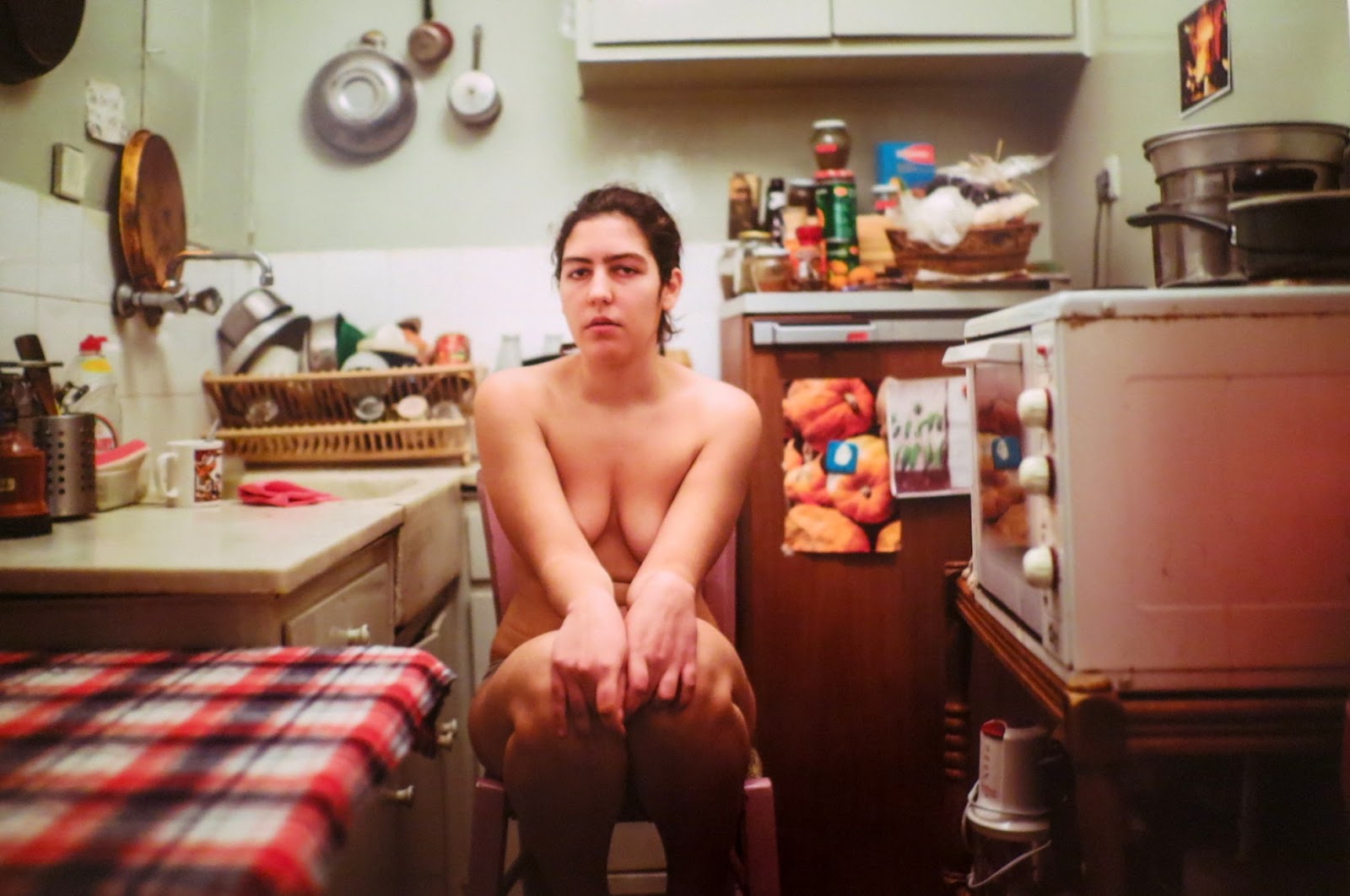
Aimilia Vroutsou:

'These images aim at redefining the representation of the female body. The unconventional poses question the conventions of the female nude as an object on display in art and everyday life.  No longer portrayed as an object solely for the enjoyment of the observer, the female body is depicted as another element of the natural world'.


Emily Gaki:

'A combination of the genres of self-portrait and still life'.


Iliana Meintani: 
 
'Self-portraits taken in several places in Greece'.


Antonis Lekkos:

'Carrying memories as an everyday solace but also as a burden...'


Konstantinos Kartelias:

'Unemployed young people and students photographed in their homes'.


Daimon Xanthopoulos:

'In Burkina Faso gold mining is for many families the only way to make a living. Entire communities including children work as gold miners. It's extremely dangerous work as they dig vertical tunnels into the earth up to 100 metres. In  the tunnels and mineshafts they risk death from explosions, rock falls and tunnel collapse. They breathe air filled with dust and sometimes toxic gases.... Above ground, children dig, crush, mill and haul ore - often in the hot sun. Some stand for hours in water, digging sand or silt from riverbeds and then carry bags of mud on their heads or back to sieving and washing sites...'


Friday, 7 August 2015

Procession


We were on our way to one of our local tavernas when we saw the flashing lights of a police car. Our first thought was that an accident had occurred but then we saw this band playing - the firefighters's band, as we found out later.


A large number of priests followed, the procession heading for one of the local churches, the Metamorphosis of the Saviour, which was celebrating the saint's namesday.


The faithful followed the priests.


The icon at pride of place


decorated with flowers as is the custom.


The procession reached the church


the service began and we went for our evening meal.


Thursday, 6 August 2015

Flowers


A visit to Antonello is very welcome in this scorching heat.


The large window as appealing as always


The dominant colour this week is pink


looking closer


in all its shades


Beautifully arranged


It's a tiny shop, but the mirrors help


the old dresser at the back of the shop


Wednesday, 5 August 2015

Sunset in Edem


Edem is one of our favourite tavernas. It's near where we live and in winter or spring we would walk there. We prefer the bus when it's very hot though. Some of the tables are set on the sand, extremely near the bathers who stay until late. It's wonderful sitting there, observing the changes from day, to dusk, to evening and night. As for the food, it's terrible. They have a captive audience, it's always packed: like us, everyone puts up with the food as it's so wonderful sitting there.


The view behind us.


As the sun was about to set behind Pireus,


everything turned to gold,


and the children playing were reduced to silhouettes.


The sun's rays radiated across the sky.


Sunday, 2 August 2015

Mikis Theodorakis - Songs of resistance


As promised in my previous post here are four songs by Mikis Theodorakis.


To Gelasto Pedi (The laughing boy)


Written in honour of Irish revolutionary hero Michael Collins, this song has come to stand for various resistance figures in Greek history. It was linked with Sotiris Petroulas who was killed, aged 22, when police attacked demonstrators in July 1965. Since Kosta Gavras's film Z about the assassination of MP Grigoris Lambrakis, the song has been identified with Lambrakis.  It's very popular and one of the most recognised songs in contemporary Greece.


T'was on an August morning, all in the dawning hours,
I went to take the warming air, all in the Month of Flowers,
And there I saw a maiden, and mournful was her cry,
'Ah what will mend my broken heart, I've lost my Laughing Boy.
So strong, so wild and brave he was, I'll mourn his loss too sore,
When thinking that I'll hear the laugh or springing step no more.
Ah, curse the times and sad the loss my heart to crucify,
That an Irish son with a rebel gun shot down my Laughing Boy.
Oh had he died by Pearse's side or in the GPO,
Killed by an English bullet from the rifle of the foe,
Or forcibly fed with Ashe lay dead in the dungeons of Mountjoy,
I'd have cried with pride for the way he died, my own dear Laughing Boy.
My princely love, can ageless love do more than tell to you,
Go raibh maith agat for all you tried to do,
For all you did, and would have done, my enemies to destroy,
I'll mourn your name and praise your fame, forever, my Laughing Boy.

It was on an August morning, all in the morning hours,
I went to take the warming air all in the month of flowers.


The Slaughterhouse


The beatings have started in the office
I count the beatings, the blood I count
I am being fattened up, shut in a slaughterhouse
today you, tomorrow me.

In the evening they are beating up Andreas in the terrace
I count the beatings, the pain I count
behind the wall we will be together again

Tap tap from you, tap tap from me
Which, in this mute language, means
I am holding strong, I am holding on

In our hearts the festival begins
tap tap from you, tap tap from me.

Our slaughterhouse has started smelling of thyme
and our cell of red sky

(music and lyrics by M. Theodorakis)

This song is about the notorious headquarters of the security police at Bouboulinas Street in Athens where torture of political prisoners was an everyday occurrence. Theodorakis was in solitary confinement for 60 days there. He joined a hunger strike but fell unconscious and was taken to Averoff prison hospital with an internal abscess.

'I heard the cries of men undergoing torture. I saw comrades who had been so badly tortured with the falanga (beating of the soles of the feet) that they could not walk. In the Averoff prison hospital I saw men who had had the bones in their feet broken by the severity of the torture. I was a man called Petropoulos, a member of the Lambrakis Youth Movement (which Theodorakis founded) with the bones in his feet broken in this way and with no nails left in his toes' says Theodorakis, recalling these awful days.  (from the Guardian )


O Antonis (from the Mautsausen album)


The lyrics are by Iakovos Kabanellis who was incarcerated in the Mauthausen Nazi concentration camp for four years.


Asma Asmaton (The Song of Songs)

Another song from the Mauthausen album.


Oh! How beautiful my beloved is
With her care in her daily dress
And with the comb in her hair.
No-one knew she's so beautiful.

Maidens from Auschwitz,
Maidens from Dachau,
Have you seen my love, perchance?

We saw her on her long journey.
She no longer wore her dress
Not the comb in her hair.

Oh! How beautiful my beloved is
Pampered by her loving mother,
And her brother's kisses.
No-one knew that she's so beautiful.

Maidens from Mathausen,
Maidens from Belsen,
Have you seen my love, perchance?

We saw her standing in the frozen courtyard,
With a number on her white arm,
And a yellow star over her heart.