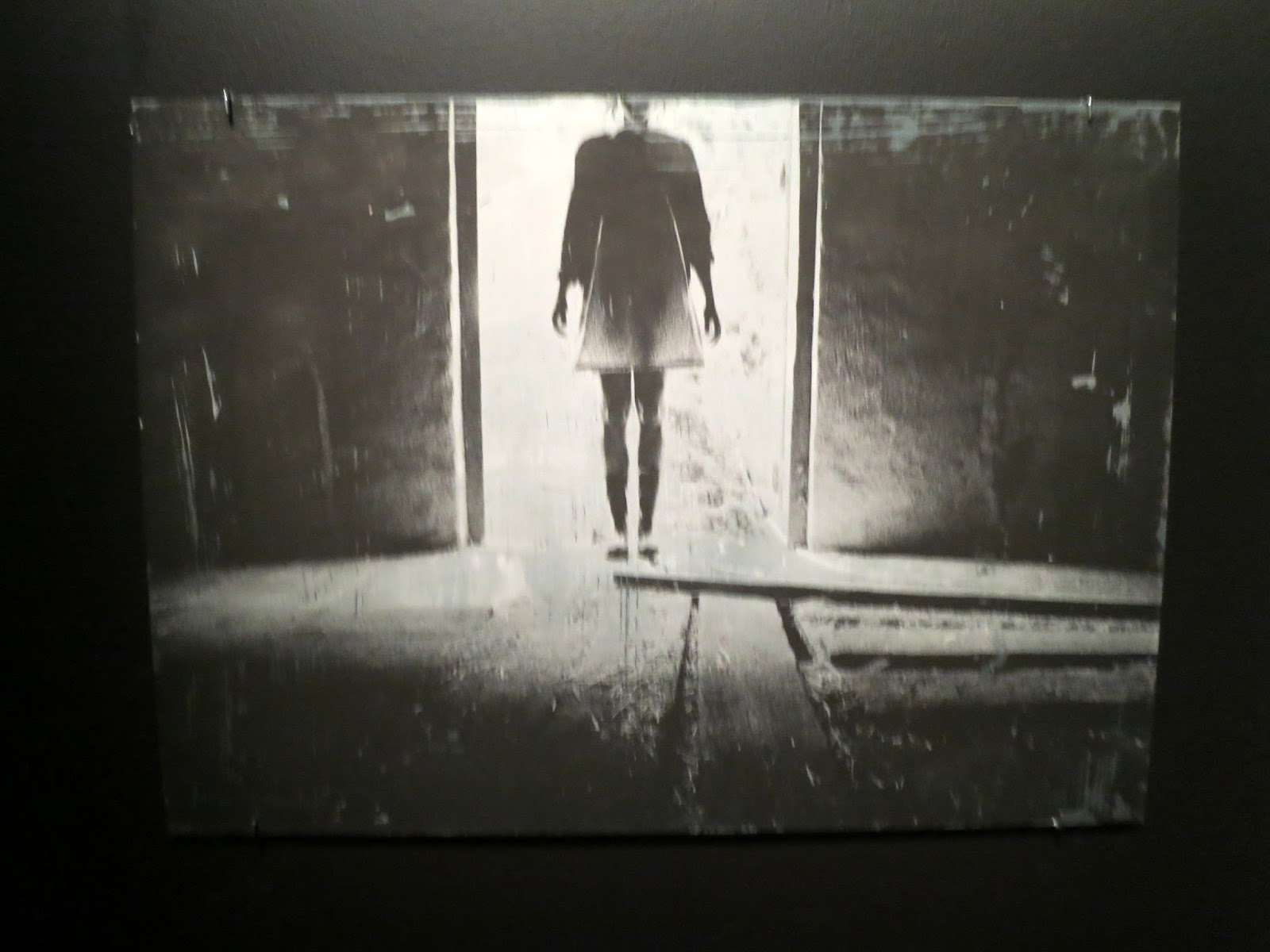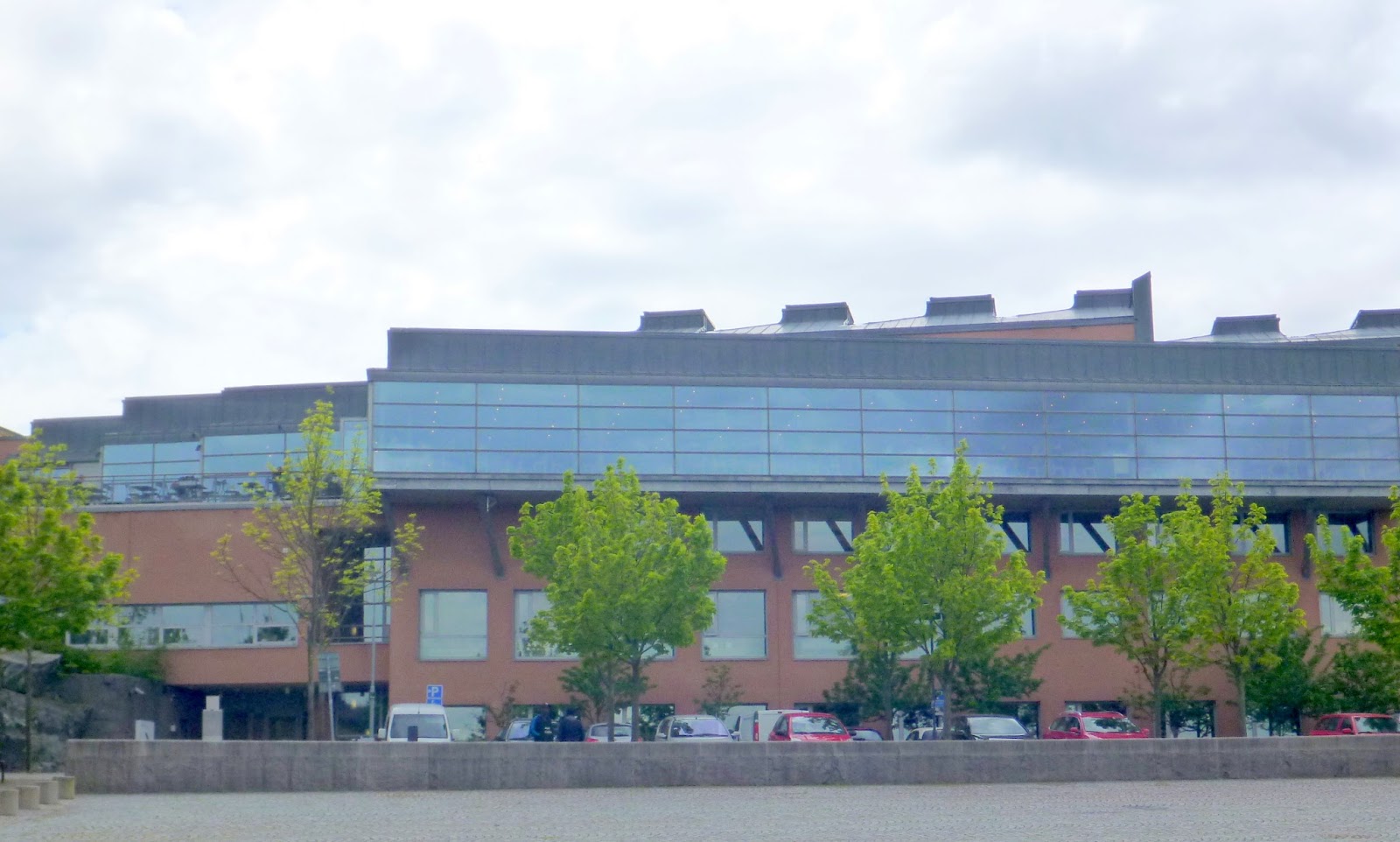
Having wandered round the small island of Kastellholmen we crossed the bridge on to Skeppsholmen island, walked all around it, and then entered the Museum of Modern Art, Moderna Museet, using the back entrance.

The Museum has one of Europe's finest collections of modern and contemporary art. It includes key works by artists such as Pablo Picasso, Henri Matisse, Dorothea Tanning, Andy Warhol and Niki de Saint Phalle. The Museum has been strongly influenced by the legacy of Marcel Duchamp.

Robert Rauschenberg's Monogram, the stuffed Angora goat that he found in a rubbish bin just around the corner from where he lived in New York, is one of the exhibits in the Museum and they seem to have adopted it as their trademark

it was everywhere


A long gallery runs the length of the museum, with doors leading to the smaller galleries with the exhibits on the right

the long gallery has art works too - like this Mushroom by Carsten Holler

The shop is well stocked with books, jewellery,

glasses

watches

and these wonderful plates by Louise Bourgeois


The toilets sign - how smart is that. The whole place breathes and references art

The surveillance camera over the sink in the toilets was a surprise

but when we spotted one in the toilet cubicle as well,

we did not know what to think....

until we realised that it's an installation

I asked about it at reception and I was told the name of the artist but I cannot find the piece of paper where I wrote it down, and I guess it's not surprising given that we visited the museum 6 months ago. I have to say though, that blogging about it now, it's a great pleasure 'revisiting' the museum and the exhibitions after six months.

The outdoor café was pleasantly empty - just us and one more person

Christian Berg, Monumental Figure, 1927

After a very late lunch we wandered around the garden - Sweden by Erik Dietman

This sculpture in the midst of the flowering lilacs (the Swedes love lilac - the bushes are everywhere) intrigued us

It's Dejeuner sur L'Herbe, by Pablo Picasso (1962), inspired by Edouard Manet

it was very difficult to get a photograph of the whole ensemble

so here are some photographs of the individual pieces, with Ken posing in this one

This set of sculptures was produced by Norwegian artist Carl Nesjar based on Picasso's cardboard models. In Manet's painting, the men are well-dressed upper-class individuals, while the woman is naked. In Picasso's version, the breakfast-eaters are all nude bathers without any bourgeois clothes.


A wonderful set of sculptures in the midst of all the shrubs and trees

Del 1, by Beth Laurin
The sculpture is a contradictory object: it's abstract, yet familiar, and made of hard polyester in a soft bend. The dark marbled surface enhances the organic feeling. It's shiny and reflects both the sky and the surrounding branches.

We then walked to the front of the museum. Between the road and the front entrance is a green space filled with

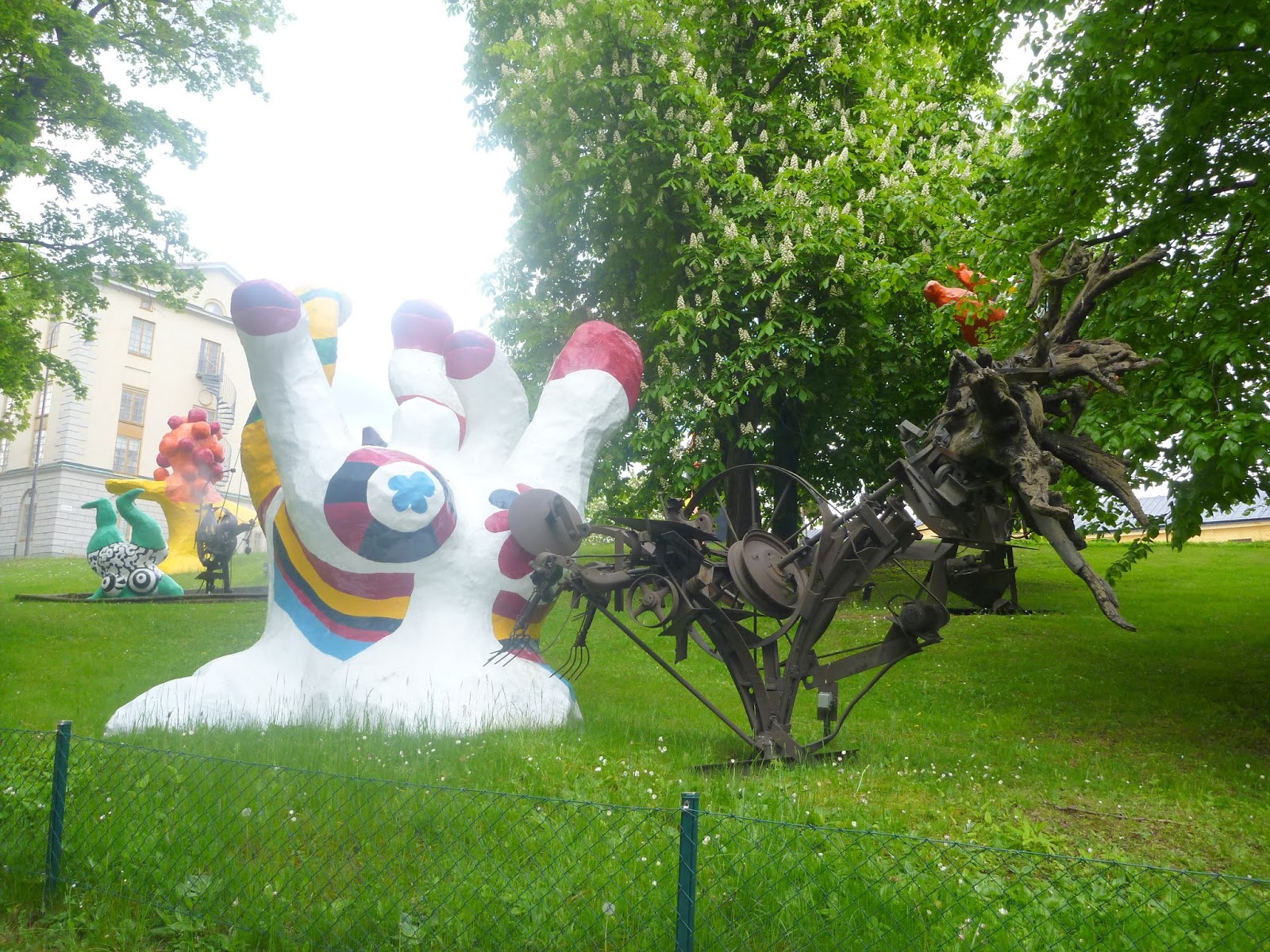
an assortment of two sets of contradictory sculptures - contradictory in texture, colour and subject matter

The Fantastic Paradise, by Niki de Saint Phalle and Jean Tinguely

Niki de Saint Phalle's colourful, life-affirming, rotund female figures,

set against Jean Tinguely's black, jagged, rattling machines.

In the warm season the figures are set in motion, spurting water that trickles here and there.

Again, it was impossible to photograph the whole of the ensemble, so individual photographs will have to do




Moving on to the entrance of the museum we came upon Four Elements by Alexander Calder.
The Four Elements rotate and billow as they move.

We walked through the entrance and came upon this courtyard

Pavilion Sculpture II, Dan Graham

Pavilion Sculpture II suggests in every way that what we are looking at is a building. And yet, it is the very opposite of a building. It has no ceiling, it is not closed and offers no protection against the elements.

The mirrors reflect the surroundings and confuse the eye. The boundaries between building and setting are blurred.

Looking back at the Calder sculptures and beyond, at one of the Niki de Saint Phalle sculptures.

Lars Englund, Instabil, 2005

Finally, we had to walk through the museum and get to the back entrance for Per Kirkeby's Untitled

a labyrinthine roofless brick building.

Per Kikeby's paintings and bronze sculptures are wild and expressive, but his brick works are terse and architectonic, somewhere in between buildings and sculptures.

Asked what the title of this work was, he answered that he doesn't usually give titles to his works, but added that The Holy Pump House might be a suitable name.

Gustav Kraitz, Close Contact
The dark diabase is polished until shiny, and when it rains it turns black as coal. The shiny sections contrast with the short sides which are rough and bumpy. The sculpture is aligned with the quayside where the waves gurgle constantly. It is easy to image the stone having been shaped by years of softly lapping water.