Having posted on the
Beamish Museum in the Northeast of England, I thought it would be appropriate to write about Skansen in Stockholm. Skansen was the inspiration for Beamish, and we visited it last year.
Skansen is located on the island Djurgarden and was founded in 1891 by Arthur Hazelius to show the way of life in the different parts of Sweden before the industrial era. The 19th century was a period of great change and as the rural way of life was rapidly giving way to an industrialised society, many feared that Sweden's many traditional customs and occupations might be lost to history. After extensive travelling, Hazelius bought around 150 houses from all over the country and had them shipped piece by piece to the museum, where they were rebuilt to provide a unique picture of traditional Sweden. Only three of the buildings in the museum are not original, and these were painstakingly copied from examples he had found.
The 75 acre site includes a full replica of an average 19th century town, in which craftspeople in traditional dress such as tanners, shoemakers, silversmiths, bakers and glass-blowers demonstrate their skills in period surroundings.
The first thing we encountered when we entered the museum were replicas of Ppipi Longstocking (Pippi Langstrump) a favourite amongst Swedes.
We entered the town
and visited the glass blower's workshop
the adjacent shop sold glass items that were made in the workshop.
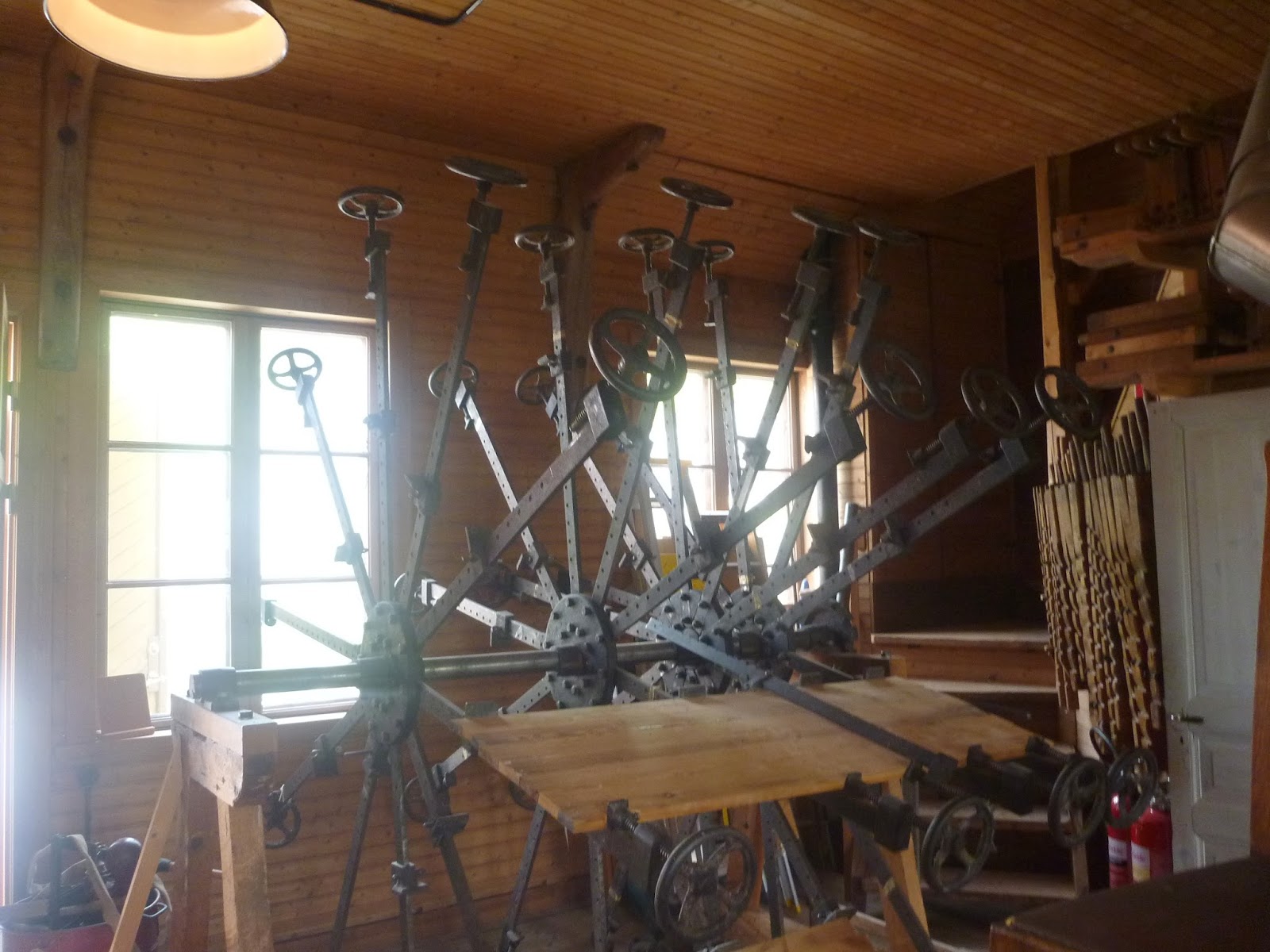
The furniture factory, from about 1920, was the next place we visited
new sources of power and new machines made it possible to mass produce furniture. This machine holds glued pieces of wood together
The hardware store
sold various housewares
which we could purchase, if we wished.
An old telephone booth stood outside the store
and a petrol pump was nearby
In the dairy shop school children were told how butter was made,
were shown the churns
and if they wanted to purchase anything, it would be weighed
We wandered around for a while. Some of the shops and houses were closed
but we enjoyed looking at the architecture
of the houses
some of which are quite quirky.
We entered the printer's house
I fell in love with the stoves in Sweden
here's another one
Most of the people working in the museum wore period costume
We entered another home, this one depicting life in 1923
the kitchen
and another gorgeous stove
a cubbyhole for keeping things warm
and where the wood went
and another one, much more ornate
We moved on to Charles Tottie's residence, an example of how a wealthy tradesman would live in the 18th century. Charles Tottie was a Scotsman who became one of Sweden's wealthiest merchants. This is only part of his house, but unfortunately, it was closed and we could not go in.
We were able to have a look at his back yard though.
The goldsmith's workshop was closed even though there was someone sitting on the step outside.
So we moved on to the pottery
a lot of these traditional pots are very similar to traditional Greek pottery
On the grass roof of the pottery workshop sat a visitor
a closer look
The savings bank was closed
we liked the windows and shutters.
The octagonal corn-chandler's summer house, built in the middle of the 18th century, is very cute.
We spent the whole day at the museum - the town is only a small part of what's available to see.